Australia is becoming a valuable meeting point for researchers, investors, and professionals interested in Africa’s growth story. This guide to the top African economy conferences in Australia highlights events that support learning, networking, and fresh market insight while helping readers discover where policy, business, and culture meet in practice.
From the Africa Down Under Conference 2026 to the 110th Global Conference on African Economy and Culture, the top 6 African economy conferences in Australia offer useful spaces for ideas, partnerships, and discussion. Each event serves different goals and audiences. Continue reading to explore which conference fits you best.
Top 6 African Economy Conferences in Australia (Quick Overview)
Explore the practical list of African economy conferences in Australia with essential details and topics covered. This quick-view table helps researchers, professionals, and investors compare event focus areas, identify relevant opportunities, and plan their 2026 conference participation more effectively.
| Date | Conference Name | Location | Topics Covered |
| September 25-27, 2026 | 110th Global Conference on African Economy and Culture (GCAEC) | Sydney | African economy, culture, trade, development, policy, and diaspora engagement |
| 31 August – 6 September 2026 | Blue Nile Program | Melbourne | African leadership, diaspora connections, cultural exchange, community development |
| September 25-27, 2026 | 143rd Global Conference on African Business and Technology (GCABT) | Sydney | African business, technology, innovation, entrepreneurship, digital transformation |
| August 30-31, 2026 | International Conference on Economic and Administrative Sciences | Sydney | Economics, administration, management, business policy, finance |
| 2 – 4 September 2026 | Africa Down Under Conference 2026 | Pan Pacific Hotel, Perth | Mining, investment, Africa-Australia trade, resources, infrastructure, economic partnerships |
| October 04-05, 2026 | International Conference on Economy, Management and Marketing | Melbourne | Economy, management, marketing, business strategy, consumer markets |
Knowing the topics covered helps you choose conferences that match your academic, professional, or business goals. Use this table to compare African economy conferences in Australia and make smarter decisions for networking, learning, and industry engagement in 2026.
Top 6 African Economy Conferences in Australia
Explore key African economy conferences in Australia with dates, locations, and focus areas. This section helps you quickly compare events and choose the right fit for research, networking, or business growth. Keep reading to find the best options for 2026.
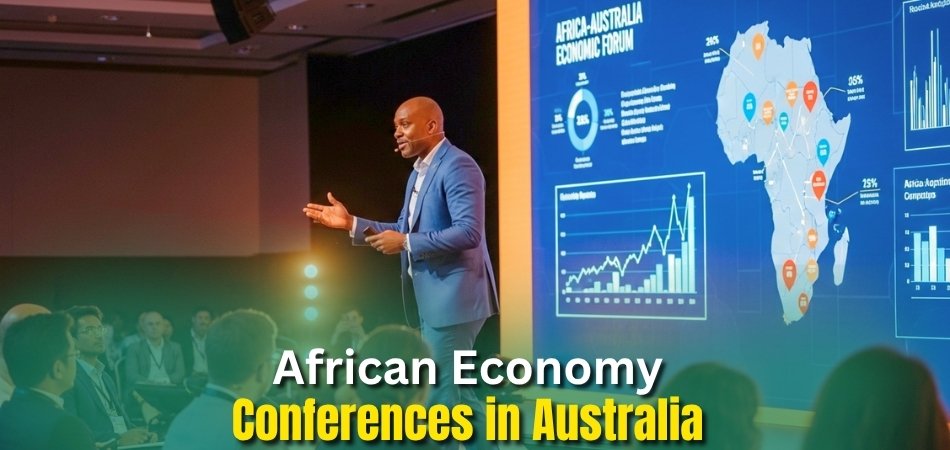
110th Global Conference on African Economy and Culture (GCAEC)
- Date: September 25–27, 2026
- Location: Sydney
- Focus Area: African economy, culture, trade, policy
- Best For: Researchers, policymakers, development professionals
This conference explores how culture and economics shape African growth. Speakers often include academics, policy experts, and development practitioners. Attendees can expect sessions on trade, diaspora impact, and economic reforms. It suits those exploring conferences in Australia that connect research with real-world African economic challenges.
Blue Nile Program
- Date: 31 August – 6 September 2026
- Location: Melbourne
- Focus Area: Leadership, diaspora engagement, cultural exchange
- Best For: Community leaders, students, emerging professionals
The Blue Nile Program focuses on leadership and African diaspora connections. Sessions include workshops, discussions, and cultural exchange activities. Speakers may include community leaders and development experts. It is ideal for those looking to understand social and economic links between Africa and Australia.
143rd Global Conference on African Business and Technology (GCABT)
- Date: September 25–27, 2026
- Location: Sydney
- Focus Area: Business, technology, innovation
- Best For: Entrepreneurs, tech professionals, investors
GCABT highlights the role of technology in African economic growth. Speakers often include startup founders, tech experts, and business leaders. Discussions cover digital transformation, entrepreneurship, and investment trends. It is useful for those interested in business opportunities and innovation across African markets.
International Conference on Economic and Administrative Sciences
- Date: August 30–31, 2026
- Location: Sydney
- Focus Area: Economics, management, finance
- Best For: Academics, researchers, business professionals
This conference brings together experts in economics and administration. It covers topics such as financial systems, governance, and policy. Speakers usually include researchers and industry professionals. Attendees can join discussions, present research, and gain insights into economic frameworks relevant to both global and African contexts.
Africa Down Under Conference 2026
- Date: 2–4 September 2026
- Location: Pan Pacific Hotel, Perth
- Focus Area: Mining, investment, trade
- Best For: Investors, policymakers, mining professionals
Africa Down Under focuses on Africa’s mining sector and investment opportunities. Industry leaders, government officials, and company executives are common speakers. Sessions discuss resources, infrastructure, and partnerships. It is a strong choice for those interested in trade relations and economic ties between Africa and Australia.
International Conference on Economy, Management and Marketing
- Date: October 04–05, 2026
- Location: Melbourne
- Focus Area: Economy, marketing, business strategy
- Best For: Marketers, managers, researchers
This conference examines how economic trends influence marketing and management strategies. Speakers often include academics and business experts. Topics include consumer behavior, market expansion, and strategic planning. It suits participants who want to link economic insights with practical business and marketing decisions.
Choosing the right conference depends on your goals, whether research, networking, or business growth. Use these African economy conferences in Australia to connect with experts, gain insights, and stay updated on trends shaping Africa’s economic future in 2026.
Attendee Requirements and Eligibility Criteria
Attending African economy conferences in Australia is generally open to a wide range of participants, including business professionals, investors, researchers, students, and diaspora entrepreneurs. However, most conferences have basic eligibility and documentation requirements that must be met before registration is confirmed.

Who Can Attend
- Investors and venture capitalists interested in African markets
- Business owners and entrepreneurs
- Government officials and policy professionals
- Academics, researchers, and students
- NGOs and development sector professionals
- Exhibitors, sponsors, and industry representatives
Basic Requirements
- Valid passport (with sufficient validity period)
- Completed conference registration
- Payment confirmation (for paid events)
- Professional or academic relevance (for specialized conferences)
Additional Requirements (Event-Specific)
- Invitation letter (sometimes required for visa support)
- Abstract or research paper (for academic conferences)
- Business profile or proposal (for exhibitors/speakers)
Open Access vs Invitation-Only Sessions
Many African economic conferences in Australia are open to general delegates after registration. However, some high-level networking sessions, closed-door roundtables, VIP forums, or government-business meetings may be restricted to approved or invited participants only.
Quick Requirements Overview
| Requirement | Usually Needed? | Notes |
| Passport | Yes | Required for international attendees |
| Conference registration | Yes | Mandatory for all delegates |
| Payment confirmation | Usually | Needed for paid events |
| Visa | Often | Depends on nationality |
| Invitation letter | Sometimes | Useful for visa support |
| Abstract or paper | Event-specific | Mostly for academic conferences |
| Business profile | Event-specific | Common for speakers, exhibitors, or sponsors |
Most African economy conferences in Australia are inclusive and open to a wide range of participants, but specialized forums may require invitation, approval, or additional documentation.
Cost of Attending African Economy Conferences in Australia
The cost of attending African economy conferences in Australia depends on the conference type, host city, travel origin, and level of participation. Business and investment summits usually cost more than academic or community-led events, while exhibitors and sponsors often face higher fees than standard delegates. Reviewing the full cost breakdown in advance helps attendees budget properly and avoid unexpected expenses.
Estimated Cost Breakdown
| Expense Category | Estimated Cost (AUD) |
| Conference ticket | $100 – $1,500+ |
| International flights | $800 – $2,500 |
| Accommodation (per night) | $100 – $300 |
| Food and daily expenses | $50 – $150/day |
| Local transportation | $20 – $60/day |
| Visa fee | $150 – $400 |
| Travel insurance | $50 – $200 |
| Airport transfers | $30 – $120 |
| Networking events or gala dinners | $50 – $250 |
| Printing, business materials, or exhibitor extras | Varies |
Typical Total Budget Range
For many international attendees, the total cost of attending a conference in Australia can range from around AUD 1,800 to AUD 5,000+, depending on airfare, hotel choice, ticket type, and length of stay. Premium business forums, exhibitor packages, and last-minute bookings can push costs even higher.
Key Cost Factors
- Conference Type: Business summits, investor forums, and premium networking events often cost more than academic conferences or university-led programs. Some research conferences may also offer discounted student rates.
- Location: Cities such as Perth and Sydney often have higher hotel and transport costs than smaller Australian cities, especially during major conference periods.
- Timing: Peak travel seasons and late bookings can significantly increase airfare and accommodation costs.
- Participation Level: Standard delegates usually pay the lowest fees, while speakers, exhibitors, and sponsors may need to budget for branding materials, booth setup, or additional access passes.
- Length of Stay: Attendees who arrive early for networking or remain after the event for meetings should budget for extra accommodation, transport, and food costs.
Common Extra Costs People Forget
Many attendees budget for the conference ticket and flight, but overlook:
- travel insurance
- visa document preparation
- airport transfers
- mobile SIM or roaming costs
- networking dinners
- printing business cards or company brochures
Ways to Reduce Costs
- Book flights and hotels early
- Use early-bird conference registration
- Stay near the venue to reduce transport costs
- Compare delegate packages before registering
- Check whether meals, workshop access, or networking sessions are already included
Pro tip: Booking early and choosing early-bird tickets can significantly reduce the total cost of attending African economy conferences in Australia.
What are the Common Visa Types for Conference Attendees?
Most international participants need a visa or travel authorization to attend conferences in Australia. The right option depends on the attendee’s nationality, the length of stay, and whether they are attending as a standard delegate, business visitor, invited participant, or research contributor. Common visa types are provided below.

Visitor visa (subclass 600) – Business Visitor stream
This is the most common option for many conference attendees. It is designed for short business visitor activities such as attending conferences, trade fairs, seminars, meetings, and contract discussions. It is generally suitable when the attendee is visiting for business purposes and is not being paid by the event organizer in Australia.
Electronic Travel Authority (ETA) – subclass 601
Eligible passport holders from certain countries may be able to use an ETA for short business visitor activities, including conference-related travel. It allows short stays, but availability depends on nationality.
eVisitor visa – subclass 651
Eligible passport holders, mainly from certain European countries, may use the eVisitor for business visitor purposes, including attending a conference. Eligibility depends on nationality and passport type.
Temporary Activity visa (subclass 408)
This visa is more specialized and may apply when a person is invited to participate in a qualifying event, endorsed activity, research activity, or another approved temporary program in Australia. It is not the standard route for most ordinary conference delegates.
Documents Typically Required
Most applicants should expect to prepare:
- A valid passport
- Conference registration confirmation
- Proof of accommodation
- Travel itinerary
- Evidence of funds or sponsor support
- Invitation letter, if the organizer provides one
- Supporting professional or institutional documents when relevant to the event type
Important Notes
- The Visitor visa (subclass 600) – Business Visitor stream is usually the main visa pathway for standard conference attendance in Australia.
- Some travelers may instead be eligible for an ETA (601) or eVisitor (651) for business visitor purposes.
- A Temporary Activity visa (subclass 408) is typically more relevant for invited, endorsed, or specialized participation rather than basic delegate attendance.
- Visa approval is never guaranteed, even if you have a conference registration or invitation letter.
- Attendees should apply early because processing times and eligibility rules vary by visa type and nationality.
Most conference attendees traveling to Australia use the Visitor visa (subclass 600) – Business Visitor stream, while some eligible nationalities may use an ETA (601) or eVisitor (651) instead.
How to Get an Invitation Letter for a Conference in Australia?
An invitation letter for a conference in Australia is commonly used to support a visa application and confirm the purpose of travel. Although not always mandatory, it can help demonstrate that the attendee has a genuine reason to visit Australia for a professional, academic, or business event.
Who Can Usually Request an Invitation Letter
Conference organizers may provide invitation letters to:
- Registered delegates
- Speakers and panelists
- Researchers or paper presenters
- Exhibitors and sponsors
- Approved business participants
Steps to Request an Invitation Letter
- Register for the conference through the official website
- Complete payment, if the event requires paid registration before issuing letters
- Contact the organizer through the official email address or request form
- Submit the required details, such as your full name, passport number, nationality, affiliation, and registration reference
- Wait for the organizer to verify your details and issue the letter by email or download link
Why Invitation Letters Matter
An invitation letter can help by:
- Confirming your participation in the event
- Supporting your visa application
- Showing the purpose of your travel
- Indicating that the conference is organized through an official channel
What an Invitation Letter Usually Includes
A standard conference invitation letter may include:
- Your name and affiliation
- Conference name and dates
- Event location
- Organizer details
- Confirmation of your registration or role
- Official signature or contact information
Key Considerations
- Not all conferences provide invitation letters
- Some organizers issue letters only after payment or registration verification
- An invitation letter does not guarantee visa approval
- You should request the letter only through the official organizer or official website
- Processing can take time, especially during busy registration periods
Quick Invitation Letter Checklist
| Item | Usually Needed? | Notes |
| Conference registration | Yes | Often required first |
| Payment confirmation | Sometimes | Depends on organizer |
| Passport details | Usually | For letter accuracy |
| Affiliation details | Usually | Company, university, or institution |
| Official request email or form | Yes | Use verified contact channels |
Best practice: Request your invitation letter as early as possible so you have enough time to review the details and submit your visa application without delays.
Signs of a Legitimate Conference
Before registering or making any payment, it is important to confirm that a conference is genuine. A legitimate conference usually has verified organizers, clear event details, credible speakers, and an official website with transparent registration and contact information.
Quick Legitimacy Checklist
| Factor | What to Check |
| Website | Professional and detailed |
| Organizer | Recognized institution or company |
| Speakers | Real, verifiable profiles |
| Venue | Confirmed location |
| History | Past events and evidence |
Key Signs of a Legitimate Conference
- Official website with clear details (agenda, speakers, venue)
- Recognized organizers (universities, government bodies, industry groups)
- Verified speakers and partner organizations
- Past event history with photos, reports, or media coverage
- Professional communication (official email domain, clear contact info)
Red Flags to Watch For
- Promises of “guaranteed visa approval”
- No verifiable organizer or speaker information
- Unrealistic claims (instant speaking slots, awards without criteria)
- Poorly designed or incomplete website
- Pressure to pay quickly without documentation
Common Challenges International Attendees Should Consider
International attendees can gain valuable business, academic, and networking opportunities at African economy conferences in Australia, but careful planning is essential to avoid avoidable setbacks. Understanding these common challenges helps you prepare better and make smarter decisions before attending.

Visa Delays Or Rejection
Visa processing can take longer than expected, especially when documents are incomplete or inconsistent. To reduce this risk, apply early, check all requirements carefully, and keep your passport, registration proof, and supporting financial documents ready.
High Travel Costs
Flights to Australia can be expensive for long-distance international attendees, especially during peak travel periods. Booking early, comparing routes, and using early-bird conference registration can help lower your overall conference and travel budget.
Accommodation Shortages
Hotels near major conference venues may sell out quickly, particularly in cities hosting large business events. Reserve accommodation as early as possible, stay close to the venue if practical, and confirm cancellation policies before making payment.
Limited Networking Success
Many attendees miss valuable connections because they arrive without a networking plan. Prepare business cards, a short professional introduction, and a list of target contacts so you can approach relevant investors, researchers, or business leaders confidently.
Event Quality Variations
Not all conferences offer the same value, speaker quality, or business opportunities. Research the organizer, speakers, agenda, venue, and past event history before registering so you can avoid low-quality or poorly managed conferences.
Weak follow-up Strategy
Attending the conference is only part of the value. Without timely follow-up, important leads and partnerships may fade quickly. After the event, send messages, connect on professional platforms, and organize your contacts for future communication.
Proper preparation improves the value, credibility, and return on investment of attending African economy conferences in Australia. In the next section, you can move into practical steps for choosing the right conference with more confidence.
Frequently Asked Questions
These additional questions address practical details readers often look for after reviewing conference costs, visa requirements, legitimacy, and attendance rules. They help clarify planning decisions, improve travel readiness, and answer common search queries related to African economy conferences in Australia.
Are African Economy Conferences In Australia Held Every Year?
Many Africa-focused business and economic conferences in Australia are recurring events, although exact dates and locations can change by year. For example, Africa Down Under is promoted as an ongoing annual conference in Perth.
Can Attendees Join These Conferences Online?
Some conferences may offer virtual access, hybrid sessions, or recorded content, but availability depends on the organizer and event format. You should always check the official event page to confirm whether online participation is available.
How Long Do African Economy Conferences In Australia Usually Last?
Most conferences last between one and three days, depending on the program, number of speakers, and networking sessions. Major events such as Africa Down Under are scheduled across multiple days rather than a single session.
Do Conference Attendees Receive A Certificate Of Participation?
Some organizers provide digital or printed certificates of attendance, especially for academic, training, or professional development events. However, certificates are not guaranteed, so attendees should confirm this directly with the conference organizer before registering.
What Should Attendees Wear To An African Economy Conference In Australia?
Business or business casual attire is usually the safest choice for economic, trade, and investment conferences in Australia. Formal networking events, speaker sessions, or gala dinners may require more polished professional dress depending on the event agenda.
Are Meals And Networking Sessions Included In The Ticket Price?
Inclusions vary by conference. Some tickets cover selected meals, coffee breaks, or networking receptions, while others charge separately for premium sessions, gala dinners, workshops, or exhibitor access. Always review the registration package before making payment.
What Happens If I Cannot Attend After Registering?
Refund, transfer, or cancellation rules depend on the organizer’s policy. Some conferences allow delegate substitutions or partial refunds before a deadline, while others treat registrations as non-refundable once payment is confirmed.
Concluding Words
The top African economy conferences in Australia give readers a practical way to compare events that matter for research, investment, and professional growth. Whether you want policy insight, business contacts, or sector knowledge, these conferences can help you connect with the right people and ideas in 2026.
Some events focus on trade and mining, while others explore culture, development, business, or technology. By reviewing the top 6 African economy conferences in Australia, you can choose wisely, plan better, and make your conference experience more useful, relevant, and rewarding.