Visa steps can feel confusing at first, and many people worry about saying the right things during the interview. This can make the whole process feel heavy, even when their plans are simple and honest. With the right plan, it becomes clear and much easier to handle. When people start looking for clear answers, they often think about the common questions in a USA conference visa interview.
Common USA conference visa interview questions cover your travel purpose, event details, funding, stay duration, and ties to your home country. You may be asked why you’re attending, who invited you, how your trip is funded, and what ensures your return. Clear, honest answers improve your approval chances.
Readers who want a smooth experience can find all the key details in this article. Every part is simple to follow and helps remove confusion from the process. Take a little time to read through, and you will feel more ready for the interview.
Why Do Consular Officers Ask These Conference Visa Questions?

Consular officers ask questions so they can understand your real reason for travel. They want to know the event name, dates, and what you plan to learn or do at the conference. Clear answers help them see that your trip is focused on the stated program.
They also ask about your money plans. Officers look at who pays for tickets, hotel, food, and local travel. Short details about savings or sponsor support show you can handle costs. This reduces doubts and shows you will not need extra help during the visit.
Questions about your job, family, and return ticket help them see you plan to come back on time. Your schedule should match the conference dates and any side plans. When you speak about upcoming conferences in USA, make sure your stay fits the event plan.
Officers compare your words with the papers you bring. They may ask about past trips and how long you stayed. Simple, honest replies build trust. Keep answers short, stick to facts, and it becomes clear you respect the rules and will follow the visa limits.
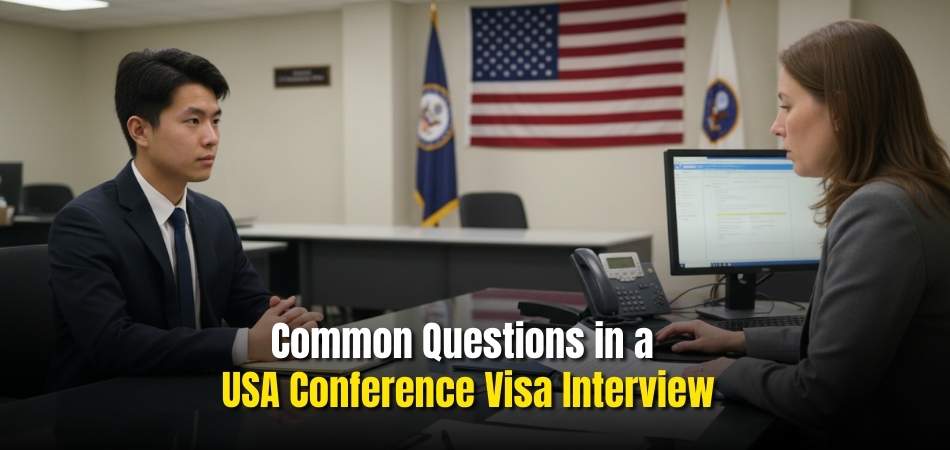
Common Questions in a USA Conference Visa Interview
Getting a conference visa interview can feel a little tense. Officers want clear answers that show your plans are honest. Most questions follow simple themes about travel, work, and money. Keep reading to see what they ask and how best.
Purpose of Travel
These questions help the officer understand why you want to visit and how the conference connects to your work. They also check that your plans match the details in your application. Clear answers show that you are focused only on the event and nothing else. These are the questions you might be asked:
What is the purpose of your visit?
I am traveling to attend the conference, take part in learning sessions, and meet professionals in my field. I want to gain useful knowledge, share ideas, and return home with information that can support my work. My visit is short and fully related to the conference only.
Which conference are you attending?
I am attending a registered professional conference in the United States. It is organized by a recognized group, and I have the invitation, agenda, and venue details. My schedule includes the main sessions that match my work so I can learn practical topics that are helpful.
Why is this specific conference important for you or your career?
This event focuses on subjects closely linked to my work. The talks and workshops will help me improve my skills and understand current methods used in my field. What I learn will help me perform better when I return and continue building my professional goals at home.
Who invited you?
I received an official invitation from the conference organizers after registering and submitting my details. They confirmed my participation and shared the event documents with me. I have the email confirmation, invitation letter, and registration proof to show that I am approved to attend.
Will you be doing anything else while in the U.S.?
My main goal is to attend the conference and complete the registered sessions. If time allows, I may visit nearby places for a short walk or simple sightseeing. I will follow my plan, respect my visa rules, and return home once the event is finished.
Financial and Logistics
These questions help the officer see that your trip is well planned and fully supported. They want to make sure you can manage your expenses and do not face money problems during your stay. Clear details about bookings and arrangements show that your plans are stable. You might face these questions:
Who is paying for your trip?
My expenses will be covered as explained in my documents. This includes flights, hotel, food, conference fees, and local travel. I also have proof, such as bank statements or sponsorship letters. Everything is arranged in advance so I can travel without financial difficulty or confusion.
How long will you stay in the U.S.?
I plan to stay only for the conference dates and a short travel window. My entry and exit dates match the event schedule. After the conference ends, I will return home and continue my regular responsibilities, since my main life and work are based there.
Where will you be staying?
I will stay at the hotel listed in my reservation, which is close to the conference venue. I have the booking confirmation, address, and contact details ready to show if needed. Staying nearby helps me reach the sessions easily and manage my time properly.
Have you booked flights and hotels?
Yes, my bookings are planned according to the conference schedule. My flight dates, hotel reservation, and registration all match the event timeline. These details prove that my travel plan is organized and temporary, and that I will leave once everything is completed.
Do you have travel insurance?
Yes, I arranged travel insurance to cover medical needs and possible emergencies during my visit. It helps ensure safety and avoids unexpected problems. Having insurance also shows that I am prepared, responsible, and ready to handle any situation while I am traveling abroad.
Ties to Your Home Country
These questions help the officer see that you have strong reasons to return home after the conference. They focus on work, family, and responsibilities that connect you to your country. Showing these ties makes it clear that your visit is temporary and planned. You may encounter the following queries:
What is your job or profession?
I work in a stable position with regular duties and ongoing tasks. My employer approved my leave and expects me to return after the conference. Attending the event will help me improve my skills, but my job and long term plans remain firmly in my home country.
Do you have family in your home country?
Yes, my family lives in my home country, and I have responsibilities toward them. My personal life, support system, and daily commitments are here. These strong family connections make it clear that I will return after my short trip for the conference.
Do you own property or have investments?
I have financial responsibilities and assets in my home country, such as savings and local commitments. These ties show that I am settled and focused on building my future here. They also prove that I have strong reasons to come back after my visit to the United States.
What are your future career plans in your home country?
My plan is to continue growing in my career at home. The conference will give me new knowledge and ideas that I can use locally. I want to develop my skills, take on more responsibility, and build long term success in my own country.
The interview is simple when you know what to expect. Stay calm and give short, clear answers to each question. Keep your papers ready and speak with confidence and honesty. Use these tips and prepare well before your appointment day.
How to Answer the USA Conference Visa Question Based on Your Profile?
Getting ready for a USA conference visa interview can feel confusing at first, but it becomes easier when you know what to say and why it matters. Each type of applicant has a different situation, so the answers should match real facts about work, money, and plans to return home. The examples below show how to explain things clearly and confidently.
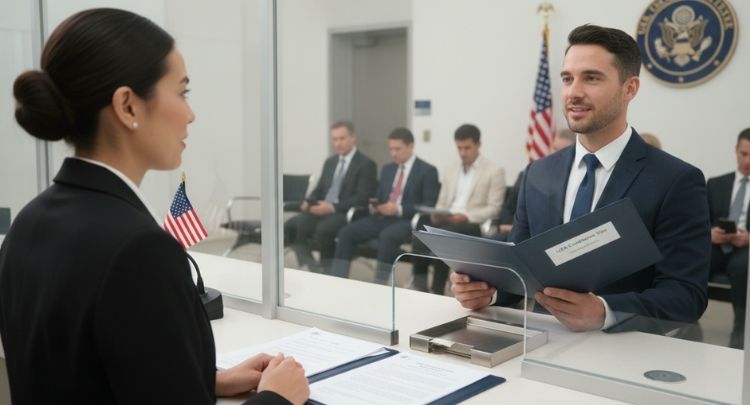
Company-Sponsored Applicant
What the officer wants to know: Why you are going, who is sending you, and how long you will stay.
To answer confidently, it helps to understand the expectation during a USA visa interview, like giving short, clear, and honest replies.
How to answer:
- Purpose of trip: “I am going to attend the [Conference Name] in [City, USA] for [number of days]. It is related to my work.”
- Who is paying: “My company is sponsoring my trip. They will cover flights, hotel, and registration.”
- Ties to home country: “I have a full-time job and I will return right after the event.”
Tip: Bring your company letter and the conference invitation.
Self-Employed or Business Owner
What the officer wants to know: Why the trip matters for your business and that you will come back.
How to answer:
- Purpose of trip: “I run my own business and will attend [Conference Name] to learn useful ideas and meet professionals.”
- Who is paying: “I will pay all costs myself.”
- Ties to home country: “I have running projects and clients waiting for me.”
Tip: Carry business registration, contracts, and bank statements.
Freelancer or Independent Consultant
What the officer wants to know: That the trip connects to your work and that you plan to return.
How to answer:
- Purpose of trip: “I work as a freelancer or consultant and I will attend [Conference Name] to grow my skills and connect with clients.”
- Who is paying: “I will pay for the trip myself.”
- Ties to home country: “I have active work and deadlines after I return.”
Tip: Bring client contracts, invoices, and proof of work.
Professor, Lecturer, or Researcher
What the officer wants to know: That the trip is academic and you will return to your role.
How to answer:
- Purpose of trip: “I am attending [Conference Name] to present my work and join academic sessions.”
- Who is paying: “My institution is covering the travel costs.”
- Ties to home country: “I have teaching and research duties to continue.”
Tip: Carry your acceptance letter and a letter from your institution.
First-Time Traveler to the USA
What the officer wants to know: That your plan is clear and you will return home.
How to answer:
- Purpose of trip: “I am going to attend [Conference Name] from [dates].”
- Who is paying: “[My company or I] will pay for the trip.”
- Ties to home country: “I have job, family, and responsibilities that I must return to.”
Tip: Be ready for simple questions about your travel background.
Recently Changed Jobs
What the officer wants to know: That your plan is real and you will return to your new job.
How to answer:
- Purpose of trip: “I recently joined [new company], and they selected me to attend [Conference Name].”
- Who is paying: “My employer is sponsoring the trip.”
- Ties to home country: “I need to return and continue my work at my new position.”
Tip: Bring your new employment letter and conference documents.
General Tips for All Applicants
- Be honest and keep answers clear.
- Show strong ties like job, family, property, or business.
- Keep answers short and direct.
- Carry supporting papers like invitation, sponsor letter, bank proof, and travel plan.
That is all you really need. Keep your answers simple, stay honest, and stay calm. Show that your plans are clear, your trip is short, and your main life and work are still at home. If you want, I can help you turn these points into short practice answers using your real details.
Tough Conference Visa Interview Questions You Must Prepare For
Visa interviews can feel tough, but good prep makes them easier. Officers ask questions to check your plans and your honesty. Clear answers help show you are a safe and real visitor. Keep reading to see hard questions and how to handle them.
Questions About Your Background And Travel Intentions
Interviewers want to understand your past and your plans. Clear, honest replies help them trust you. Keep answers short and match your papers. Stay calm during follow ups. Here are the questions you should be ready for.
Have You Ever Been Denied A Visa Before?
If you were denied before, say it clearly. Tell the date, the place, and the reason. Share what changed since then. Bring proof if something was fixed. Honest details show you learned from the issue and respect the rules now too.
Have You Ever Overstayed Or Had Immigration Issues?
Say exactly what happened and how it ended. Do not hide it. Explain any mistake and what you did to fix it. Show papers if the case closed. Officers want to see you understand the rules and will follow them in the future.
What Are Your Long-Term Goals?
Talk about your career plans at home. Explain how the conference helps your work. Make it clear your main life is in your own country. Mention steady plans like job growth or studies. This shows you plan to return after the visit.
Can You Show Proof Of Financial Stability?
Be ready with bank statements, pay slips, or tax papers. Explain simply how you will pay for flights, stay, and daily costs. If a sponsor helps, show their letter. The goal is to prove the trip is covered and you will not struggle.
Have You Traveled Abroad Before? Where And Why?
List the countries, the dates, and the reason for each trip. Say you returned on time every time. If you joined events or meetings, mention them. Stamps in your passport help. This shows you respect rules and keep your travel plans honest.
Questions About Details And Plans
Officers also check how well you planned the visit. Clear plans show you are serious. Bring printouts and bookings to support answers. Keep everything simple and real. Here are the questions they often ask.

Why Did You Choose These Dates?
Explain that your dates match the conference schedule. Mention the start and end days. Show the invite or event agenda. Say you plan to arrive a little early and leave soon after. This proves your travel fits the real event.
What Will You Do Each Day During The Visit?
Share a simple plan with mornings and afternoons. Include conference sessions, breaks, and any planned meetings. Show the officer your printed agenda. Keep the plan realistic. When your day plan matches the event, it tells them you are organized.
Do You Plan To Visit Other Places?
If you will visit nearby places, explain where and why. Keep it short. Show that it will not change your return date. If you are only attending the event, say that clearly. The key point is you still plan to go back home on time.
Do You Have Relatives Or Friends Abroad?
Say who they are and where they live. Explain how often you talk. Make clear you will not stay with them unless your plan shows that. The officer wants to see your visit is for the conference, not for moving or long stays.
Have You Prepared All Your Documents?
Say yes only if you truly have them ready. Show leave letters, hotel bookings, conference invites, and any property or family papers that prove ties. Keep everything neat. When papers are complete, the interview becomes much easier for everyone.
Questions That Test Honesty And Intent
Some questions test truth and intent. Stay calm and answer straight. Short facts work better than long talk. Do not hide details if they ask. Here are the questions that check your honesty.
Do You Have Any Criminal Record?
Answer honestly, even if it feels hard. If there was a case, explain what it was and how it ended. Bring court or police papers if needed. Officers want to know the facts. Clear truth is always safer than guessing or hiding.
How Can You Guarantee You Will Return?
Talk about strong ties at home. Mention your job, family, studies, or property. Show letters from your employer or proof of leave. Explain future plans that need you back. These facts help them see you do not want to stay longer than allowed.
Has Anyone Helped You With The Application?
Say who helped and what they did. Maybe a friend filled a form or a company paid a fee. This is normal. The officer only wants to know the support is real and clean. Honest credit avoids doubt and keeps your case simple.
Trick Questions Officers Ask in USA Conference Visa Interviews
These questions are designed to test your real intention.
Why this conference and not one in your own country?
They want to know if you truly need to go to the US.
Good answer:
“This conference is organized by international experts and offers sessions not available in my country. It directly matches my work.”
Bad answer:
“I just want to travel to the US.”
What will you do if your visa is rejected?
This tests if you are desperate to enter the US.
Good answer:
“I will attend similar events in my region and continue my work. This conference is helpful, but my career does not depend on the US.”
Bad answer:
“I must go to the US at any cost.”
Practice your replies and keep your papers ready for review. Short, honest answers build trust and make the interview smooth. Do not guess, and never hide any facts that matter. Use these points, prepare well, and walk in with calm.
Documents Checklist Table
Before your interview, having the right papers is just as important as giving good answers. Many visas are refused simply because a document is missing or not clear. To avoid this problem, it helps to know exactly what the embassy expects you to carry. The checklist below shows the main documents you must bring and the extra ones that support your case and prove your travel plan, money, and ties to home.
|
Mandatory Documents |
Supporting Documents |
| Valid passport |
Employer letter |
|
DS-160 confirmation page |
Conference invitation |
| Visa appointment letter |
Hotel booking |
|
Visa fee receipt |
Flight plan |
| Photo (US size) |
Bank statements |
|
Leave approval letter |
|
|
Business registration (if self-employed) |
|
|
Sponsor letter (if sponsored) |
Mandatory documents are always required. Supporting documents prove ties, money, and purpose.
Easy Answer Formula for USA Conference Visa Questions
Visa interviews feel stressful, but simple answers can make things easier. Clear speech helps officers understand you and trust your plans. Short replies show confidence and reduce chances of confusion too. Read these tips below to prepare strong, honest answers today.
Keep It Short And Clear
Simple sentences help the officer follow every detail. Say only what answers the question. Avoid long stories about plans or past trips. If they need more, they will ask. Short lines sound calm and respectful, which helps your case. This keeps the talk smooth and saves time during review.
Use The 3 Part Formula
Your answer can follow three clear steps. First tell what you do. Then share why the trip matters for your work or study. Last, say when you will return home. This order shows planning and also shows respect for rules. Officers like direct timelines because they see your limits.
Match Your Paperwork
Everything you say should fit the forms you submitted. Check dates, job titles, and travel plans before the interview. Any small conflict can create doubt. Keep your answers aligned with your proof, and always carry the required documents for a USA visa interview so your details match what you say.
Show Your Home Ties
The officer wants to see strong reasons you will return. You can mention your job, close family, or property at home. Keep it short and honest. Avoid sharing extra plans that were not asked. Simple facts calm worries about long stays. This builds trust without sounding like you are selling yourself.
Be Honest Always
Truth is the safest plan. If you do not know something, say so and give a brief note. Guessing can harm your case. Officers can see when answers feel forced. Clear truth shows respect and keeps the talk smooth. This also lowers stress because you do not hide anything.
Practice Sample Answers
Before the interview, read common questions and try short replies. Say them out loud until they sound natural. Focus on what you do, why the trip matters, and when you return. Do not memorize a script. Real answers feel calm and clear. This practice helps you speak without rushing or fear.
Stay Calm During The Interview
A steady voice shows confidence. Take a small breath before each reply. Listen to the full question, then answer only what is asked. If something is unclear, ask them to repeat. Easy, honest talk makes the meeting smooth and friendly. This calm tone can leave a good final impression.
Crucial Tip You Must Know
Your spoken answers must match your DS-160 form exactly.
If your job, salary, sponsor, travel dates, or conference name is different from your DS-160, the officer may refuse your visa.
Most refusals happen because:
- the form says one thing
- the applicant says something else
Before your interview, re-read your DS-160 carefully.
Strong interviews come from clear, honest answers and steady focus. These tips help you speak with confidence and simple logic. Take time to prepare, review papers, and practice your replies. Use this guide, and handle your visa talk with calm.
FAQs About Common Questions in a USA Conference Visa Interview
These common questions help you understand how a USA conference visa interview works. They clear doubts about papers, behavior, and interview mistakes. Reading these answers can help you stay calm, give clear replies, and avoid confusion during the interview. Use them as a guide to prepare smartly and speak with confidence.
How Early Should I Arrive for My Conference Visa Interview?
It is best to reach the embassy at least 20 to 30 minutes early. This gives you enough time to pass security checks without stress. Arriving early also helps you relax before the interview. When you are calm, your answers sound clear and confident.
What Should I Wear for a USA Conference Visa Interview?
You can wear clean and simple formal or semi-formal clothes. You do not need fancy or expensive outfits. Your clothes should make you look neat and respectful. A fresh appearance helps create a good first impression during the interview.
How Should I Keep My Documents for the Interview?
Keep your papers in a neat file so you can take them out easily when asked. Organize items like passport, appointment letter, bank papers, and conference proof. A clean file shows that you are prepared and serious about your trip. It also helps you avoid searching for papers in a hurry.
Can I Carry My Phone or Bag Inside the Embassy?
Many embassies do not allow phones or big bags inside. You may have to keep them outside in a locker or with a trusted person. It is better to bring only important papers and one small folder. This keeps the entry process smooth and simple.
What Should I Do If I Do Not Understand a Question During the Interview?
If you do not understand something, politely ask the officer to repeat it. This is normal and does not harm your case. It is better to ask again than to give a wrong reply. Calm communication helps you answer correctly and avoid confusion.
How Long Does a Conference Visa Interview Usually Last?
Most interviews are very short and may take only a few minutes. The officer usually asks simple questions to confirm your plans. Even though the interview is short, your answers must be clear. Good preparation helps you reply without fear.
Last Words
A visa interview feels big, but steady prep makes it simpler. When you know your plan, keep papers ready, and speak with calm honesty, you show trust and purpose. Practice helps you answer clearly and stay confident through every step.
Most officers focus on simple facts like travel plan, work, costs, and return plans. These are the common questions in a USA conference visa interview and the answers should match your papers, stay short, and prove the visit is temporary.
Before the day, review your notes, check dates again, and keep copies in order. Speak slowly, smile, and ask if something is unclear. Small habits reduce stress and keep you ready. I wish you a smooth interview and trip ahead.