
Getting an Australia conference visa can sometimes feel slower than expected. Many people plan their travel, gather papers, and wait longer than they thought they would. It can be confusing and stressful, leaving travelers wondering why nothing is moving with their file and thinking, why is my Australia conference visa taking so long?
Your Australia conference visa may take a long time due to missing documents, application errors, extra security checks, high demand, or delays at local embassies. Applying late, choosing the wrong visa subclass, or global events can also slow approval. Apply early and ensure all paperwork is correct to avoid delays.
Do you want to know what really causes these delays and how to fix them? Keep reading, because this article shares every important reason and simple ways to make your Australia conference visa process faster and easier.
Why Is My Australia Conference Visa Taking So Long?
Applying for a visa can be stressful, especially when time is short. Many people wait longer than expected for their Australia conference visa. The delay can happen for a few simple reasons that are easy to fix. Let’s look at the most common ones below so you can prepare better next time.
Missing or Incomplete Documents
When some papers are missing or not filled out correctly, your visa stops moving. The immigration office will need to contact you again, which takes more time. Always check that every form, ID copy, and proof of event is included. Small mistakes like this can slow down the process a lot.
Extra Checks by External Agencies
Sometimes, your visa needs more checks. These can include your health, character, or national security reports. Such reviews are done by other government offices and can take extra days or weeks. Make sure all medical or police papers are correct before submitting.
High Number of Applications
When too many people apply at the same time, it creates a queue. This usually happens before big international events or during peak seasons. The officers must review each file carefully. It helps to apply early when there are fewer pending applications.
Wrong Visa Subclass or Application Errors
Choosing the wrong visa type or typing the wrong details can cause long delays. Some people apply for a visitor visa instead of a conference visa by mistake. Always read the visa guide carefully before applying. Double-check the subclass number that matches your event.
Country-Specific Delays
Your country’s local embassy or visa office may face delays too. Some passports need extra security clearance, which adds time. Local holidays or slow courier services can also affect the process. Be patient and track your application online for updates.
Late Application Submission
Submitting your visa too close to your travel date is risky. The process may take longer than you expect. Always plan at least a few months ahead of the conference. This gives you enough time to fix any issues that might come up.
External Website Delays
Sometimes, slowdowns happen due to website or online system updates. If the Immigration and Citizenship website is under maintenance, applications pause. Check for any online alerts before starting your application. This simple step can save days of waiting.
Global Event or Security Impact
Big world events, travel alerts, or system changes can also affect processing speed. Even if your documents are perfect, you might face extra wait times. Many people who plan to attend upcoming conferences in Australia often face such delays. Staying updated helps you plan smarter and avoid last-minute stress.
Visa delays can be frustrating, but most causes are simple to solve. Always send complete papers, apply early, and follow the right subclass. A little care at the start can save weeks of stress later. Stay updated, and you will be ready for your conference without worry.
Which Visa Subclass Is Used for Attending a Conference?
If you’re planning to attend a conference in Australia, here are three visa options under the Department of Home Affairs (Australia) you might consider: Visitor visa (Subclass 600)—Business Visitor Stream, Electronic Travel Authority (Subclass 601, ETA), and eVisitor (Subclass 651). Let’s see each in simple terms and when each is most suitable.
1. Visitor visa (Subclass 600) — Business Visitor Stream

What it is: This is a visa for people who want to visit Australia temporarily for business-type reasons, for instance, attending a conference, meeting people, negotiating, etc.
Key points:
- You apply under the “Business Visitor” stream of Subclass 600.
- It allows stays up to about 3 months typically (but in some cases maybe longer) for each visit.
- You must genuinely intend to visit for business visitor activities (not full-time work) and meet health/character and funds requirements.
When you should use it:
- If your passport is not eligible for the simpler online visas (ETA or eVisitor).
- If you plan to stay for more than the simpler visa’s limit, or your purpose includes specific business visitor activity (attending a conference, seminars), and you want a very clear “business visitor” label.
- If you might need a slightly longer or more flexible stay than the simpler ones.
Things to remember:
- This visa is more formal. It may require more documentation.
- It costs more than the free/cheap online ones.
- You cannot engage in paid work in Australia under this visa
Summary: If you’re attending a conference and you want the business-visitor label, and perhaps you’re from a country that doesn’t qualify for the simpler visas, the Subclass 600 Business Visitor is the safe route.
2. Electronic Travel Authority (Subclass 601, ETA)
What it is: A quick, mostly online travel authorisation for people with eligible passports to visit Australia for tourism or business purposes.
Key points:
- The stay limit: up to 3 months per visit.
- Valid for multiple entries in a 12-month period (for eligible passports) in many cases.
- For business visitor activities such as attending conferences, meetings, and negotiating contracts.
When you should use it:
- If your passport is from one of the “ETA-eligible” countries (check the official list).
- If you plan to attend a conference, stay for up to 3 months, and your visit doesn’t require complex business activities beyond what a “business visitor” can do.
- If you want a faster, simpler process.
Things to remember:
- Cannot work (i.e., you cannot take up paid employment) under this visa.
- If you want to stay longer than 3 months, this may not be sufficient.
Summary: ETA (Subclass 601) is great for eligible passport holders attending a conference or business meeting for a short period (up to 3 months). It’s simpler and faster.
3. eVisitor (Subclass 651)
What it is: Another online travel visa for people holding certain eligible passports. It allows visits for tourism or business purposes in Australia.
Key points:
- It lets you stay up to 3 months per visit.
- It is valid for up to 12 months for multiple entries (depending on conditions) for eligible passport holders.
- It allows “business visitor” activities (including attending conferences) among its permitted purposes.
When you should use it:
- If you hold a passport from a country that qualifies for the eVisitor (check the official eligibility list).
- If you intend to attend a conference or business event, stay up to 3 months, and you want a visa with free or low cost.
Things to remember:
- If you need to stay longer than 3 months, this visa may not suffice.
- Extensions might not be possible under some conditions.
If your passport is eligible, the eVisitor 651 is a good choice for attending a conference in Australia for up to 3 months in one trip. It’s straightforward and cost-effective.
Which One is Best for You?
- Check your passport eligibility. If you hold a passport from a country that qualifies for ETA (601) or eVisitor (651), then those are quicker and simpler.
- Check purpose & duration. If your conference attendance is short (within 3 months) and only involves typical business visitor activities (attending, networking, maybe presenting), then ETA or eVisitor will usually work.
- If you need more flexibility (longer stay, more complex business visitor activities) or your passport isn’t eligible for ETA/eVisitor → go for Visitor visa (Subclass 600) Business Visitor Stream.
- Important: None of these visas allows you to work for an Australian employer or bring in income from Australian sources. They are for temporary business-visitor or tourist-type stays.
Tips to Speed Up Your Australia Conference Visa Approval
If you want your Australia conference visa to be approved faster, you need to plan smartly. Submitting the right documents, avoiding small mistakes, and applying early can make a big difference in processing time.
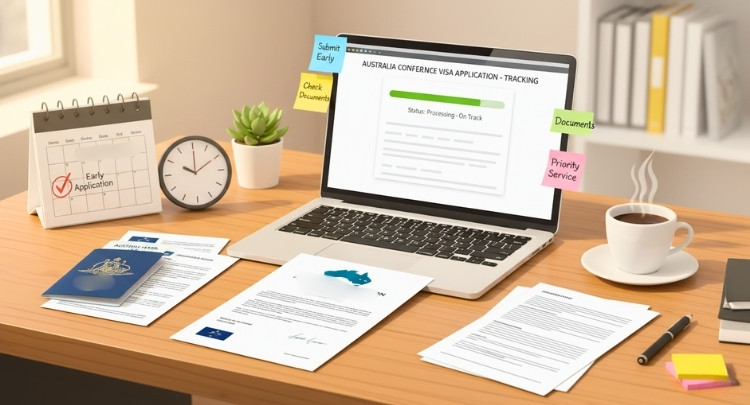
- Submit early: Applying early gives officers more time to review your case properly. It also helps you avoid last-minute stress or delays close to your conference date.
- Check all documents: Go through every paper before submission to make sure nothing is missing. Incomplete or outdated documents are a common reason for visa delays.
- Fill forms correctly: Review your visa forms for spelling, date, and number mistakes. Even one small error can slow down the approval or cause rejection.
- Use priority service: If your travel date is near, choose the priority processing option. It may cost more, but your visa will be processed faster.
- Keep copies ready: Always keep both printed and digital copies of your documents. This helps you quickly provide any extra papers if asked by immigration officers.
- Include an invitation letter: Add the official conference invitation from the event host. This proves your reason for travel and supports your visa request.
- Track your application: Regularly check the official portal for updates. This way, you can respond fast if the visa office asks for more details or documents.
Preparing early, checking every document, and using faster processing options can save you time and worry. To make the Australian conference visa processing time shorter, applicants should double-check their paperwork, avoid incomplete forms, and consider applying well before the event date.
Conference-Specific Document Checklist and How Missing Items Cause Delay
Before attending a conference, you must have all the right papers ready. Many travelers face delays only because one small paper is missing. Preparing these papers on time makes your trip easy and stress-free. Let’s look at what you need and how missing papers can slow you down.
1. Invitation Letter from Conference Organisers
Why it matters:
This letter proves that you are officially invited to the event. It’s often required for visa applications, travel funding, or employer approval.
Common mistakes:
- Forgetting the official letterhead or the organizer’s signature.
- Submitting a screenshot instead of the original PDF.
Possible delay: Your visa or travel approval can get rejected or delayed without proper proof of the event.

2. Conference Registration or Proof of Payment
Why it matters:
You need to show that you’ve paid the registration fee or are officially registered.
Common mistakes:
- Only keeping an email confirmation instead of the receipt.
- Forgetting to include your name or registration ID.
Possible delay: You may not get your badge on time or could face issues at the visa interview.
3. Travel Itinerary and Accommodation Plan
Why it matters:
This shows your travel purpose, flight dates, and where you’ll stay during the conference.
Common mistakes:
- Missing hotel booking confirmation.
- One-way flight ticket without a return plan.
Possible delay: Visa officers or organizers may think you don’t plan to return or lack proper arrangements.
4. Employer Letter or Proof of Leave (If Applicable)
Why it matters:
This confirms that your employer knows about your travel and has granted you permission.
Common mistakes:
- No official letterhead or signature.
- Dates that don’t match your travel period.
Possible delay: Embassy may think your travel purpose isn’t genuine or your job status is unclear.
5. Proof of Financial Capacity and Ties to Home Country
Why it matters:
You must show that you can afford the trip and that you plan to return home.
Common documents:
- Bank statements (last 3 to 6 months).
- Property or family proof.
- Job appointment letter.
Common mistakes:
- Submitting unclear or incomplete statements.
Possible delay: Visa denial due to doubts about your financial stability or return intentions.
6. Translations and Clear Scans
Why it matters:
Documents in languages other than English (or the embassy’s required language) must be translated and certified.
Common mistakes:
- Poor-quality scans.
- Forgetting to attach translated copies.
Possible delay: Application rejection or request for resubmission.
What to Do If Your Visa Hasn’t Been Decided and the Conference Date Is Near?
Waiting for a visa can be stressful, especially when your travel date is close. Many people feel unsure about what steps to take next. The good news is that there are a few simple things you can do to stay on track. Let’s go over what to do if your visa decision is still pending and your conference is coming up soon.
Contact the Local Visa Processing Office or Embassy
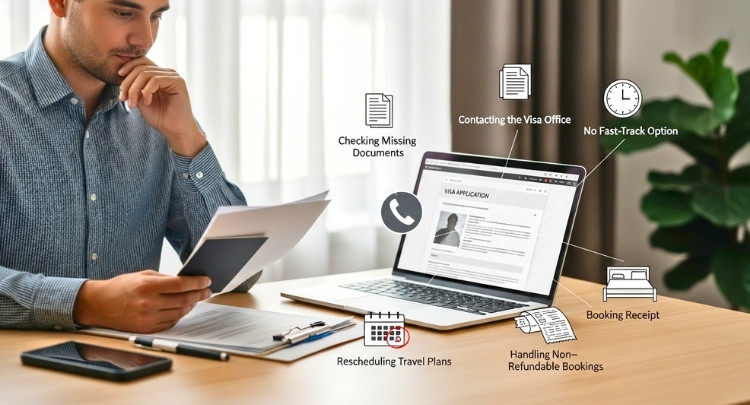
Reach out to the visa office or embassy that is handling your application. Ask them if they can share an update or give an idea of the current processing time. Sometimes they can confirm if your file is still under review or if extra documents are needed. Clear communication can help you plan your next move better.
Check If Extra Documents Are Needed
Many visa delays happen because of missing or unclear documents. Make sure all your forms, proof of funds, and invitation letters are complete and readable. If your visa decision is taking longer than expected, it helps in understanding rejection and delay factors for Australian conference visa, as missing documents or incomplete information are often common causes.
Consider Rescheduling Travel Plans
If your travel date is very near and you still don’t have your visa, it’s safer to delay your trip. Talk to your airline or travel agent about changing your ticket. Most airlines allow date changes for a small fee. Waiting until you get your visa will save you stress and extra costs later.
Handle Non-Refundable Bookings Carefully
If you have already booked a hotel or flight that cannot be refunded, contact them as soon as possible. Some hotels allow partial refunds or let you move your stay to a later date. Airlines might give travel credits. Always explain that your visa is delayed and you may need to adjust your plans.
Remember There Is No Guaranteed Fast Track
Many people think there is a quick way to get a visa approved faster, but there isn’t. No official fast track is available for visitor visas. However, being active and following up with the visa office helps. It shows that you are serious about your travel plans and can sometimes lead to quicker updates.
Waiting for a visa can feel hard when your event date is close. Staying calm and acting early can make a big difference. Contact your visa office, check your documents, and plan your travel wisely. Taking small steps now will help you be ready once your visa is approved.
FAQs About Why Is My Australia Conference Visa Taking So Long?
Waiting for your Australian conference visa can feel stressful, especially when your travel date is close. Many people have common questions about why their visa takes time and what can be done to handle the delay. Here are some clear and simple answers to the most asked questions that will help you understand the process better and avoid mistakes in the future.
How Long Does It Usually Take To Get An Australia Conference Visa?
The time to process your visa can change depending on the visa type and the number of applications. Normally, it takes a few weeks, but during busy times, it can take longer. Each application is checked carefully for documents, background, and purpose of travel. Applying early gives you enough time to handle any delay or extra document requests.
Can I Still Attend My Conference If My Visa Is Not Approved Yet?
If your visa is still under review, you cannot travel to Australia until it is approved. You should contact your conference organizers and explain your situation. Sometimes, they may allow you to join online or reschedule your presentation. It is always better to wait for your visa decision before booking non-refundable tickets or hotels.
What Happens If Immigration Asks For More Documents?
When the visa officer asks for more papers, it means they need extra proof before making a decision. You should send the requested documents quickly and make sure they are clear and correct. Delaying this step can make the process take even longer. Always check your email and immigration portal for any updates or messages from the visa office.
Can I Contact The Visa Office To Check My Application Status?
Yes, you can contact the visa office or embassy where you applied. Use their official contact form or helpline to ask for an update. Be polite and clear when sharing your application details. Sometimes they can tell you if your file is still being processed or if they need more information.
Does The Type Of Conference Affect Visa Approval Time?
Yes, the type and size of the conference can make a difference. If it’s a large international event, more people apply at the same time, which can slow down processing. Some conferences also require extra security checks for international visitors. Always include your official invitation and event details to help officers verify your purpose faster.
Can My Visa Be Refused After A Long Delay?
Yes, even if your visa takes a long time, it can still be refused if the documents or information are not correct. The delay often means your file needs more checks. If your visa is refused, you will receive a letter explaining the reason. You can reapply after fixing the problems mentioned in the letter.
Conclusion
Getting an Australian conference visa can take time for many small reasons, like missing papers, wrong details, or high application numbers. Staying patient and checking everything early helps you avoid these delays. Now you know the real answer to why is my Australia conference visa taking so long?
To make your next visa process smoother, apply early, double-check your papers, and track your application often. Always keep copies of every document and stay calm during the wait. Good luck with your upcoming conference in Australia!