
Planning a trip to Canada from Kenya is exciting, whether for tourism, study, or new opportunities. But before you book your flight, knowing what documents are needed to travel to Canada from Kenya? is essential. Having the right documents can make the difference between a smooth approval and unnecessary delays.
In simple terms, Kenyan travelers need a valid passport, visa application forms, financial proof, travel plans, and supporting documents like invitation letters or proof of ties. Each document shows your purpose and readiness to travel. Please continue reading to understand every requirement in detail and apply with confidence.
Visa-Free Entry to Canada for Kenyan Passport Holders—Is It True?
No, Kenyan passport holders cannot travel to Canada without a visa. A valid visa must be obtained before departure.
Why Kenya Is Not Visa-Exempt for Canada
Canada classifies countries into visa-required and visa-exempt categories. Kenya falls under the visa-required category, meaning:

- Kenyan citizens must apply for a Temporary Resident Visa (TRV) before traveling
- They are not eligible for visa-free entry
- They cannot use an Electronic Travel Authorization (eTA) unless they already hold a valid Canadian visa or meet specific conditions
This policy is set by Immigration, Refugees and Citizenship Canada to regulate entry and ensure proper screening of travelers.
What Documents are Needed to Travel to Canada from Kenya?
Kenyan citizens need a valid passport, completed visa application forms, passport photos, proof of financial support, travel itinerary, and supporting documents such as proof of ties and invitation letters to travel to Canada. Here are all the details about it:
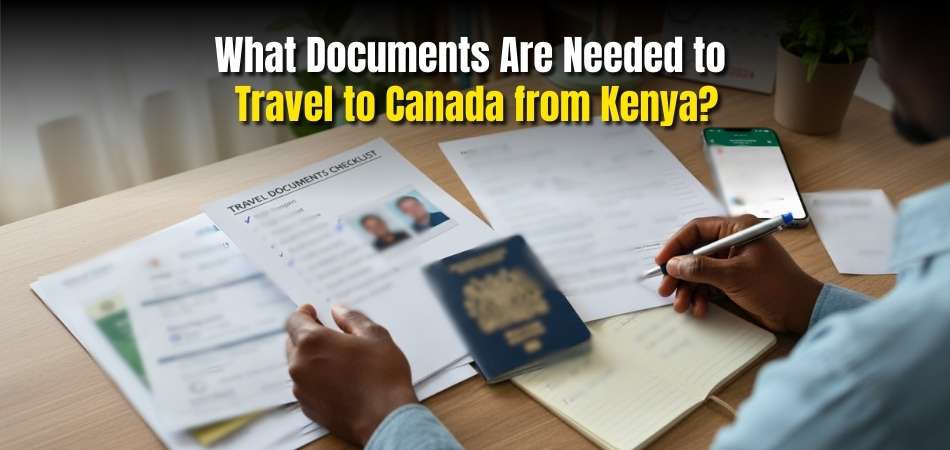
Valid Passport Requirements
Your passport is your primary identification document. It must:
- Be valid for at least 6 months beyond your intended travel date
- Have at least one or two blank pages
- Be in good physical condition
A damaged or nearly expired passport can lead to rejection.
Completed Visa Application Forms
You must fill out all required forms accurately, as this is a key part of understanding the visa necessity for Kenyan visiting Canada and ensuring your application meets immigration requirements. These typically include:
- Visa application form
- Family information form
Ensure all information matches your supporting documents. Even small inconsistencies can cause delays.
Passport-Sized Photographs
Recent images that adhere to Canadian regulations are required:
- Taken within the last 6 months
- White background
- Correct size and clarity
Proof of Financial Support
This is one of the most important requirements. You must prove that you can financially support your trip. Accepted documents include:
- Bank statements (last 6 months)
- Pay slips or employment letter
- Business registration documents (if self-employed)
- Sponsorship letter (if someone else is funding your trip)
Strong financial proof significantly increases approval chances.
Travel Itinerary and Flight Details
You should provide a clear travel plan, including:
- Flight reservation (not always a confirmed ticket)
- Hotel booking or accommodation details
This shows that your trip is well planned.
Invitation Letter (If Applicable)
If you’re visiting someone in Canada, include:
- A letter from your host
- Their contact details and status in Canada
- Purpose and duration of your visit
Proof of Ties to Kenya
Visa officers need to confirm that you will return to Kenya after your visit.
Examples include:
- Employment letter
- Business ownership documents
- Property ownership
- Family responsibilities
This is a critical factor in visa approval.
Travel History (If Any)
If you have traveled internationally before, include:
- Previous visas
- Entry and exit stamps
A strong travel history builds credibility.
Documents Required Based on Your Travel Purpose
The documents required to travel to Canada from Kenya vary based on your purpose, such as tourism, study, or work. Each visa type requires specific supporting documents to verify your intent, eligibility, and financial capacity for travel.
Tourist / Visitor Visa (Short-Term Travel)
In addition to the basic required documents, you may need:
- Travel itinerary (flight reservation)
- Proof of accommodation (hotel booking or host details)
- Cover letter explaining your travel purpose, especially if you plan to attend events like upcoming international conferences in Canada during your visit
- Proof of ties to Kenya
Student Visa (Study Permit)
If you plan to study in Canada, you must provide:
- Letter of acceptance from a recognized Canadian institution
- Proof of tuition payment
- Academic documents (certificates, transcripts)
- Proof of sufficient funds for tuition and living expenses
- Statement of purpose (study plan)
Work Visa (Work Permit)
For employment in Canada, additional documents include:
- Job offer letter from a Canadian employer
- Work contract
- Employer-related documents
- Labour Market Impact Assessment (LMIA) (if required)
- Proof of qualifications and work experience
Complete Canada Visa Document Checklist for Kenyan Citizens
A complete Canada visa document checklist helps Kenyan applicants ensure all required and supporting documents are prepared accurately. This checklist simplifies the application process and reduces the risk of delays or visa refusal due to missing information.
| Document | Required | Notes |
| Passport | ✔ | Must be valid |
| Application Forms | ✔ | Accurate and complete |
| Photos | ✔ | Must meet specifications |
| Bank Statements | ✔ | Proof of funds |
| Travel Itinerary | ✔ | Shows travel plan |
| Invitation Letter | Optional | For visits/business |
| Employment Letter | ✔ | Proof of ties |
| Travel History | Optional | Strengthens application |
| Biometrics | ✔ | Mandatory |
Additional Requirements for Kenyan Applicants
In addition to the required documents, Kenyan applicants must complete additional steps such as biometrics and, in some cases, medical examinations or police clearance certificates, depending on their travel purpose and length of stay.
These requirements are part of the Canada visa application process and help authorities assess your identity, health status, and background.
Biometrics Requirement in Kenya (Mandatory)
All applicants must provide biometrics, which include:
- Fingerprints
- Digital photograph
Biometrics are mandatory and are submitted at an authorized visa application center after completing your application.
Medical Examination (Conditional Requirement)
You may need a medical exam if:
- You plan to stay in Canada for an extended period
- You intend to work in healthcare or related fields
- Your application requires additional health screening
This ensures you meet Canada’s health and safety standards.
Police Clearance Certificate (Background Verification)
Some applicants may be required to provide:
- Proof of no criminal record
This document helps immigration authorities assess your background and eligibility for entry into Canada.
Where to Apply for a Canadian Visa in Kenya?
Kenyan citizens can apply for a Canada visa online through the official immigration portal and must visit an authorized visa application center in Kenya to submit biometrics and complete the process. Here are some specifics about it:
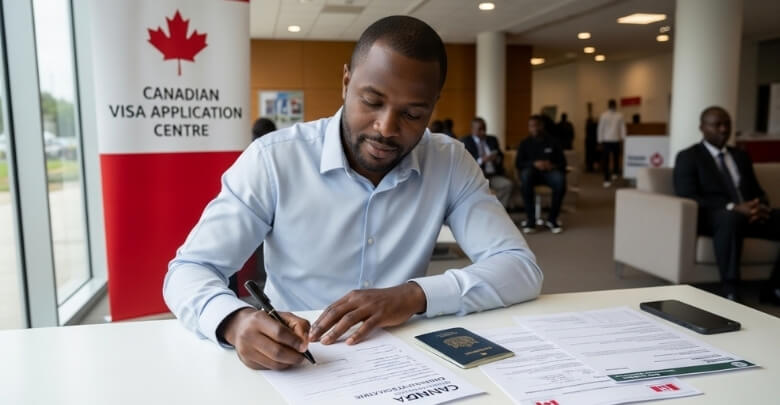
Apply Online (Recommended Method)
- Submit your application through the official immigration website
- Upload all required documents
- Pay the visa application fee
This is the fastest and most commonly used method.
Apply Through a Visa Application Center
After submitting your application online, you must visit an authorized visa application center in Kenya to:
- Provide biometrics (fingerprints and photo)
- Submit any additional documents if requested
Biometrics submission is mandatory for all applicants and must be done in person.
Step-by-Step Process to Apply for a Canada Visa from Kenya
Applying for a Canada visa from Kenya involves a clear sequence of actions, from choosing the right visa type to submitting biometrics and waiting for a decision. Let’s break down each step clearly.
Step 1: Identify the Right Visa Type
Start by selecting the correct visa category based on your travel purpose. Most applicants from Kenya apply for a visitor visa, study permit, or work permit. Choosing the right type ensures you prepare the correct forms and documents.
Step 2: Check the Full Eligibility Requirements
Before applying, review the eligibility criteria for your chosen visa type. Visa officers assess your purpose of travel, financial stability, immigration history, and your intention to return to Kenya after your stay.
Step 3: Gather All Required Supporting Documents
Prepare a complete and organized set of documents before starting your application. These include your passport, application forms, photos, proof of funds, and supporting documents relevant to your travel purpose.
Submitting incomplete or inconsistent documents is one of the most common reasons for delays or visa refusal.
Step 4: Complete the Online Visa Application
Apply through the official immigration portal and fill out all required forms accurately. The Canada visa application process for Kenyan applicants is primarily online, so ensure all information matches your documents to avoid processing issues.
Step 5: Pay the Visa and Biometrics Fees
After submitting your application, pay the required visa processing fee and biometrics fee. Keep your payment confirmation, as it may be required for tracking your application or attending your biometrics appointment.
Step 6: Book and Attend Your Biometrics Appointment
Schedule a biometrics appointment at an authorized visa application center in Kenya. You will provide fingerprints and a digital photograph. Biometrics are mandatory and are required for your application to move to the next stage.
Step 7: Submit Additional Documents if Requested
In some cases, you may be asked to provide additional documents such as medical exam results, police clearance certificates, or updated financial proof. Respond promptly to avoid delays in the application processing stage.
Step 8: Track Your Application and Wait for a Decision
After completing all steps, monitor your application status online. Processing times for a Canadian visa from Kenya typically vary, but most decisions are made within a few weeks, depending on application completeness and volume.
Quick View of Canada Visa Fees for Kenyan Applicants
Understanding the cost of applying for a Canadian visa from Kenya is essential for proper planning. Visa fees vary depending on the type of visa, and additional costs may apply based on your specific situation.
| Visa Type | Application Fee | Biometrics Fee | Total Estimated Cost |
| Visitor Visa | CAD 100 | CAD 85 | CAD 185 |
| Student Visa | CAD 150 | CAD 85 | CAD 235 |
| Work Visa | CAD 155 | CAD 85 | CAD 240 |
These are standard fees charged per applicant and are paid during the application process.
What Do These Fees Actually Cover?
- Application fee → Processing your visa request
- Biometrics fee → Fingerprints and photo for identity verification
These fees are mandatory and must be paid before your application is processed.
Additional Costs You Should Expect
Beyond the official fees, many applicants from Kenya often overlook these extra expenses:
- Medical examination fees (if required)
- Police clearance certificate charges
- Document translation or notarization
- Transport costs to the visa application center
- Optional visa assistance services
These can significantly increase your total cost depending on your case.
Practical Budget Insight for Kenyan Applicants
While the official visa fee may seem manageable, a realistic budget should account for:
- Visa + biometrics → around CAD 185 to CAD 240
- Additional expenses → varies widely
A safe estimate is to budget higher than the base fee to avoid interruptions during your application process.
How and When to Pay
- Payments are made online during application submission
- Fees are charged in Canadian dollars (CAD)
- You must keep your payment receipt as proof
Your application will not proceed until payment is completed.
How Much Bank Balance is Required for Canada Visa?
There is no fixed bank balance required for a Canada visa from Kenya, but applicants should typically show at least CAD 5,000 to CAD 10,000 or more to cover travel, accommodation, and daily expenses.
The required bank balance depends on your length of stay, travel purpose, and personal circumstances. Visa officers assess whether you can financially support yourself without working illegally or overstaying your visa.
Estimated Funds Based on Travel Duration
| Duration of Stay | Recommended Minimum Balance |
| 1–2 weeks | CAD 3,000 – CAD 5,000 |
| 3–4 weeks | CAD 5,000 – CAD 8,000 |
| 1–2 months | CAD 8,000 – CAD 12,000+ |
These are general estimates and may vary depending on your travel plans and lifestyle.
What Your Bank Balance Should Cover
Your financial proof must clearly show that you can afford:
- Flight tickets (round trip), with costs varying depending on ticket prices from Kenya to Canada at the time of booking
- Accommodation (hotel or host support)
- Daily living expenses (food, transport, activities)
The more detailed and realistic your financial plan, the stronger your application.
Accepted Proof of Funds for Kenyan Applicants
To support your bank balance, include:
- Bank statements (last 6 months)
- Pay slips or employment letter
- Business income records (if self-employed)
- Sponsorship letter (if someone else is funding your trip)
All documents should be consistent, verifiable, and up to date.
Important Financial Assessment Factors
Visa officers do not just look at the amount. They also evaluate:
- Consistency of income
- Source of funds
- Sudden large deposits (can raise concerns)
- Financial ties to Kenya
A stable financial history is often more important than a high balance.
Practical Tip to Strengthen Your Financial Proof
Instead of focusing only on the amount, aim to show:
- Regular income over time
- Clear savings pattern
- Logical connection between your income and travel plans
This builds trust and improves your chances of visa approval.
Common Mistakes to Avoid When Preparing Documents
Errors in preparing documents for a Canada visa from Kenya often include incomplete applications, inconsistent information, weak financial proof, and missing or incorrect supporting documents during the application process. To learn more, see the bullet point below:
- Incomplete applications: Missing forms or unanswered sections can delay processing or lead to rejection.
- Incorrect or inconsistent information: Details that do not match across documents may raise concerns during review.
- Weak financial proof: Insufficient funds or unclear income sources can reduce approval chances.
- Missing supporting documents: Failing to include required documents can make your application incomplete.
- Submitting fake or unverifiable documents: This can result in immediate refusal and possible future bans.
- Sudden large bank deposits: Unexplained funds may raise red flags for visa officers.
- Unclear travel purpose: Lack of a clear reason for visiting Canada can weaken your application.
- Poor document organization: Disorganized submissions make it harder for visa officers to assess your case.
- Missing document translations (if required): Documents not in English or French must be properly translated.

Pro Tips to Increase Your Visa Approval Chances
Improving your chances of getting a Canada visa from Kenya depends on submitting a complete, accurate, and well-supported application that clearly shows your travel purpose, financial stability, and intention to return home.
To strengthen your application and stand out during the review process, follow these practical tips:
- Write a clear and convincing cover letter: Explain your travel purpose, duration of stay, and plans in Canada to help visa officers understand your intentions.
- Provide strong proof of ties to Kenya: Documents such as employment letters, business ownership, or family responsibilities show that you intend to return after your visit.
- Organize your documents neatly: A well-structured application makes it easier for visa officers to review your case and reduces confusion.
- Be honest and consistent in all information: Any false or conflicting details can lead to immediate rejection or future restrictions.
- Include additional supporting documents when possible: Extra documents, such as travel history or financial evidence, can strengthen your credibility.
- Show stable and consistent financial records: Avoid sudden large deposits and ensure your bank statements reflect a clear and reliable income pattern.
- Clearly define your travel purpose: Whether for tourism, study, or business, your reason for visiting Canada should be specific and well-supported.
Processing Time for Canada Visa in Kenya
The processing time for a Canada visa from Kenya typically ranges from 2 to 8 weeks, depending on application completeness, biometrics submission, and verification requirements.
Processing time begins after you submit your application and complete biometrics. While most applications are processed within a few weeks, timelines can vary based on several factors.
Typical Processing Timeline
- Standard processing time: 2 to 8 weeks
- Some applications may take longer depending on individual circumstances
Common Reasons for Delays
- High application volume: Increased demand can slow down processing times.
- Missing or incomplete documents: Applications with missing information may require additional review.
- Additional verification or background checks: Some applications require further assessment before a decision is made.
How to Avoid Delays
- Submit a complete and accurate application
- Double-check all documents before submission
- Respond quickly to any additional document requests
Processing time for a Canada visa from Kenya is not fixed, but submitting a complete and well-prepared application can help ensure faster processing and reduce the risk of delays.
What Happens After You Arrive in Canada from Kenya?
After arriving in Canada from Kenya, travelers must go through border control where officers verify documents, confirm travel purpose, and decide final entry. You may be asked questions and required to show supporting documents.

Immigration and Border Control Check
When you land in Canada, you will first go through immigration screening:
- Present your passport and valid visa
- Answer questions about your travel purpose
- Provide details about your stay
Border officers from Canada Border Services Agency verify your eligibility to enter.
Documents You May Be Asked to Show
Even if your visa is approved, you may still need to present supporting documents such as:
- Proof of funds
- Return ticket
- Hotel booking or host details
- Invitation letter (if applicable)
These documents confirm that your visit matches your application.
Questions You May Be Asked
Border officers may ask simple but important questions like:
- Why are you visiting Canada?
- How long will you stay?
- Where will you stay?
- Do you have enough funds?
Answer clearly and honestly to avoid complications.
Customs and Baggage Declaration
After immigration, you will go through customs:
- Declare items you are bringing into Canada
- Follow regulations on restricted or taxable goods
Failure to declare items properly can result in fines or penalties.
Final Entry Decision
It is important to understand that:
- A visa allows you to travel to Canada
- The final decision to enter is made at the border
If everything is in order, you will be allowed entry and given a stay duration.
Frequently Asked Questions
Beyond paperwork and application procedures, understanding the Canada visa process from Kenya frequently raises more questions. These frequently asked questions address common concerns and provide clear, practical answers to help Kenyan applicants prepare confidently and avoid confusion.
How Long Can Kenyan Citizens Stay In Canada On A Visitor Visa?
Kenyan citizens are typically allowed to stay in Canada for up to 6 months per visit, depending on the duration granted by the border officer at entry.
What Is The Minimum Age To Apply For A Canada Visa From Kenya?
There is no minimum age requirement, but applicants under 18 must apply with the support of a parent or legal guardian and provide additional consent documents.
Where Can I Track My Canada Visa Application Status From Kenya?
You can track your application status through the official Canada immigration online portal using your application number and account login details.
Why Is A Cover Letter Important For A Canada Visa Application?
A cover letter helps explain your travel purpose, plans, and intentions clearly, making it easier for visa officers to understand your application and assess your credibility.
Can I Reapply Immediately After A Canada Visa Refusal?
Yes, you can reapply at any time, but it is important to address the reasons for refusal and strengthen your application before submitting again.
What Happens If My Passport Expires During The Visa Process?
If your passport expires during processing, it may delay your application. You may be required to renew your passport and update your application details.
How Early Should I Apply For A Canada Visa From Kenya?
It is recommended to apply at least 1 to 3 months before your planned travel date to allow enough time for processing and any additional requirements.
Which Language Should My Documents Be Submitted In?
All documents must be submitted in English or French. If your documents are in another language, you must provide a certified translation along with the original copies.
Conclusion
Planning your journey becomes much easier once you clearly understand what documents are needed to travel to Canada from Kenya. From passports to financial proof and supporting documents, each requirement plays a key role in building a strong visa application.
By preparing your documents carefully and following the right process, you can improve your approval chances and avoid delays. Stay organized, be honest, and ensure everything is complete to make your travel to Canada smooth and stress-free.