Language diversity is a beautiful reflection of human culture, yet it can also create barriers during global meetings or professional gatherings. That’s where conference interpreting comes in. It ensures that every participant, regardless of their native language, can understand and contribute meaningfully to discussions. Whether the event is a multinational business forum or an international summit, interpreting helps every voice be heard clearly.
This guide explains what are the types of conference interpreting, the essential skills interpreters need, the equipment used, and how to choose the right type for your event. It also explores the growing influence of technology and the challenges that interpreters face today.
What Are the Types of Conference Interpreting?
Conference interpreting features several methods, each designed for different event settings, audience sizes, and communication needs. Understanding these types helps you plan multilingual events more efficiently. Explore the following options to choose the best interpreting method for your upcoming conferences.
Simultaneous Interpreting
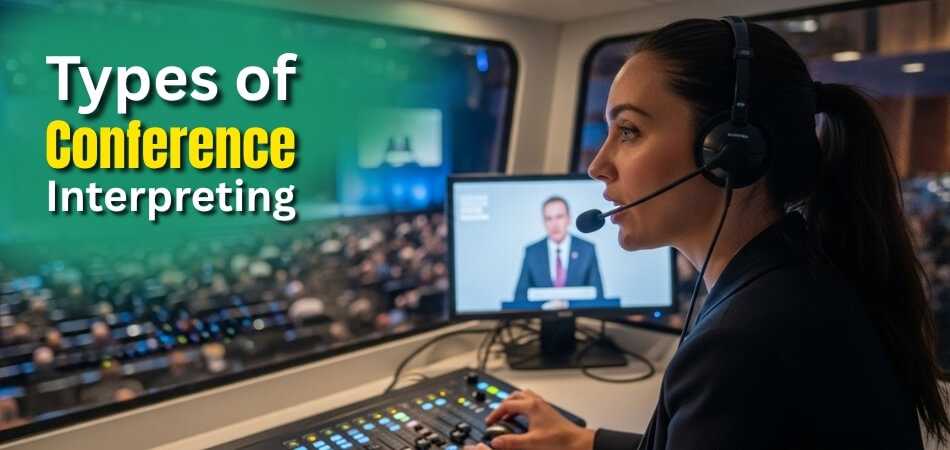
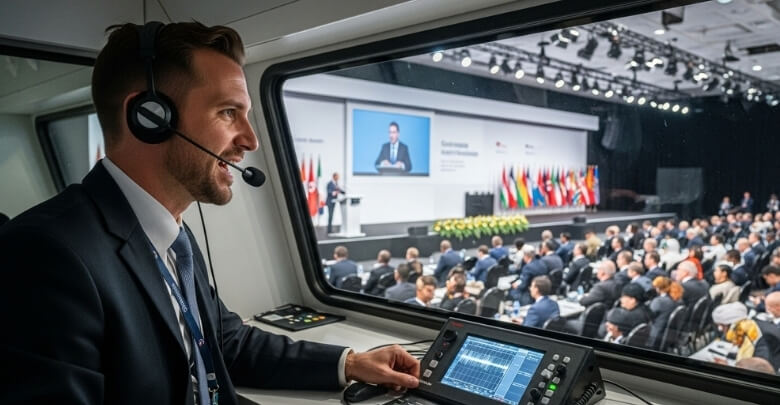
Simultaneous interpreting happens in real time. The interpreter listens through a headset and translates the speech into another language almost instantly. Listeners hear the translation through their headsets with only a one- or two-second delay.
Where it’s used:
- Large international conferences
- Political summits (UN, EU, G20, etc.)
- Multilingual corporate events
Advantages:
- Keeps the flow of speeches uninterrupted
- Saves time for large audiences
- Enables multiple languages simultaneously
Considerations:
- Requires soundproof booths, microphones, and headsets
- Needs at least two interpreters per language pair working in shifts
Example:
During the United Nations General Assembly, interpreters in booths deliver real-time translations so hundreds of delegates can listen in their preferred language. As you plan to attend the upcoming conferences, simultaneous interpreting often becomes the top choice for ensuring smooth multilingual communication at scale.
Consecutive Interpreting
Here, the speaker pauses every few sentences to allow the interpreter to convey the message in the target language. Interpreters rely on note-taking techniques to capture details accurately.
Where it’s used:
- Press conferences
- Board meetings or small seminars
- Interviews and training sessions
Advantages:
- Does not need specialized equipment
- Allows time for clarity and tone accuracy
- Ideal for smaller, more interactive groups
Considerations:
- Lengthens the total event duration because of pauses
- May interrupt natural speech rhythm in large gatherings
Example:
A CEO presents a new product to international investors. After each key point, the interpreter relays the message so all investors fully understand before asking questions.
Whispered Interpreting (Chuchotage)
In whispered interpreting, the interpreter sits or stands next to one or two listeners and whispers the translation simultaneously as the speaker talks.
Where it’s used:
- Private meetings with a few participants
- VIP briefings or small negotiations
Advantages:
- Minimal setup, no booth required
- Fast and discreet solution
Considerations:
- Not suitable for large or noisy rooms
- Can strain the interpreter’s voice over long periods
Example:
During a diplomatic visit, an interpreter quietly translates the host’s remarks for one foreign delegate without disturbing others.
Relay Interpreting
Relay interpreting involves multiple interpreters. One interpreter translates the original speech into a common “pivot” language, and others interpret from that language into different target languages.
Where it’s used:
- Large multilingual events with rare languages
- Regional conferences involving many linguistic groups
Advantages:
- Enables interpretation for languages with few direct pair interpreters
- Maintains event inclusivity
Considerations:
- Increases lag time slightly
- Requires strong coordination between teams
Example:
At a global education summit, a Korean speaker’s words are first interpreted into English. Then, other interpreters translate from English into French, Spanish, and Arabic.
Liaison or Bilateral Interpreting
This form is more conversational. The interpreter translates back and forth between two languages, facilitating direct dialogue.
Where it’s used:
- Business negotiations
- Legal consultations
- Diplomatic meetings
Advantages:
- Ideal for two-way communication
- Encourages natural conversation flow
- Minimal technical setup
Considerations:
- Time-consuming for long discussions
- Requires exceptional listening and recall skills
Example:
During a trade mission, a liaison interpreter helps a buyer and seller understand each other’s terms in real time.
Remote and Hybrid Interpreting
Modern events often take place online or in mixed formats. Remote interpreting happens entirely online, while hybrid interpreting combines in-person and virtual participation.
Where it’s used:
- Webinars, online training, and hybrid summits
- Global corporate meetings via Zoom or similar platforms
Advantages:
- Cost-efficient, no travel or physical booths
- Flexible for dispersed participants
- Scalable to large audiences
Considerations:
- Relies heavily on stable internet and audio quality
- Technical issues can interrupt communication
Example:
A multinational company hosts an online product launch with interpreters working remotely from different continents, ensuring clients worldwide can follow in real time.
Each interpreting type offers a unique benefit suited to specific settings. By understanding how these modes differ, event organizers can ensure seamless, inclusive communication that connects every participant regardless of language.
Comparing the Different Types (Quick Comparison)
Choosing the right interpreting style depends on event goals, audience size, and technical setup. This quick comparison helps organizers identify which method fits their needs best. Review the table below to decide which interpreting type matches your event requirements.
| Type | Typical Setting | Equipment Needed | Audience Size | Ideal For |
| Simultaneous | Large international conferences | Booths, headsets, microphones | 100+ | Multilingual summits |
| Consecutive | Small events, press meetings | None | Up to 50 | Seminars or briefings |
| Whispered (Chuchotage) | VIP or private meetings | None | 1–3 | Diplomatic visits |
| Relay | Multilingual events | Full booth setup | Large | Global summits |
| Liaison/Bilateral | Business or legal talks | Minimal | 2–10 | Negotiations |
| Remote/Hybrid | Virtual or hybrid events | Software and headsets | Variable | Online events |
This quick guide gives a clear overview of how different interpreting modes serve various event types. By comparing formats, organizers can confidently select the method that ensures smooth, inclusive, and efficient communication for every participant.
Importance of Conference Interpreting in Global Events
Language plays a vital role in how ideas are shared, understood, and acted upon. As international events bring together participants from different regions and languages, effective communication becomes essential. Let’s explore why conference interpreting is key to successful global interaction and move toward understanding its main types next.

Promoting Inclusive Communication
Conference interpreting ensures that every participant can follow discussions in their native language. It removes linguistic barriers that often exclude non-native speakers. This inclusivity empowers people from diverse regions to share insights, ask questions, and contribute meaningfully to global conversations.
Preventing Misunderstandings
In global meetings or diplomatic negotiations, even a single mistranslated phrase can cause confusion or conflict. Professional interpreters help preserve tone, accuracy, and intent. Their skill ensures that messages stay precise, fostering smoother dialogue and maintaining trust among international participants.
Enhancing Participation and Engagement
When attendees understand content clearly, they engage more confidently. Conference interpreting helps delegates listen, respond, and collaborate without hesitation. This leads to more vibrant discussions, stronger networking, and greater value for both speakers and participants throughout the event.
Building Trust and Professionalism
A multilingual event that provides interpreting reflects inclusivity and organization. Participants feel respected when communication accommodates their languages. Organizers, in turn, earn credibility and a reputation for professionalism by prioritizing clear and equal communication for all attendees.
Supporting Global Collaboration
Interpreters make it possible for experts, leaders, and innovators from around the world to exchange ideas. Whether in science, business, or education, interpreting helps bridge cultural gaps and encourages cooperation, paving the way for long-term partnerships and shared progress.
Conference interpreting stands as the foundation of mutual understanding in global events. It promotes inclusion, trust, and cooperation, ensuring that every voice is heard clearly. With this foundation established, let’s now move to explore the main types of conference interpreting that make such communication possible.
Equipment Used in Conference Interpreting
Every successful interpreting session depends on reliable technology. The right setup ensures clear communication, accurate delivery, and minimal disruption. Let’s explore the essential tools interpreters and organizers rely on, and then move on to understanding the vital skills professionals bring to the job.
- Soundproof Booths: These booths keep interpreters isolated from background noise, ensuring clear focus. They also provide optimal sound monitoring and privacy, making them essential for simultaneous or relay interpreting during large-scale events.
- Headsets and Microphones: Interpreters use high-quality microphones to deliver precise audio output, while delegates listen through wireless headsets. Together, they maintain consistent sound clarity throughout the entire conference.
- Audio Control Consoles: These devices manage multiple sound channels, allowing interpreters to adjust volume and switch languages quickly. Control consoles also help technicians maintain audio balance and eliminate feedback issues.
- Infrared or FM Transmission Systems: These systems transmit the interpreter’s voice securely to listeners. Infrared options are often used in confidential settings like diplomatic meetings to prevent interference or eavesdropping.
- Interpretation Platforms and Software: For remote and hybrid events, tools such as Interprefy, Kudo, and Zoom Interpretation support real-time multilingual communication with minimal delay and stable audio quality.
- Backup and Monitoring Tools: Backup power supplies, spare devices, and technical oversight ensure the session continues smoothly even if a primary system fails. This preparation prevents costly interruptions.
Technology plays a key role in conference interpreting, ensuring messages are transmitted accurately and clearly. With dependable tools in place, interpreters can focus fully on communication quality. Next, let’s look at the professional skills that make interpreters truly exceptional.
Skills and Qualities of a Professional Conference Interpreter
Conference interpreting is not just about translating words; it’s about conveying meaning, tone, and intent with precision and grace. A skilled interpreter combines language mastery with cultural awareness and focus. Let’s explore the key qualities that define the role of a conference interpreter before moving on to how to choose the right interpreting type.
Exceptional Listening and Memory
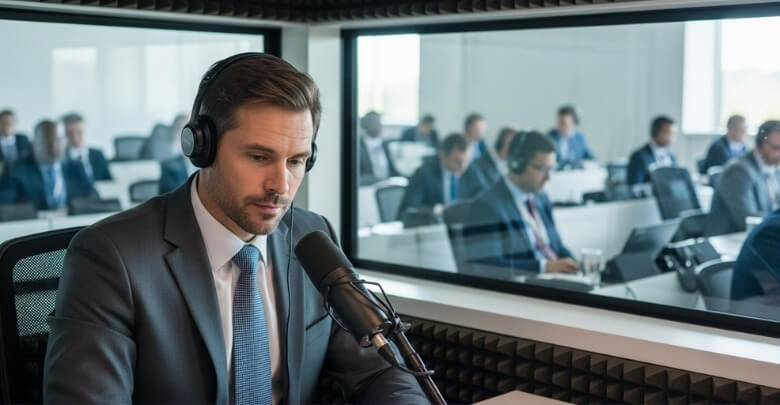
Interpreters must listen, process, and translate speech in real time without losing meaning. This requires sharp focus, strong memory, and the ability to recall key phrases instantly. They balance hearing one language while speaking another, often within seconds.
Advanced Linguistic Accuracy
Accuracy goes far beyond basic vocabulary. Professional interpreters master idioms, technical terms, and tone to preserve the speaker’s intent. Their precise word choice ensures the message remains faithful to its original meaning, regardless of subject complexity.
Cultural Intelligence
Cultural context can transform the meaning of a phrase. Skilled interpreters understand gestures, expressions, and sensitivities unique to each language. They adapt messages to align with cultural expectations, maintaining respect and clarity in diverse international settings.
Emotional Control and Stamina
Conference sessions can last for hours, covering intense or sensitive topics. Interpreters must stay calm, focused, and clear-headed under pressure. Emotional control allows them to maintain consistent delivery, even during challenging discussions or mentally demanding events.
Team Collaboration
In simultaneous interpreting, professionals often work in pairs or small teams. They alternate regularly to maintain sharpness and prevent fatigue. Team coordination ensures smooth transitions, consistent tone, and sustained accuracy throughout long sessions.
Continuous Learning
The interpreting field evolves as global industries grow. Professionals constantly update their knowledge of new terms, emerging technologies, and cultural shifts. This commitment to learning helps them adapt quickly to new topics and maintain their credibility.
The role of a conference interpreter is a blend of technical skill, cultural insight, and mental endurance. These qualities turn simple translation into seamless communication. Next, let’s explore how event planners can choose the right interpreting type for their specific needs.
How to Choose the Right Type of Interpreting?
Selecting the best interpreting mode requires understanding your event’s structure, audience, and technical setup. The right choice ensures clarity, engagement, and smooth delivery. Explore these key factors to help you choose wisely before we uncover the real-world challenges interpreters often face.
Evaluate Audience Size and Diversity
The number and background of participants largely determine the ideal interpreting style. Large, multilingual audiences work best with simultaneous or relay interpreting for real-time communication. Smaller, interactive groups benefit from consecutive or liaison interpreting, allowing more natural pauses and engagement.
Determine Technical and Budget Limits
Budget and infrastructure play an important role in selecting a mode. Simultaneous interpreting is efficient but requires booths, microphones, and headsets. For smaller budgets, whispered or liaison interpreting offers quality results without heavy equipment, ensuring accessibility for intimate gatherings.
Assess Event Style
Event format influences interpreting needs. Formal keynotes and large conferences demand continuous flow, where simultaneous interpreting keeps momentum. For workshops, training sessions, or panel discussions, consecutive or liaison interpreting encourages participation and dialogue while maintaining a clear understanding.
Consider the Number of Languages
Events involving several languages or rare combinations require relay interpreting to ensure complete coverage. Using an intermediary language allows interpreters to communicate effectively, keeping all participants informed even when direct language pairs are unavailable.
Check Internet and Venue Readiness
Technical reliability is crucial for hybrid or remote events. Organizers should verify platform compatibility, stable internet connections, and quality audio equipment. Proper setup guarantees that interpreters can work efficiently without interruptions or delays during live sessions.
Match Interpreter Expertise
Every industry uses specific terminology and tone. Choosing interpreters familiar with your subject, whether it’s medical, legal, or diplomatic, ensures message accuracy. Their expertise adds professionalism and credibility to your event, preventing costly misunderstandings.
By carefully weighing these factors, organizers can select the interpreting type that best suits their audience and objectives. With the right choice made, it’s time to explore the practical challenges interpreters often encounter during real-world conferences.
Common Challenges in Conference Interpreting
Even with strong preparation and expertise, interpreters face many challenges during live events. These issues can affect accuracy, timing, and communication flow. Let’s explore the most common challenges in conference interpreting before moving forward to understand how the future of this profession is evolving.
Cognitive Overload
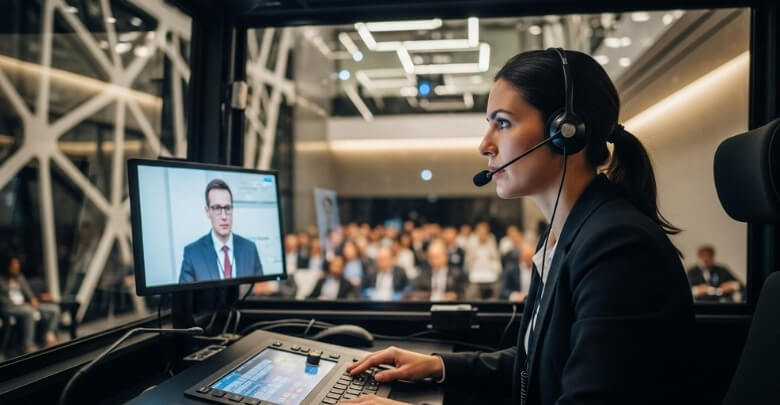
Interpreters listen, process, and speak almost simultaneously while staying true to the speaker’s message. This intense mental multitasking causes fatigue over time. To manage it, interpreters usually work in pairs and rotate frequently to maintain focus and consistent performance.
Technical Issues
Sound clarity and connection stability are critical for successful interpreting. Poor audio systems, weak internet, or faulty headsets can disrupt interpretation and lead to confusion. Regular technical checks, professional equipment, and onsite technicians help reduce these risks significantly.
Rapid or Unclear Speakers
Fast-paced speech, unfamiliar accents, or overlapping voices make accurate interpreting challenging. When speakers fail to pause or enunciate, interpreters struggle to keep up. Providing clear speaking guidelines and rehearsal time can greatly improve interpretation quality and timing.
Specialized or Unfamiliar Topics
Events covering technical subjects such as medical, scientific, or legal fields require interpreters to prepare extensively. Complex jargon can slow interpretation if not studied beforehand. Briefings, research, and access to event materials help ensure clarity and precision.
Cultural or Contextual Nuances
Language reflects culture, and meanings can shift across regions. A phrase that sounds neutral in one language might be sensitive in another. Skilled interpreters rely on cultural understanding and context awareness to ensure the message stays appropriate and accurate.
Stress and Time Pressure
Conference interpreting demands intense focus for long periods. Constant attention, combined with fast-paced delivery, can lead to stress or burnout. Scheduled breaks, team support, and mental preparation help interpreters sustain energy and maintain clarity throughout events.
Recognizing these challenges in conference interpreting helps event planners and interpreters prepare effectively. By addressing these issues early, conferences can maintain seamless communication. Next, let’s look ahead at how technology and evolving trends are shaping the future of conference interpreting.
Future of Conference Interpreting
The interpreting field is transforming rapidly due to advancements in technology and changing global communication needs. Professionals are adapting to new platforms and methods to meet these evolving demands. Let’s explore the trends shaping the future of conference interpreting before we move to address frequently asked questions.
Rise of AI-Assisted Interpreting
Artificial intelligence now supports interpreters through live captioning and real-time translation tools. While these systems enhance accessibility, human interpreters remain essential for conveying emotion, tone, and cultural nuance that machines still cannot replicate with full accuracy.
Growth of Hybrid and Remote Formats
Since global events have shifted online, hybrid and remote interpreting have become common. This format enables flexibility and wider participation. Future conferences will likely continue integrating physical and digital elements to create inclusive, borderless communication experiences.
Increased Demand for Rare Language Combinations
Globalization has expanded the need for diverse language coverage. As new markets rise, interpreters for languages such as Bengali, Swahili, and Vietnamese are in higher demand. Relay interpreting will keep evolving to support these expanding linguistic requirements effectively.
Focus on Environmental Sustainability
The growing emphasis on sustainability encourages event organizers to adopt remote interpreting. By reducing travel needs and material use, online solutions help conferences lower their carbon footprint while maintaining accessibility and communication quality across continents.
Ongoing Professional Development
Technology and communication styles evolve constantly. Interpreters must stay updated through continued education and certification. Regular training ensures they maintain precision, adapt to emerging platforms, and uphold the highest professional standards in every interpreting environment.
The future of conference interpreting blends human skill with technological innovation. Interpreters will use advanced tools to improve efficiency while preserving cultural depth. With these changes underway, let’s now answer some frequently asked questions to bring further clarity to this evolving profession.
Frequently Asked Questions
Conference interpreting raises many questions for organizers and attendees who want their events to run smoothly across languages. This section clears up the most common doubts. Explore these practical answers before concluding with our final thoughts on effective multilingual communication.
What Is Conference Interpreting?
Conference interpreting is the process of translating spoken communication in real time during multilingual events. It allows participants from different linguistic backgrounds to understand each other and exchange ideas effectively without language barriers.
How Does Conference Interpreting Differ From Translation?
Translation deals with written texts, while interpreting focuses on live speech. Interpreters must listen, process, and deliver messages instantly, whereas translators can work with more time for research and revision.
What Qualifications Should a Conference Interpreter Have?
Professional interpreters typically hold specialized training or certification, such as AIIC membership or university degrees in interpretation. They also maintain subject expertise in fields like law, business, or science for accurate delivery.
How Long Can an Interpreter Work Without a Break?
Simultaneous interpreters usually work in pairs and rotate every 20 to 30 minutes. Continuous interpreting requires intense concentration, so regular breaks help maintain accuracy and prevent fatigue.
What Is the Difference Between Consecutive and Simultaneous Interpreting?
In consecutive interpreting, the speaker pauses so the interpreter can translate. In simultaneous interpreting, translation happens instantly while the speaker continues. The latter saves time but requires more equipment and coordination.
Why Is Preparation Important Before an Event?
Preparation allows interpreters to learn terminology, speaker styles, and agenda topics in advance. This reduces hesitation during live sessions and ensures smoother, contextually accurate interpretations.
How Do Interpreters Handle Jargon or Specialized Topics?
They study glossaries, review presentation materials, and research key terms beforehand. Familiarity with the event’s subject matter allows interpreters to deliver precise, relevant translations without losing meaning.
Can Remote Interpreting Match the Quality of In-person Interpreting?
Yes, with stable internet, quality microphones, and a good technical setup, remote interpreting can be equally effective. However, in-person setups may still offer better audience connection and visual cues.
How Are Interpreters Assigned for Multilingual Conferences?
Event organizers hire teams covering each required language pair. Relay interpreting may be used when direct language combinations are unavailable, ensuring full language coverage for all participants.
What Are the Common Mistakes to Avoid When Organizing Interpreting Services?
Skipping pre-event testing, hiring underqualified interpreters, or ignoring technical support can lead to confusion. Early planning, clear communication, and professional coordination ensure successful multilingual event execution.
Concluding Lines
Conference interpreting is the cornerstone of international communication, turning language diversity into an opportunity for connection and understanding. It enables collaboration, innovation, and diplomacy to thrive by ensuring that every idea is shared clearly, no matter the language or culture involved.
From simultaneous interpreting at global summits to liaison or remote methods for smaller teams, each approach serves a distinct purpose. Understanding what are the types of conference interpreting helps organizers choose the best method for their events. Behind every seamless multilingual exchange are skilled interpreters who blend linguistic accuracy, cultural awareness, and technical ability, making it possible for every participant to have a true voice in global dialogue.