
Vancouver, British Columbia continues to rise as a leading destination for medical innovation, public health leadership, and digital health advancement. From world-class research institutions to a thriving biotech ecosystem, the city attracts global healthcare professionals every year. That’s why exploring the top 10 health care conferences in Vancouver is essential for clinicians, researchers, and healthcare executives planning their professional growth.
The top 10 health care conferences in Vancouver 2026 include major gatherings such as the 16th Global Conference on Medical and Health Science by Global Conference Alliance and the Annual Healthcare Summit. These events connect experts across clinical research, AI in healthcare, and public health policy. Continue reading to discover which conference aligns best with your goals.
Top 10 Health Care Conferences in Vancouver 2026 (Quick Overview)
Top health care conferences in Vancouver from April to December 2026 bring together clinicians, nurses, researchers, and healthcare leaders to explore medical innovation, patient care, public health, and health infrastructure. Use the table below to quickly compare dates, focus areas, and locations for planning.
| Date | Conference Name | Location | Specialty |
| April 10-12, 2026 | 16th Global Conference on Medical and Health Science (GCMHS) | Vancouver, Canada | General medicine, clinical research, public health, health sciences |
| May 25-26, 2026 | Annual Healthcare Summit | Coast Coal Harbour Vancouver Hotel, Vancouver, Canada | Healthcare leadership, hospital strategy, policy, system management |
| April 10-12, 2026 | 17th Global Conference on Nursing and Healthcare Management (GCNHM) | Vancouver, Canada | Nursing practice, nursing leadership, healthcare administration, quality of care |
| May 29-30, 2026 | Annual Nurse Practitioner Conference | Vancouver, Canada | Nurse practitioner practice, primary care, diagnostics, prescribing, evidence-based care |
| April 10-12, 2026 | 12th Global Conference on Healthcare Policy and Management (GCHPM) | Vancouver, Canada | Health policy, healthcare management, governance, health systems planning |
| May 31 – June 2, 2026 | CHES British Columbia Chapter Conference | Vancouver, Canada | Healthcare engineering, biomedical systems, hospital facilities, operations |
| June 18 – 19, 2026 | Annual Forum on Healthcare Infrastructure | Vancouver, British Columbia, Canada | Healthcare infrastructure, hospital design, capital projects, system modernization |
| August 21-22, 2026 | International Conference on Advancement in Healthcare Technology and Biomedical Engineering | Annacis Research Centre, Vancouver, BC, Canada | Biomedical engineering, digital health, medical devices, AI in healthcare, health tech |
| Sep 18 – 28, 2026 | Cardiology & Family Medicine Cruise Conference | Vancouver, British Columbia, Canada | Cardiology, family medicine, preventive care, chronic disease management |
| October 25-26, 2026 | International Conference on Medical and Health Sciences | Vancouver, Canada | Multidisciplinary medicine, epidemiology, translational health research |
These Vancouver health care conferences in 2026 offer practical learning, credible networking, and current insights across clinical medicine, nursing, biomedical engineering, and healthcare leadership. Pick events that match your role, budget, and specialty, then book early as Vancouver, British Columbia is a high-demand destination for healthcare professionals.
Top 10 Health Care Conferences in Vancouver (Details)
Vancouver, British Columbia, Canada will host leading health care conferences in 2026 across clinical medicine, nursing, health policy, biomedical engineering, and healthcare leadership. This curated list highlights the top 10 events with key dates, specialties, and audiences to help healthcare professionals plan education and networking opportunities effectively.

1. 16th Global Conference on Medical and Health Science (GCMHS)
- Date: April 10–12, 2026
- Location: Vancouver, British Columbia, Canada
- Specialty: General medicine, clinical research, public health, health sciences
- Best for: Physicians, researchers, public health professionals
The GCMHS in Vancouver brings evidence-based work in medicine and public health into one space, with sessions focused on clinical research and real-world health outcomes. As one of the notable health care conferences in Vancouver, it features physician-researchers, public health specialists, and academic presenters, along with peer-led paper talks and discussion panels.
2. Annual Healthcare Summit
- Date: May 25–26, 2026
- Location: Coast Coal Harbour Vancouver Hotel, Vancouver, British Columbia, Canada
- Specialty: Healthcare leadership, hospital strategy, policy, system management
- Best for: Executives, administrators, policy leaders
Hosted in Vancouver, this summit is built for decision-makers tackling system strategy, policy direction, and hospital performance. The agenda is typically shaped by health system executives and hospital leaders, with practical insights also shared by policy voices and operational experts who work directly in Canadian healthcare.
3. 17th Global Conference on Nursing and Healthcare Management (GCNHM)

- Date: April 10–12, 2026
- Location: Vancouver, British Columbia, Canada
- Specialty: Nursing practice, leadership, healthcare administration, quality of care
- Best for: Nurse leaders, educators, healthcare managers
GCNHM highlights nursing leadership and healthcare management topics such as staffing, patient safety, and care quality improvement. Expect a speaker lineup that usually blends nurse educators and clinical leaders, plus healthcare administrators who bring hands-on experience from hospital and community care settings.
4. Annual Nurse Practitioner Conference
- Date: May 29–30, 2026
- Location: Vancouver, British Columbia, Canada
- Specialty: NP practice, primary care, diagnostics, prescribing, evidence-based care
- Best for: Nurse practitioners, primary care teams
This Vancouver NP conference prioritizes practical primary care updates, from diagnostics to prescribing and chronic disease management. Sessions are commonly delivered by experienced NPs and clinical educators, often supported by primary care clinicians who share case-based approaches you can apply in day-to-day practice.
5. 12th Global Conference on Healthcare Policy and Management (GCHPM)
- Date: April 10–12, 2026
- Location: Vancouver, British Columbia, Canada
- Specialty: Health policy, healthcare management, governance, systems planning
- Best for: Policymakers, health managers, researchers
GCHPM in Vancouver explores governance and health systems planning, with conversations around financing, regulation, and policy reform. Instead of purely clinical talks, you’ll typically see sessions led by health policy researchers, public-sector leaders, and healthcare managers focused on system-level decisions.
6. CHES British Columbia Chapter Conference
- Date: May 31–June 2, 2026
- Location: Vancouver, British Columbia, Canada
- Specialty: Healthcare engineering, biomedical systems, hospital facilities, operations
- Best for: Facility managers, biomedical engineers, operations leaders
CHES BC in Vancouver is designed for the people who keep hospitals running safely and efficiently, including engineering, facilities, and biomedical teams. Presentations are usually delivered by facility directors, healthcare engineers, and biomedical technology specialists, with applied sessions on standards, operations, and equipment management.
7. Annual Forum on Healthcare Infrastructure
- Date: June 18–19, 2026
- Location: Vancouver, British Columbia, Canada
- Specialty: Hospital design, capital projects, infrastructure modernization
- Best for: Infrastructure leaders, planners, hospital administrators
This Vancouver infrastructure forum focuses on hospital expansion, modernization planning, and capital investment decisions. The speaker mix often includes capital project leads and healthcare planners, alongside hospital operations leaders who translate infrastructure strategy into patient flow improvements and system resilience.
8. International Conference on Advancement in Healthcare Technology and Biomedical Engineering
- Date: August 21–22, 2026
- Location: Annacis Research Centre, Vancouver, British Columbia, Canada
- Specialty: Biomedical engineering, digital health, AI in healthcare, medical devices
- Best for: Health tech researchers, engineers, innovators
Held at Annacis Research Centre in Vancouver, this event dives into digital health, medical devices, and AI-driven care solutions. Rather than broad theory, you’ll often hear from biomedical engineers, applied researchers, and health-tech innovators, with demos and research talks that connect engineering to clinical impact.
9. Cardiology & Family Medicine Cruise Conference
- Date: Sep 18–28, 2026
- Location: Vancouver, British Columbia, Canada
- Specialty: Cardiology, family medicine, preventive care, chronic disease management
- Best for: Family physicians, internists, cardiology-focused clinicians
Departing from Vancouver, this cruise CME blends cardiology and primary care updates in an immersive learning environment. Faculty-style sessions are typically delivered by cardiologists and family medicine clinicians, with clinical educators guiding guideline reviews and practice-focused case discussions.
10. International Conference on Medical and Health Sciences
- Date: October 25–26, 2026
- Location: Vancouver, British Columbia, Canada
- Specialty: Multidisciplinary medicine, epidemiology, translational health research
- Best for: Researchers, clinicians, public health professionals
This Vancouver conference is multidisciplinary by design, covering clinical medicine, epidemiology, and translational research. You can expect a varied program featuring clinician-researchers and academic health scientists, often paired with epidemiology-focused talks that connect population evidence to real clinical decision-making.
Why is Vancouver a Growing Health Innovation Hub in Canada?
Vancouver, British Columbia, is a leading Canadian health innovation hub, powered by top research universities, growing life sciences companies, and strong healthcare collaboration. This ecosystem makes Vancouver a high-impact destination for medical research, digital health, and conferences.
- Research Powerhouses (UBC & SFU): UBC and SFU strengthen Vancouver’s health innovation through biomedical research, AI, engineering talent, and hospital partnerships.
- Expanding Life Sciences Ecosystem: Vancouver supports a growing mix of biotech, medtech, and digital health firms across British Columbia’s life sciences sector.
- Globally Active Local Leaders: Companies like AbCellera, STEMCELL Technologies, and Aspect Biosystems help Vancouver advance antibodies, cell therapy, and biomanufacturing innovation.
- Major Health Infrastructure Growth: Developments like the new St. Paul’s Hospital campus support clinical research capacity and healthcare innovation in Vancouver, British Columbia.
- Supportive Public Investment Signals: Provincial and federal programs often back labs, clinical trials, and commercialization initiatives that strengthen Vancouver’s health innovation pipeline.
- Digital Health Specialization: Vancouver is recognized for strengths in virtual care, health data platforms, and AI-enabled diagnostics across British Columbia’s healthcare ecosystem.
- Pacific Rim Collaboration Advantage: Vancouver’s West Coast location supports Asia-Pacific research partnerships, global healthcare collaboration, and international participation in medical conferences.
- Indigenous Health Equity Focus: Many Vancouver health initiatives increasingly emphasize Indigenous health equity, culturally safe care, and community-led healthcare improvement strategies.
- High Quality of Life for Talent: Vancouver’s livability helps attract global researchers, clinicians, and health tech talent to British Columbia’s innovation ecosystem.
For anyone researching health care conferences in Vancouver, this innovation ecosystem explains the city’s global pull. Vancouver, Canada, blends research, startups, infrastructure, and inclusive health priorities, creating real value for healthcare leaders, researchers, and policy professionals.
How to Select the Right Health Care Conference to Attend in Vancouver?
Choosing among the top health care conferences in Vancouver requires a strategic review of credibility, accreditation, research quality, and industry relevance. Evaluating these factors helps healthcare professionals select high-impact medical conferences in Vancouver, British Columbia, that align with career goals and evolving healthcare trends.

Quick Selection Tips: Prioritize speaker authority, peer-reviewed research, CME/CPD accreditation, international participation, reputable Vancouver venues, and alignment with high-demand healthcare topics.
Review Speaker and Organizer Authority
Examine keynote speakers’ credentials, clinical leadership roles, academic affiliations, and publication records. Conferences organized by established healthcare institutions, universities, or recognized medical associations in Vancouver typically signal stronger professional credibility.
Assess Research Quality and Topic Depth
High-value healthcare events in British Columbia feature peer-reviewed studies, clinical trial updates, and data-driven discussions. Look for programs addressing AI in healthcare, public health innovation, biotechnology, and patient safety.
Verify CME or CPD Accreditation
If professional licensing matters, confirm whether the conference offers accredited Continuing Medical Education (CME) or Continuing Professional Development (CPD) credits recognized in Canada or internationally.
Evaluate International and Industry Participation
Medical conferences in Vancouver that attract global researchers, policymakers, and industry leaders provide broader collaboration opportunities and stronger networking potential across Canada and the Asia-Pacific region.
Consider Venue Reputation and Scale
Events hosted at established convention centers, university campuses, or major medical institutions in Vancouver often indicate higher organizational standards, accessibility, and professional infrastructure.
Align With Current Industry Demand
Choose conferences covering high-growth themes such as digital health, biomanufacturing, healthcare technology, and clinical innovation. Events aligned with industry demand typically draw influential decision-makers and offer stronger long-term value.
Selecting a healthcare conference in Vancouver using these criteria ensures educational relevance, recognized credentials, and meaningful professional connections within Canada’s expanding health innovation ecosystem.
Key Topics Covered at Vancouver Health Care Conferences
Vancouver health care conferences consistently focus on high-impact themes shaping Canada’s healthcare future. The following checklist highlights the most discussed topics across medical conferences in Vancouver, British Columbia.
Topic Checklist:
- Artificial intelligence in healthcare, including clinical decision support, predictive analytics, and AI-enabled diagnostics used across Canadian care settings.
- Telemedicine and virtual care, covering remote monitoring, digital consultations, and scalable virtual health delivery across British Columbia.
- Patient safety and quality improvement, focusing on evidence-based standards, risk reduction, and measurable outcomes in hospitals and clinics.
- Healthcare policy in Canada, highlighting funding models, regulatory updates, and provincial strategies shaping care delivery in Vancouver.
- Mental health and community care, emphasizing integrated services, addiction support, and prevention-focused programs for population wellbeing.
- Indigenous health equity, addressing culturally safe care, reconciliation-informed practice, and Indigenous-led health approaches in British Columbia.
- Climate change and healthcare, exploring sustainability, environmental health impacts, emergency readiness, and resilient healthcare infrastructure planning.
- Aging population and chronic disease, featuring geriatric care models, long-term care innovation, and chronic condition management in Canada.
These priority topics reflect the evolving focus of health care conferences in Vancouver, reinforcing the city’s role as a hub for medical innovation, public health leadership, and healthcare system advancement.
Cost Breakdown for Attending Vancouver Health Care Conferences
Attending health care conferences in Vancouver, British Columbia, typically costs between CAD $800 and $4,500+, depending on event size, accreditation, and travel requirements. Below is a realistic cost overview to help healthcare professionals plan effectively.
Estimated Cost Overview
| Expense Category | Estimated Cost (CAD) | Notes |
| Registration (Early Bird) | $400 – $900 | Smaller or academic conferences |
| Registration (Standard) | $800 – $1,800 | Large international medical conferences |
| Premium / CME-Heavy Events | $1,500 – $3,000+ | Multi-day accredited programs |
| Hotel (Per Night, Downtown Vancouver) | $220 – $450 | Peak season pricing higher |
| Budget Accommodation | $120 – $220 | Outside core downtown |
| Airfare (Domestic Canada) | $200 – $700 | Varies by province |
| Airfare (International) | $800 – $2,000+ | US, Europe, Asia-Pacific routes |
| Workshops / Add-On Sessions | $150 – $600 | Pre-conference certifications |
| Local Transport (3–4 days) | $40 – $120 | SkyTrain, rideshare, taxis |
| Meals & Incidentals (Daily) | $60 – $120 | Depending on venue inclusions |
Typical Total Budget Scenarios
Having a clear idea of typical total budget scenarios for attending health care conferences in Vancouver helps professionals estimate realistic costs based on travel origin. Expenses vary for local, domestic Canadian, and international attendees, especially when factoring in registration fees, accommodation, and airfare.
- Local Attendee (No Flight): CAD $900 – $2,200
- Domestic Canadian Attendee: CAD $1,500 – $3,500
- International Attendee: CAD $2,500 – $4,500+
Costs are generally higher during peak tourism months in Vancouver (May–September), especially for conferences near major venues like the downtown waterfront or university campuses.
What Drives Higher Costs?
Several factors influence higher costs at medical conferences in Vancouver, including accreditation level, speaker profile, event duration, and venue location. Recognizing these cost drivers helps healthcare professionals budget strategically and choose conferences aligned with their professional and financial goals.
- CME/CPD accreditation
- International keynote speakers
- Multi-day programming (3–4 days)
- Premium downtown venues
- High-demand health tech or biotech themes
Planning strategically, using early-bird registration, booking accommodations in advance, and selecting bundled packages can significantly reduce overall expenses for attending medical conferences in Vancouver, Canada.
Registration Tips & Important Deadlines for Vancouver Health Care Conferences
Registering early for health care conferences in Vancouver, British Columbia, can significantly reduce costs and improve acceptance opportunities. Understanding deadlines for early-bird pricing, abstract submissions, visa documentation, and refund policies helps healthcare professionals secure their participation without last-minute complications.
- Early Bird Discounts: Most medical conferences in Vancouver offer reduced registration rates 2–4 months before the event, helping attendees save substantially on standard fees.
- Abstract Submission Deadlines: Researchers presenting at healthcare conferences in Canada should monitor abstract and paper submission dates carefully, as deadlines typically close several months prior to the conference.
- Visa Invitation Letters: International attendees often require official invitation letters from conference organizers in Vancouver to support Canadian visa applications and travel documentation.
- Refund and Cancellation Policies: Review cancellation terms before registering, as refund windows and processing timelines vary across medical events in British Columbia.
- Group Discounts: Some Vancouver healthcare conferences provide reduced rates for institutional groups, hospital teams, or student cohorts registering together.
Planning around these registration milestones ensures smoother participation, cost efficiency, and professional readiness when attending health care conferences in Vancouver, Canada.
Call for Papers: Present Your Research in Vancouver
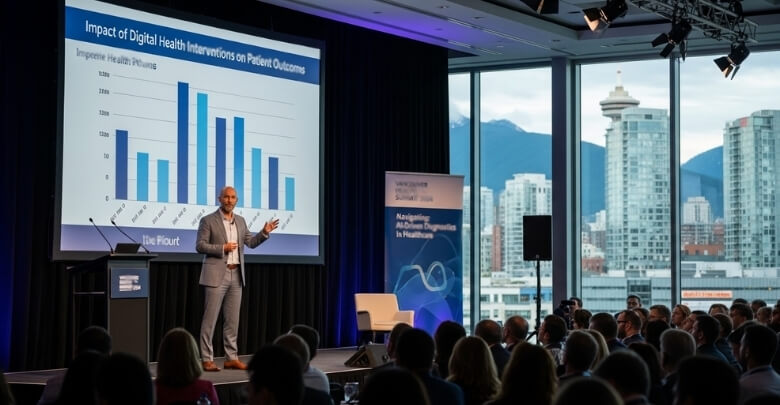
Health care conferences in Vancouver actively invite original research submissions in clinical medicine, digital health, public health, biotechnology, nursing science, and healthcare policy. Presenting at a Vancouver medical conference enhances academic visibility, peer recognition, and collaboration within Canada’s healthcare ecosystem.
Who Should Submit Research?
Healthcare professionals eligible to submit research to Vancouver health care conferences include clinicians, academic researchers, graduate students, public health experts, and health technology innovators seeking academic visibility in Canada’s medical community.
- Physicians and clinical specialists
- Academic faculty and postdoctoral researchers
- PhD and graduate students
- Public health professionals
- Healthcare administrators
- Digital health and biotech innovators
Interdisciplinary submissions are especially valued in Vancouver, particularly those addressing AI in healthcare, health system reform, patient safety, Indigenous health equity, and chronic disease management in Canada.
How the Peer-Review Process Works
Most reputable medical conferences in Vancouver use a structured peer-review system where scientific committees evaluate abstracts for originality, methodology, clinical relevance, and contribution to healthcare research in Canada and internationally.
- Abstract screening by a scientific committee
- Blind or double-blind peer review
- Scoring based on originality, methodology, statistical validity, and clinical relevance
- Final acceptance decision with revision requests (if applicable)
Highly ranked submissions are often prioritized for plenary or oral presentation sessions.
Publication and Indexing Opportunities
Many health care conferences in Vancouver offer publication pathways through proceedings, affiliated journals, and indexed platforms, allowing researchers to enhance citation visibility, academic credibility, and measurable research impact within Canada and internationally.
- Published in conference proceedings
- Included in affiliated peer-reviewed journals
- Assigned DOIs for citation tracking
- Indexed in academic databases (varies by organizer)
For researchers seeking citation growth and academic impact in Canada, verifying indexing and publication partnerships before submission is essential.
Poster vs. Oral Presentation: Strategic Differences
Understanding the difference between poster and oral presentations at Vancouver medical conferences helps researchers choose formats that maximize visibility, networking impact, and professional recognition within Canada’s healthcare and academic community.
- Oral Presentations are typically reserved for high-impact or statistically robust studies and offer greater visibility among healthcare leaders and decision-makers.
- Poster Presentations allow deeper one-on-one discussion, ideal for early-stage research, pilot studies, and interdisciplinary networking.
Both formats at Vancouver health care conferences provide meaningful exposure within the Canadian medical research community.
Why Submitting Research in Vancouver Adds Value
Vancouver’s strong academic base, growing life sciences sector, and international conference participation create an environment where research can reach clinicians, policymakers, biotech leaders, and global collaborators.
For researchers evaluating health care conferences in Vancouver, submitting a paper transforms attendance from passive learning into measurable academic advancement.
Travel & Venue Guide for Vancouver Conference Attendees
Attending health care conferences in Vancouver, British Columbia, is logistically efficient due to the city’s compact downtown core, integrated transit system, and concentrated conference infrastructure. Most major medical conferences in Vancouver are clustered within a highly walkable waterfront and university corridor.

Where Most Conferences Take Place
Downtown Waterfront Cluster:
The Vancouver Convention Centre anchors large international medical conferences in Vancouver. This area is ideal for attendees who want hotels, dining, networking venues, and transit access within walking distance.
Academic & Research-Based Events:
Research-heavy health care conferences are often hosted at the University of British Columbia or Simon Fraser University, particularly for clinical symposia and public health forums.
Where to Stay (Strategic Booking Advice)
- Stay in Downtown Vancouver if your event is at the Convention Centre.
- Book near a Canada Line SkyTrain station for direct airport access.
- Reserve 2–3 months in advance during peak conference season (May–September).
Hotels within a 10-minute walking radius significantly reduce transportation costs and maximize networking flexibility.
Airport & Local Transportation Strategy
Vancouver International Airport (YVR) connects to downtown via the Canada Line SkyTrain in about 25 minutes, making Vancouver one of the easiest Canadian cities for conference arrivals.
Transportation tips:
- SkyTrain is faster and cheaper than taxis during peak hours.
- Downtown venues rarely require car rentals.
- Ride-sharing is widely available.
Best Time to Attend Conferences in Vancouver
Most health care conferences in Vancouver are scheduled between April and September, aligning with mild weather and higher international attendance.
However:
- Summer months bring higher hotel prices.
- Fall events may offer lower accommodation costs.
- Winter conferences typically provide better flight deals.
Quick Planning Summary for Conference Attendees
For efficiency, stay downtown, use SkyTrain from YVR, book early during peak months, and prioritize walkable venues. Vancouver’s compact geography reduces logistical stress, allowing healthcare professionals to focus on networking and education.
Frequently Asked Questions About Health Care Conferences in Vancouver
Health care conferences in Vancouver, British Columbia attract clinicians, researchers, policymakers, and healthcare innovators from across Canada and internationally. Below are commonly searched questions that help attendees better understand planning, eligibility, networking, and participation expectations.
Are Health Care Conferences in Vancouver Open to Students?
Yes, many medical conferences in Vancouver offer discounted student registration and dedicated academic tracks. Graduate, medical, and nursing students are often encouraged to attend, especially research-focused or university-hosted healthcare events.
Do Vancouver Health Care Conferences Offer Virtual Attendance Options?
Many conferences now provide hybrid or virtual participation formats. This allows healthcare professionals unable to travel to Vancouver, Canada to access keynote sessions, panel discussions, and selected workshops remotely.
How Far in Advance Should I Register for a Vancouver Medical Conference?
Early registration is recommended, particularly for high-demand health tech or public health conferences. Registering two to four months before the event typically secures lower pricing and better accommodation availability in downtown Vancouver.
Can I Network With Hospitals or Healthcare Recruiters at These Conferences?
Yes, large health care conferences in Vancouver often include networking sessions, exhibitor halls, and recruiter participation. Hospital systems, research institutions, and health technology companies frequently attend to identify collaboration or hiring opportunities.
Are There Sponsorship Opportunities for Healthcare Companies?
Many Vancouver medical conferences offer sponsorship and exhibitor packages for biotech firms, digital health startups, and healthcare service providers. These opportunities increase brand visibility within Canada’s healthcare leadership community.
What Is the Typical Duration of a Health Care Conference in Vancouver?
Most healthcare conferences in Vancouver run between one and four days, depending on scale and accreditation. Larger international events may include pre-conference workshops and post-event networking sessions.
Do International Attendees Need Special Documentation to Attend?
International participants may require a Canadian visitor visa depending on nationality. Conference organizers in Vancouver typically provide official invitation letters to support visa applications and travel documentation processes.
Concluding Words
Attending one of the top health care conferences in Vancouver can open doors to new research collaborations, policy discussions, and health technology partnerships. Vancouver’s strong academic base and global accessibility make it a powerful meeting ground for healthcare advancement.
Whether you aim to publish research, earn CME credits, or expand your professional network, the top 10 health care conferences in Vancouver 2026 offer measurable value. Choose strategically, plan early, and invest in the conference that supports your long-term healthcare career goals.