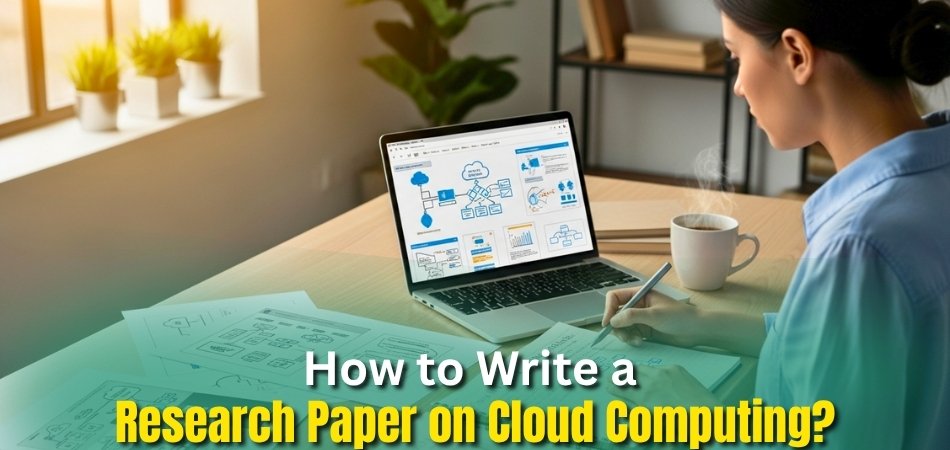
Cloud computing has become one of the most discussed topics in today’s digital era. From data management to artificial intelligence, it powers much of the modern technology we rely on every day. With such rapid growth and innovation, it’s no surprise that researchers around the world are drawn to study this field. But the question is, how to write a research paper on cloud computing?
To write a research paper on cloud computing, choose a focused topic, study recent research, define clear objectives, apply a suitable methodology, and present results with supporting data and visuals. Maintain accuracy, follow formatting guidelines, and cite all sources properly to ensure credibility and academic value.
In this article, you’ll discover a complete guide to creating a strong research paper on cloud computing. Keep reading to explore practical steps, downloadable templates, and expert tips that simplify the writing process and help you produce a paper that meets academic and professional standards.
How to Write a Research Paper on Cloud Computing: Step-by-step Process
Writing a research paper on cloud computing requires more than technical understanding; it demands a clear plan and an organized approach. The process involves identifying a focused topic, reviewing existing studies, designing a solid methodology, and presenting your findings in a logical, academic format. Below is a step-by-step guide to help you plan, write, and complete a professional research paper on cloud computing with confidence.
Step 1: Choose a Focused Research Topic
Begin by narrowing down your area of interest in cloud computing, such as multi-cloud deployment strategies, data privacy, or cost optimization. Observing discussions and papers presented at international events, including conferences in Australia, Canada, and the USA, can help identify emerging challenges and gaps in research. Choosing a topic aligned with current trends ensures your paper is relevant and impactful.
Step 2: Conduct a Thorough Literature Review
A literature review helps you understand what has already been studied and where your research can add value. Collect academic articles, journals, and conference papers, then summarize trends, key findings, and gaps. Evaluating previous studies ensures your paper builds on solid foundations and avoids duplicating existing work, providing a strong basis for your contribution.
Step 3: Define Research Objectives and Questions
Clearly outline the purpose of your study by crafting precise research objectives and questions. Align them with gaps found in the literature review to maintain focus. Well-defined objectives guide your methodology and analysis, keeping your paper coherent, academically rigorous, and easy to follow for readers.
Step 4: Develop a Structured Methodology
Decide on your research approach, whether it involves experiments, simulations, surveys, or case studies. Explain your methods clearly so that other researchers can replicate your study. A well-structured methodology section demonstrates the reliability and validity of your work, increasing the credibility and professionalism of your paper.
Step 5: Analyze Results and Present Data
Interpret your findings carefully and present them using charts, graphs, and tables. Highlight trends, correlations, or unexpected outcomes. A clear and organized presentation helps readers understand the significance of your research and how it contributes to advancing knowledge in cloud computing.
Step 6: Write Discussion and Conclusion Sections
Relate your results to your research questions and existing literature. Discuss the implications of your findings, limitations of your study, and possible areas for future research. A thoughtful discussion and conclusion demonstrate critical thinking and provide meaningful insights for other researchers in the field.
Step 7: Review, Edit, and Proofread
Finally, ensure your paper is polished, clear, and properly cited. Check for grammar, consistency, and formatting according to academic standards. Thorough proofreading increases credibility and makes your research more professional, ensuring that your work communicates effectively to both peers and academic reviewers.
How to Analyze Academic Research Trends Before Writing Your Paper?
Understanding the latest research trends is crucial before starting a paper on cloud computing. It helps you identify which topics are gaining attention, where gaps exist, and how your work can contribute meaningfully to the field. Studying current trends ensures your research is relevant, timely, and aligned with academic discussions, while helping avoid duplicating existing work.
Review Recent Journals and Publications

Scan top journals, conference proceedings, and academic databases like IEEE, ACM, and Springer. Focus on papers published in the last 3–5 years to identify which cloud computing topics are currently popular. This review provides insight into the direction of research and helps pinpoint areas where your work can offer new contributions.
Track Conference Proceedings and Presentations
Examine keynote speeches, session topics, and papers from relevant conferences. These events often showcase emerging ideas and practical challenges researchers are addressing. Reviewing conference proceedings helps you understand the hot topics in the field, giving direction to your research focus and inspiration for an original study.
Identify Frequently Cited Papers and Authors
Analyze citation patterns to find studies with significant influence in the field. Highly cited papers often indicate foundational research or widely recognized methodologies. Following leading authors helps uncover research trends, provides context for your work, and suggests methods and approaches that are widely accepted in the academic community.
Monitor Research Collaboration Networks
Observe collaborations between universities, companies, and research institutions. Understanding which teams are working together and on which topics can highlight emerging areas, interdisciplinary research, and potential opportunities for partnerships. This perspective allows you to position your research within the broader context of ongoing studies.
Use Academic Trend Analysis Tools
Leverage tools like Google Scholar Metrics, Scopus, and ResearchGate to track trending topics, most cited papers, and popular keywords. These platforms provide a clear overview of current research activity, enabling you to refine your focus and select a study area that is both novel and highly relevant to the field of cloud computing.
Build a Trend Map
Document observations and categorize topics by relevance and novelty. Creating a visual map of trends allows you to organize ideas, identify gaps, and plan your research objectives effectively. A trend map serves as a reference for shaping your paper and ensures alignment with current academic discussions.
Common Citation and Formatting Styles for Cloud Computing Research Paper
Proper citation and formatting give your cloud computing research paper professionalism and credibility. Each style follows distinct rules for referencing and structure. Choosing the right format depends on your target journal or conference. Below are the most common citation styles used in cloud computing research and when to apply them.

Citation Style for Cloud Computing Research Paper
APA (American Psychological Association)
Widely used in social sciences and some engineering journals, APA emphasizes in-text citations with the author and year. Reference lists are organized alphabetically. For cloud computing papers, APA is suitable when discussing theoretical frameworks, surveys, or case studies, providing clarity and consistency in referencing prior work.
IEEE (Institute of Electrical and Electronics Engineers)
IEEE style is popular in engineering, computer science, and technology conferences. It uses numbered citations in square brackets (e.g., [1]) and a reference list in order of appearance. IEEE is ideal for cloud computing research with technical content, simulations, or algorithm descriptions, allowing concise citation without interrupting technical flow.
Harvard Style
Harvard referencing uses author-date in-text citations, similar to APA, but is often preferred in the UK and some Australian conferences. Reference lists are alphabetical. It works well when emphasizing comparisons between studies, highlighting trends, or discussing cloud computing methodologies in a contextual manner.
ACM (Association for Computing Machinery)
ACM style is frequently used in computing conferences, including cloud computing research. It combines elements of IEEE and author-date formats depending on the conference. ACM format ensures papers meet computing-specific standards, including clear section headings, figure/table formatting, and technical precision.
Formatting Essentials for Conference Papers
A well-formatted research paper improves readability and ensures compliance with conference submission guidelines. Below is the recommended structure and formatting sequence aligned with standard cloud computing conference requirements.
- Title Page: Include the full research title, author names, institutional affiliations, and contact information. Keep the title concise yet descriptive, accurately reflecting the core focus of your study.
- Abstract: Limit to 150–250 words summarizing your objectives, methodology, results, and conclusions. Ensure it is self-contained and free of citations.
- Keywords: Add 4–6 relevant keywords immediately after the abstract to improve search visibility.
- Introduction: Begin with background context, define the research problem, and state objectives clearly. Maintain a logical flow leading to your study’s purpose.
- Literature Review: Summarize relevant previous studies, highlight key findings, and identify research gaps. Reference conference and journal papers to ensure coverage of recent work.
- Methodology: Describe the approach, tools, datasets, and frameworks used in your study. Provide enough detail for reproducibility and align formatting with conference standards.
- Results and Analysis: Present key findings with tables, graphs, or figures. Ensure visuals are properly labeled, captioned, and referenced in text. Use consistent formatting for clarity.
- Discussion: Interpret results in relation to objectives and existing research. Maintain uniform heading styles and paragraph spacing for readability.
- Conclusion: Summarize the main contributions and suggest possible future work. Keep it concise and aligned with your paper’s objectives.
- References: Follow the conference’s required citation format (usually IEEE or ACM). Verify that all in-text citations match the reference list, checking order, punctuation, and completeness.
Global Differences in Formatting, Writing, and Publication Practices
Research paper expectations in cloud computing can differ widely depending on the country or region. Understanding these differences allows researchers to tailor their work for international journals and conferences, increasing the chances of acceptance and relevance. Below is a comparison of common practices in several key countries.

United States
Academic papers in the U.S. often emphasize conciseness and clarity. Research methodology and results are usually highlighted early, and introductions tend to be brief. APA style is the most commonly used citation format. Peer review processes are rigorous, focusing heavily on originality, reproducibility, and practical implications of the research.
Canada
Canadian journals typically balance technical detail with readability. Literature reviews may be slightly longer, providing context and theoretical foundations. APA and IEEE are frequently used, depending on the field. Reviewers often look for both methodological rigor and contributions to industry applications, reflecting Canada’s strong emphasis on applied research.
Australia
Australian research papers often place strong emphasis on engineering applications and industry relevance, especially in cloud computing and related fields. Clear structure, logical argument flow, and integration of case studies or simulations are highly valued. Researchers looking to engage with peers or present their work can find cloud engineering conference in Australia, which provides insights into local research priorities and networking opportunities.
United Kingdom
UK journals often require extensive literature reviews and careful contextualization of research. Harvard and IEEE referencing styles are commonly used. Academic tone tends to be formal but also emphasizes critical discussion, with a strong focus on theoretical frameworks and methodological justification.
Germany
German research papers frequently highlight methodological precision and detailed technical explanations. Structured abstracts and clear, labeled visuals are highly valued. Reviewers expect thorough documentation of experiments or simulations, and the writing style is formal, focusing on technical accuracy rather than readability.
Editing, Reviewing, and Finalizing Your Cloud Computing Research Paper
Before your research paper is ready for submission, it must go through careful editing and review. These final steps ensure your ideas are clear, your arguments are structured logically, and your formatting aligns with academic standards. To make your cloud computing paper publication-ready, follow these essential checks before submission.
“Ensure Clarity and Consistency
Verify Formatting and Referencing Style
Seek Peer or Supervisor Feedback
Run Grammar and Plagiarism Checks
Check Figures, Tables, and Data Accuracy
Prepare Files According to Submission Guidelines
Submit to the Right Journal or Conference
Track Review Progress and Respond Professionally“
Ensure Clarity and Consistency
Read your paper critically to confirm that each section flows logically. Eliminate redundant information and ensure consistent terminology throughout, especially for technical terms like virtualization, scalability, or cloud security. Clear transitions between sections help readers understand your research without confusion.
Verify Formatting and Referencing Style
Follow your target journal or conference’s required formatting style, whether it’s IEEE, APA, Harvard, or ACM. Double-check citation accuracy, numbering, and reference order. Inconsistent formatting is one of the most common reasons for initial rejection in both journals and conference submissions.
Seek Peer or Supervisor Feedback
Share your draft with mentors, colleagues, or subject experts. A second perspective helps identify unclear sections and strengthens weak arguments. By attending cloud engineering conferences in Australia, Canada, or other regions, you gain exposure to current research discussions and practical insights that can enhance your paper’s depth and clarity before submission.
Run Grammar and Plagiarism Checks
Proofread your paper thoroughly for grammar, punctuation, and sentence structure. Use professional tools like Grammarly or Turnitin to detect unintentional plagiarism. A clean, original manuscript enhances credibility and meets ethical standards for academic publication.
Check Figures, Tables, and Data Accuracy
Verify that all visuals are properly labeled, referenced in text, and formatted consistently. Ensure graphs and tables reflect accurate data values. Visual accuracy reinforces your research integrity and supports the credibility of your findings.
Prepare Files According to Submission Guidelines
Every journal or conference specifies preferred file formats—commonly PDF, Word, or LaTeX. Include supplementary files such as datasets or simulation outputs if required. Proper preparation minimizes submission errors and ensures smoother review processing.
Submit to the Right Journal or Conference
Select publication outlets that match your topic and methodology. Cloud computing journals and international conferences provide ideal platforms for visibility and expert feedback. Reviewing their submission requirements beforehand increases your acceptance chances.
Track Review Progress and Respond Professionally
After submission, monitor updates and be ready to revise based on reviewer comments. Address feedback clearly and resubmit within deadlines. A professional and timely response builds credibility and often leads to faster approval for publication.
Ethical and Professional Practices in Cloud Computing Research
Responsible research extends beyond writing and publication—it also involves how data is handled, cited, and shared. Maintaining ethical standards ensures your paper is credible and respected by peers. Before final submission, review these essential practices to uphold integrity and professionalism throughout your cloud computing research process.

Maintain Academic Integrity
Always acknowledge the work of other researchers. Properly cite theories, data, and algorithms referenced in your paper. Academic honesty builds trust with reviewers and prevents plagiarism concerns that could lead to rejection or ethical violations during the review process.
Protect Data Privacy and Security
When using cloud-based datasets or simulation results, ensure sensitive information is handled responsibly. Remove identifiers, encrypt files, and respect usage permissions. Protecting data not only fulfills ethical obligations but also strengthens the reliability and credibility of your research outcomes.
Use Open-Source Tools Transparently
If your research relies on open-source frameworks, APIs, or libraries, acknowledge them clearly. Transparency allows peers to replicate your study and validate your findings. Open acknowledgment also demonstrates professionalism and respect for the broader research community.
Ensure Accuracy in Reporting Results
Present all results—positive or negative—with equal honesty. Avoid altering or omitting findings to make outcomes appear stronger. Ethical reporting improves the authenticity of your paper and promotes meaningful academic discussions in the cloud computing field.
Follow Institutional and Publisher Guidelines
Adhere to your university’s ethics policies and the submission guidelines of your chosen journal or conference. Complying with review, authorship, and data-sharing standards ensures your paper meets professional publishing expectations across international academic platforms.
Avoid Duplicate or Simultaneous Submissions
Submit your research to only one outlet at a time. Duplicate or simultaneous submissions can damage your reputation and lead to blacklisting from publishers. Wait for a final decision or withdraw your paper before submitting it elsewhere.
Handle Peer Feedback Professionally
Respond to reviewer comments with respect and clarity. Acknowledge valid suggestions and explain any disagreements logically. Professional communication with reviewers strengthens your reputation and often leads to better revisions or future collaboration opportunities.
Respect Collaboration and Authorship Roles
Clearly define each author’s contribution before submission. Properly credit collaborators, institutions, or sponsors who supported your research. Ethical authorship prevents disputes and ensures transparency in how your work was developed.
Why Cloud Computing Research Papers Get Rejected — and How to Avoid It
Even well-written research papers can face rejection if key academic or structural elements are overlooked. Understanding the common reasons for rejection helps researchers refine their approach and improve acceptance chances. Here are some of the most frequent pitfalls in cloud computing research papers and practical ways to avoid them.
Lack of Original Contribution
Many submissions repeat existing studies without offering new insight. Reviewers look for innovation—whether in problem framing, methodology, or application. Conduct a thorough literature review to identify real gaps and focus on how your work adds value to the evolving field of cloud computing.
Weak Connection Between Sections
When the introduction, literature review, and results don’t align, the paper appears fragmented. Each section should logically build on the last, leading readers smoothly to your conclusion. Create an outline early to maintain consistency between objectives, methods, and outcomes.
Inconsistent Formatting and Referencing
Formatting errors and mixed citation styles make a paper appear unpolished. Follow one consistent format—typically IEEE or ACM for cloud computing research. Double-check figure numbering, reference order, and table captions to meet conference or journal submission standards precisely.
Insufficient Data Validation
Papers often get rejected because they lack solid data support or clear validation methods. Include detailed descriptions of datasets, testing parameters, and evaluation metrics. Present both strengths and limitations transparently to build trust in your findings.
Overuse of Technical Jargon
Dense terminology can make research inaccessible to broader reviewers. While technical precision is important, balance it with clarity. Use simple, direct language where possible and define specialized terms to ensure your paper remains readable across disciplines.
Poor Quality Visuals
Unlabeled or low-resolution figures weaken presentation quality. All charts, tables, and graphs must be clearly titled and referenced in text. Ensure consistency in formatting and color schemes, and include captions that explain what each visual represents in context.
Ignoring Ethical and Professional Standards
Failing to credit tools, data sources, or contributors undermines credibility. Always acknowledge open-source software, research collaborators, and funding bodies. Ethical transparency not only prevents plagiarism issues but also enhances the professionalism of your submission.
Neglecting Reviewer Guidelines
Many promising papers are rejected for not following simple submission rules—word limits, page count, or file format. Always review the specific requirements of your target journal or conference before submission. Small oversights can result in desk rejection before peer review even begins.
Smart Tips to Get Your Cloud Computing Paper Accepted
Getting a cloud computing research paper accepted requires more than good data—it takes clarity, structure, and attention to reviewer expectations. Small improvements in presentation, formatting, and communication can make a major difference in acceptance rates. Follow these smart, practical tips to ensure your paper meets academic and professional standards.

- Start with a Focused Research Question: Define a clear, specific problem that adds value to the field. Narrower topics make your research more impactful and easier to evaluate.
- Align Every Section with Your Objectives: Ensure your introduction, methods, and conclusion all connect logically. Reviewers appreciate a consistent, goal-driven structure.
- Support Arguments with Recent References: Cite studies published within the last three to five years, including conference papers, to show your research is current and relevant.
- Make Visuals Speak Clearly: Use well-labeled figures and tables that add clarity instead of clutter. Captions should explain exactly what each visual represents.
- Balance Technical Depth with Readability: Explain complex ideas in a simple, structured manner. Write as if your reader understands the field—but not your exact model or algorithm.
- Highlight Practical Application: Show how your findings can be applied in industry or future research. Practical relevance strengthens credibility and interest.
- Follow Submission Guidelines Strictly: Adhere to word limits, reference styles, and formatting instructions. Noncompliance often leads to desk rejection before review.
- Proofread and Seek Feedback: Read your paper aloud, run grammar checks, and ask peers for feedback. A fresh perspective can catch errors you might overlook.
Frequently Asked Questions About Cloud Computing Research Papers
Many researchers have questions about planning, structuring, and submitting their cloud computing research. These FAQs address common concerns to help you prepare a stronger paper and get through the publication process confidently.
What Makes a Cloud Computing Research Paper Stand Out?
A paper stands out when it combines originality, clear objectives, and strong practical value. Reviewers appreciate work that not only introduces innovative ideas but also demonstrates measurable results or real-world applications supported by reliable data and relevant analysis.
How Do I Choose a Research Topic in Cloud Computing?
Select a topic that’s both specific and relevant, such as edge-cloud collaboration, data migration efficiency, or green computing. Review recent journals and conference papers to identify trending gaps or unresolved challenges that your study can meaningfully address.
Can I Use Conference Papers as References in My Research?
Yes, conference papers are valuable sources, especially in fast-evolving fields like cloud computing. They often present the latest experiments and early findings that haven’t yet appeared in journals, keeping your literature review timely and informed.
How Long Should a Cloud Computing Research Paper Be?
Most conferences accept papers between 5–8 pages, while journals may allow 6,000–8,000 words. However, focus on conciseness—include only essential details that support your objectives. Always follow the specific word or page limit mentioned in the submission guidelines.
What Is the Best Citation Style for Cloud Computing Papers?
IEEE and ACM are the most commonly accepted styles for engineering and computer science conferences. APA or Harvard may also be used depending on the publisher’s requirements. Check formatting instructions carefully before preparing your references.
Should I Include Code or Algorithms in My Paper?
Yes, if they are central to your study. Include pseudocode, flowcharts, or algorithm outlines that clarify your process. However, long code listings should be placed in appendices or provided as supplementary materials rather than in the main text.
How Can I Improve My Chances of Acceptance?
Focus on clarity, originality, and structure. Align every section with your objectives, use up-to-date references, and double-check formatting. Submitting a polished, proofread paper that adheres to ethical and stylistic standards increases your likelihood of acceptance.
Can I Submit the Same Paper to Multiple Conferences?
No. Submitting the same paper simultaneously to more than one conference or journal is considered unethical. Wait for a decision or withdraw it before resubmitting elsewhere. Duplicate submissions can lead to rejection or permanent disqualification.
Is It Necessary to Include a Future Work Section?
Yes. A short future work section shows reviewers that your research contributes to an ongoing discussion and opens new directions. It reflects awareness of limitations and adds depth to your conclusion, especially in cloud computing’s fast-changing landscape.
What Happens After My Paper Gets Accepted?
Once accepted, you’ll receive formatting instructions for camera-ready submission and may need to register for the conference or provide presentation slides. Prepare for both oral and poster presentation formats to showcase your findings effectively to the audience.
Conclusive Lines
Writing a successful cloud computing research paper requires a blend of technical insight, structured planning, and academic precision. From selecting a focused topic to organizing your findings into a professional layout, every step contributes to how effectively your ideas are communicated and evaluated.
Understanding how to write a research paper on cloud computing? begins with recognizing that strong research is not just about results—it’s about clarity, originality, and relevance. By aligning your objectives with current trends, referencing credible studies, and maintaining ethical standards, you set your work apart from generic submissions.
As cloud technology continues to evolve, so does the opportunity to contribute meaningful research. Whether presenting at international conferences or submitting to peer-reviewed journals, a well-prepared paper positions you among thought leaders shaping the next generation of cloud innovation.