Presenting at or citing a conference presentation is common in academic writing, but referencing it correctly can be tricky. Many students and researchers struggle with the right format, especially when it comes to different citation styles.
A well-cited presentation adds credibility and helps readers locate the original source of information easily. Knowing the right ways of how to reference conference presentation can save time and ensure academic accuracy.
To learn how to reference a conference presentation, write the speaker’s name, date, and title in italics, followed by a description of the talk in brackets. Then, include the conference name, city, and country — and add a link if available.
Follow this article to see examples, styles, and expert tips that make your referencing process accurate, quick, and effortless.
How to Reference Conference Presentation: Step-by-Step Process
You need clear steps to reference a conference presentation with confidence in your writing. This guide shows each stage, from gathering details to formatting styles, with simple language and examples. Follow along, learn fast, and build citations that look polished, accurate, and easy for others. Start now with smart steps.
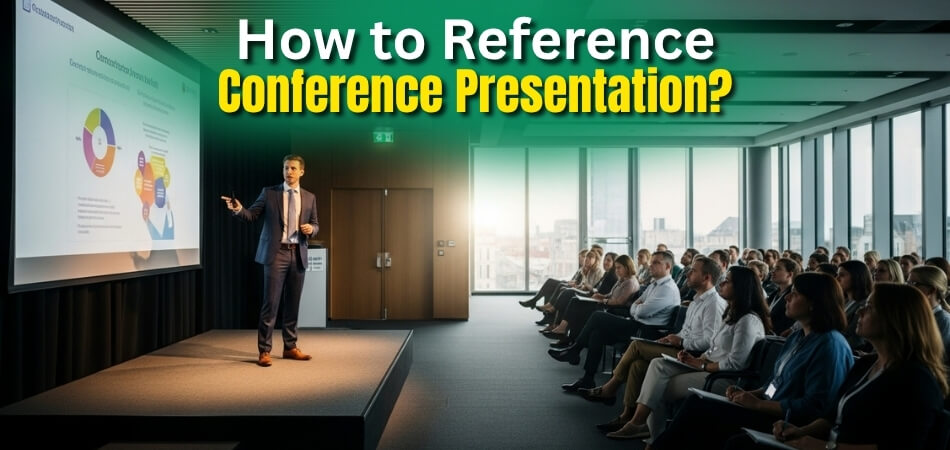
Step 1: Collect the Essential Details
Collect the presenter’s full name, the presentation title, and the exact date from the program materials carefully. Note the conference name, city, country, and whether the session was online, hybrid, or in-person format. Copy any working link to slides or recording, and verify spelling, punctuation, and capitalization for accuracy today.
Step 2: Write the Author Element First
Start the reference with the speaker’s last name, followed by initials, ensuring spacing and periods match your style. If there are multiple presenters, keep the listed order, and separate names with commas before the final ampersand. Confirm capitalization for prefixes like Mc, O’, or van, and include suffixes such as Jr., Sr., or III.
Step 3: Add the Date in Parentheses
Place the year in parentheses, then add the month and day if available, keeping the order consistent throughout. For multi-day events, write the start day and end day with an en dash between them clearly. Use Arabic numerals for days, spell out months where required, and avoid extra punctuation after the date entry.
Step 4: Italicize the Presentation Title
Write the presentation title in sentence case, italicize it, and remove any trailing punctuation that seems unnecessary there. Keep acronyms as the presenter used them, and retain proper nouns, chemical symbols, and gene names accurately everywhere. Do not add quotation marks, do not change capitalization beyond style rules, and avoid decorative characters or emojis.
Step 5: Add a Bracketed Talk Description
After the title, add a bracketed description like bracket Poster presentation bracket or bracket Paper presentation bracket exactly. Use clear terms that match the event program, such as keynote address, workshop session, panel discussion, or tutorial. Keep the bracketed phrase short, avoid jargon, and place it right after the italic title without commas anywhere.
Step 6: State the Conference and Location
Write the full conference name as the organizers present it, including edition numbers, abbreviations, and the hosting society. Add the city and country after the conference name, using spellings, and avoid postal codes or district names. If the event was virtual, write Online in place of location, and keep the wording simple and consistent.
Step 7: Include a Working Link Last
Finish with a working URL that points to slides, abstract, recording, or an official page that confirms the talk. Test the link in a browser, ensure it loads quickly, and avoid shortened links that may expire soon. Write Retrieved, then today’s date only when your style requires access dates, and follow that rule consistently always.
Step 8: Practice With Real Examples
Build practice by drafting one sample reference using these steps, then compare it to a trusted model carefully. Survey Canada, the United States, the United Kingdom, and Germany; review upcoming conferences in Canada to craft examples. Use varied fields, like computing, health, and design, so your samples reflect real sessions and common formats today.
Common Mistakes to Avoid When Referencing Conference Presentations
Referencing errors often happen when writers rush or skip small details. Keeping your citations clean improves clarity and credibility. Below are short, clear points showing common mistakes to avoid when referencing a conference presentation so your work stays neat and accurate.
- Missing info: Leaving out the conference name or location makes your reference incomplete. Always include full event details.
- Wrong order: Mixing name, date, and title confuses readers. Follow the correct sequence shown in your style guide.
- Title case error: Using title case instead of sentence case looks unprofessional. Only capitalize the first word and proper nouns.
- No brackets: Forgetting [Paper presentation] or [Poster session] loses clarity. Add correct bracketed descriptions right after the title.
- No italics: Skipping italics for the title breaks format rules. Italicize only the presentation title for consistency.
- Bad links: Adding broken or missing links hurts credibility. Test URLs before adding them to your reference list.
- Wrong date: Writing incorrect dates confuses timelines. Always use the exact event date from the conference schedule.
Importance of References in a Conference Presentation
Have you ever listened to someone give a great presentation and wondered how they remember every detail correctly? References help with that. They make sure facts are right and ideas are credited. Let’s see why using references during a conference presentation really matters.
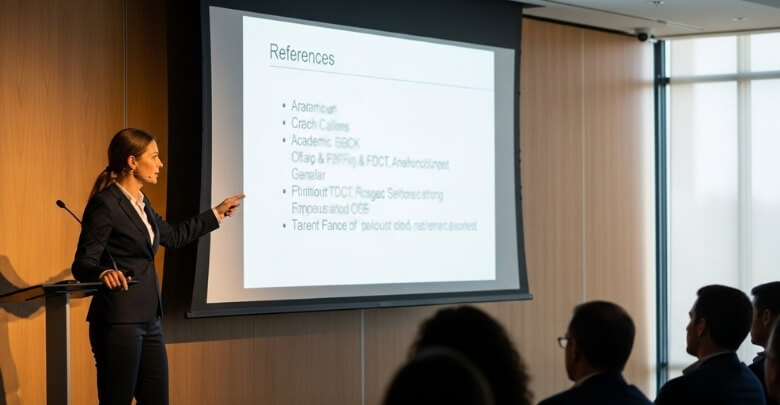
Builds Trust
When you include references, your audience knows you didn’t just make things up. It shows that your points come from real research or experts who know the topic well. People tend to believe and listen more when they see you’ve done your homework. It’s like giving proof that your information is solid and trustworthy.
Gives Proper Credit
Every presentation includes ideas or facts learned from others. Using references means you’re giving credit to the people who discovered or studied those ideas first. It’s a way of showing respect to those researchers. By doing this, you also avoid copying someone else’s work or claiming it as your own.
Makes Your Work Reliable
A presentation with good references looks more reliable and professional. It tells your audience that your talk is based on verified information, not guesses. When you support your slides with accurate sources, listeners know your points are backed by real data. This simple step adds serious value to your presentation.
Helps the Audience Learn More
References are not just for you — they help your audience too. After the presentation, some people might want to read more about the topic. When they see your references, they can easily find those books, papers, or websites. This makes your talk more useful and educational for everyone.
Strengthens Your Understanding
Preparing references helps you understand your topic better. You get to read more deeply, compare different opinions, and notice new ideas. As you collect sources, you’ll find facts that make your own explanations clearer. The more effort you put into referencing, the stronger your understanding becomes when you present.
Avoids Plagiarism
Plagiarism means using someone’s work without giving them credit, which is a big problem in academics. References protect you from that mistake. They show that your research is honest and original. If you’re ever unsure how to list your sources, you can learn to cite a conference presentation in APA style for guidance.
Looks More Professional
When your slides or speech include proper references, your presentation looks polished. Teachers, judges, or organizers notice that you’ve followed real academic rules. It gives your work a neat and serious touch. Even small reference details, like correct names and dates, make a big difference in how people see your effort.
Key Details You Need Before Creating a Reference for a Conference Presentation
Before you start writing a reference, it’s important to gather all the right details first. Without them, your reference may look messy or incomplete. These small pieces of information make a big difference in how correct and clear your work appears.
Presenter’s Name
Always begin by noting the presenter’s full name carefully. This shows who created or shared the main ideas at the conference. Make sure you spell their first and last names correctly. If there’s more than one presenter, write their names in the same order shown on the program. Double-check for middle initials or titles because missing them can make your reference look wrong.
Presentation Title
The title tells everyone what the presentation is about, so it must be written correctly. Write it exactly as it appeared in the event’s schedule or slides. Don’t change words or punctuation unless your style guide says so. Usually, only the first word and proper nouns get capital letters. A clean and accurate title helps readers identify the exact presentation easily.
Date of Presentation
Knowing the date helps others see when the talk happened. Conferences often last several days, so you should include the exact day the presentation took place. Write it in a clear format with the day, month, and year. If the event lasted multiple days, add both start and end dates. This small detail makes your reference complete and precise.
Conference Name
The conference name is like the event’s identity, so include it fully and correctly. Don’t shorten or skip any part, even if the name is long. For example, use “International Science Education Conference” instead of just “Science Conference.” The full name helps readers find the event if they want to learn more about it. Always use the official name from the event materials.
Location of Event
Adding the city and country where the conference happened makes your reference more complete. If the presentation was online, simply write “Online” instead of a physical place. Make sure the city name is spelled correctly and not confused with another one. Including the country helps too because some cities share names in different nations. This makes your reference clear and easy to follow.
Presentation Type
It’s helpful to mention what kind of presentation it was — like a paper talk, poster, or workshop. This short detail tells readers what format the presenter used to share their work. Write it in brackets right after the title, such as [Poster presentation]. Including this shows that you understand different conference styles and helps people imagine what kind of session it was.
Online Link
If the presentation has an online version, include the link at the end of your reference. It could be a video, slide file, or event webpage. Always test the link to make sure it opens and works properly. If no link exists, you can skip this step. Having a working link helps others easily find and review the presentation themselves later.
Different Types of References for Conference Presentation
Referencing a conference presentation correctly helps your work look professional and credible. Depending on the citation style you follow, the format can change slightly, but the core details remain the same. Below, you’ll find simple examples of how to reference conference papers, posters, and online presentations.
| Type | Basic Format | Example |
| APA Style | Author, A. A. (Year, Month). Title of presentation [Type of presentation]. Conference Name, City, Country. URL (if available). | Khan, R. (2024, May). AI in classroom learning [Paper presentation]. Global Education Conference, Toronto, Canada. |
| MLA Style | Author Last Name, First Name. “Title of Presentation.” Conference Name, Day Month Year, Venue, City. | Rahman, Laila. “Climate Change and Student Projects.” Youth Science Conference, 12 Mar. 2024, Convention Hall, Dhaka. |
| Chicago or Harvard Style | Author Last Name, First Name. Year. “Title of Presentation.” Paper presented at Conference Name, City, Country, Month Day–Day. | Ahmed, Sami. 2024. “The Power of Digital Teaching.” Paper presented at Education Future Summit, London, UK, July 10–12. |
| Unpublished or Online Presentation | Author, A. A. (Year, Month). Title of presentation [Description of form]. Retrieved from URL (if available). | Chowdhury, N. (2023, August). Learning from virtual classrooms [Online presentation]. Retrieved from. |
| Poster Presentation | Author, A. A. (Year, Month). Title of poster [Poster presentation]. Conference Name, City, Country. URL (if available). | Islam, F. (2025, January). Effects of recycling awareness in schools [Poster presentation]. Green Future Forum, Ottawa, Canada. |
Benefits of Including Suitable References for Conference Presentation
Adding references to your conference presentation shows you care about facts and fairness. It helps people trust your information and understand your topic better. Let’s look at the real benefits that come from using proper and suitable references in your presentation.
Builds Strong Credibility
- Using proper references shows that your work stands on real facts and reliable research, not on guesses or opinions. It helps the audience see that your presentation is built on genuine knowledge and thoughtful study.
- When you mention your sources clearly, people respect your preparation and effort more during your presentation session. It also proves that you took the time to check the details carefully before sharing your ideas.
Encourages Honest Research
- Referencing teaches you to collect information honestly and organize your data in a fair and truthful manner. It helps you avoid mixing up random facts that might confuse your main idea or message.
- When you prepare citations early, you stay honest with your research and avoid copying others’ words without permission. This keeps your presentation ethical and clean from plagiarism.
Improves Presentation Quality
- Proper references make your slides and notes look organized and professional to everyone attending your session. It adds a neat finish that makes your presentation easy to follow and understand.
- Including credible references helps your audience verify your facts faster and trust your explanations without hesitation during discussions or questions.
Supports Audience Learning
- References allow your audience to explore deeper after your presentation ends, improving their learning experience easily. They can visit your sources to read more and discover useful information.
- When you use accurate references, your listeners can understand your topic better because they know where your data came from. It connects your talk to real studies and publications.
Shows Academic Maturity
- Adding references reflects that you understand academic standards and follow proper presentation rules correctly. It also displays your readiness to share research responsibly.
- When you prepare according to proper guidelines, like citation eligibility for Conference presentations, you build respect among experts and judges. It shows you understand how real academic communication works.
Increases Future Opportunities
- A well-referenced presentation makes you stand out, helping teachers or professionals remember your name for future events. It builds a positive image.
- When people see your accurate work, they might invite you to present again or join bigger research projects later.
Boosts Confidence While Presenting
- Knowing that your data comes from valid sources gives you confidence while speaking in front of the audience. You can explain points better.
- References act like your safety net, letting you handle questions smartly because you already have solid proof behind your statements.
Encourages Team Collaboration
- Group presentations with references help all members understand the research background clearly, improving teamwork and smooth communication. Everyone stays on the same page.
- When your team shares sources openly, it reduces confusion and builds a strong connection through shared learning and clear understanding.
FAQs About Using References for Conference Presentation
Referencing a conference presentation can sometimes feel confusing because of different rules and formats. Many people struggle with smaller details that aren’t clearly explained in guides. Here are some fresh, relevant FAQs to help you handle citations confidently and correctly.
How Do I Reference a Virtual Conference Presentation?
When referencing an online event, mention that it was virtual instead of listing a city or country name. Include the speaker, date, title, [Online presentation] in brackets, and link if available. This shows the event took place digitally, not physically.
Can I Reference a Conference Presentation That I Attended But Isn’t Online?
Yes, you can reference it as an unpublished source. Write the presenter’s name, date, title, and describe it as an unpublished presentation. Include the event’s name and location, but skip any web link since it doesn’t exist online.
How Do I Cite Multiple Speakers in One Conference Presentation?
When more than one person presents, list all presenters in the same order they appeared in the program. Separate their names with commas and add an ampersand before the final name. Use consistent formatting throughout the entire reference list.
Should I Include the Exact Conference Dates or Just the Year?
If possible, always include the full date instead of only the year. Conferences often last several days, and including the exact dates makes your reference precise. This small detail helps readers find the correct session or record.
What If the Presentation Title Is Very Long?
If a title is lengthy, still write it completely as shown in official conference materials. Avoid shortening or editing it yourself. Readers should see the title exactly as the presenter originally used it during the session.
Wrap Up
Referencing a conference presentation might seem like a small step, but it makes a big difference in your work. It helps others trust your information and shows that your ideas come from real, reliable sources. Learning how to reference conference presentation correctly also improves your research and presentation skills over time.
When you include accurate details, your work looks professional and honest, leaving a lasting impression on your audience. Always take a few minutes to double-check your references before finishing. Small efforts like these help your presentation stand out, showing that you value accuracy, respect, and genuine learning.