A conference invitation can open doors, but one wrong letter can close them fast. Many people trust documents without checking small details. That mistake can cause refusal, stress, and wasted time. Careful checks protect plans and future travel, which is why some readers think about how do I verify a Canada invitation letter?
To verify a Canada invitation letter, check the host’s identity, legal status, contact details, and ensure the visit purpose matches your travel plans. Confirm dates, return plans, and consistency across all documents. A valid signature, clear formatting, and supporting proof help avoid visa delays and build trust.
Do you want to know how officers judge letters and spot weak ones? This article explains every step in clear detail. It covers documents to request, warning signs, strong examples, and scam handling. Reading further helps you avoid mistakes and stay confident.
What Is a Canada Invitation Letter and Why Does Verification Matter?

A Canada invitation letter is a formal document written by a host in Canada. It supports a visitor’s visa application by explaining who is inviting them and why. The letter adds clarity to travel plans and helps officials understand the purpose of the visit. It does not guarantee visa approval, but it strengthens the application.
This letter usually includes key details about both the host and the visitor. It explains the relationship between them and the reason for travel. Common reasons include family visits, business meetings, or attending upcoming conferences in Canada. Clear and honest details help avoid confusion during the review process.
Verification matters because immigration officers must trust the information provided. When details cannot be verified, applications may face delays or refusal. Verified information shows that the visit is real and well planned. It also reduces the risk of fraud or false claims.
A well prepared invitation letter supports transparency and trust. It should match other documents like travel plans and proof of funds. Accuracy matters more than length or strong wording. When details align, the application process feels smoother and more reliable for everyone involved.
How Do I Verify a Canada Invitation Letter? (Simple Guide)
Verifying a Canada invitation letter helps avoid stress and visa delays. Many applicants trust letters without checking details that matter later. Simple checks protect you from mistakes, refusals, and lost time. Follow the steps below to confirm everything clearly and safely.
Check the Host’s Identity and Contact Details
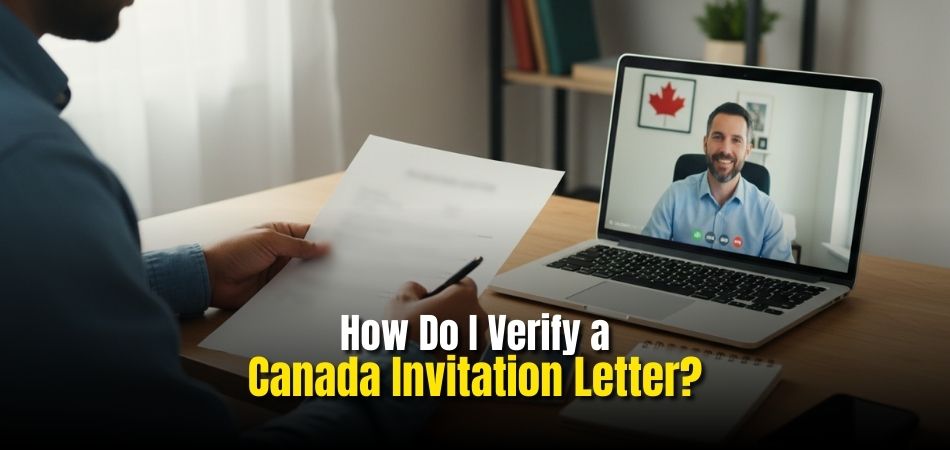
Start by reviewing the host’s full name, address, phone number, and email. These details should look real and complete. Try calling or messaging if possible. A real host responds clearly. Missing or vague contact details often signal problems and should never be ignored during verification process steps.
Confirm the Host’s Status in Canada
Ask for proof showing the host’s legal status in Canada. This may include citizenship papers, permanent resident cards, or valid visas. Status proof shows the host can legally invite visitors. Without this, the letter feels weak and may raise doubts during review by visa officers later on.
Review the Purpose of Visit and Trip Details
Look closely at the stated reason for travel in the letter. It should match your plans, such as family visits, meetings, or upcoming conferences in Canada. Clear purpose helps officers understand intent. Vague reasons create confusion and slow decisions during visa checks for many applicants every year.
Check Dates, Duration, and Return Plan
Compare travel dates, stay length, and return plans carefully. Dates should align with work leave, tickets, and schedules. A clear return plan shows temporary intent. If dates conflict or seem open ended, officers may question travel seriousness and delay approval until issues get resolved properly by review teams.
Match the Letter With Your Other Documents
Cross check the invitation letter against your passport, forms, and bookings. Names, dates, and reasons must align everywhere. Small mismatches can cause big doubts. Consistency shows honesty and planning, which helps officers trust your application more easily during measured review processes at visa offices worldwide today now.
Confirm Signatures and Formatting
Look for a handwritten or proper digital signature on the letter. Formatting should appear clean and professional. Official dates and addresses must be present. Poor layout or missing signatures make letters look rushed and unreliable to visa reviewers who assess documents carefully before making final decisions always.
Save Proof and Keep Everything Consistent
Keep copies of emails, messages, and identity proofs together. These support the invitation if questions arise. Organized records help you respond fast. Consistent documents reduce stress and show readiness if officials request extra checks later during application review stages and interviews when needed by authorities abroad offices.
Verification keeps your application clear, honest, and easier to review. Small checks reduce risks and help avoid unnecessary delays during processing times. Consistent documents build trust with officers handling your file carefully always there. Use this guide to stay prepared and confident throughout the process ahead.
What Do Canadian Visa Officers Actually Check in Invitation Letters?
Visa officers read invitation letters carefully to judge intent and trust. Many applicants assume letters are simple, but details matter greatly. Small gaps or unclear claims can raise doubts during review. The checks below explain what officers focus on before deciding.
Identity And Relationship With Host
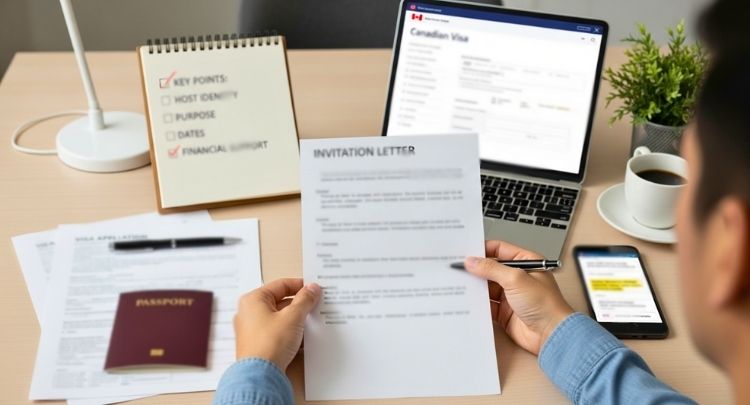
Officers first look at who invited you and how you know them. Names, addresses, and contact details must be clear. The relationship should be explained simply and honestly. If a family member or friend issue the notarized invitation letter, officers may request extra proof showing the connection is real.
Purpose Of Visit Explained Clearly
They check why you are visiting Canada and what you plan to do. The reason must sound reasonable and match your documents. Short visits, events, or family time are easier to understand. Vague goals or mixed messages often lead to doubts about true travel intent.
Host’s Legal Status In Canada
Officers review whether the host lives in Canada legally. Proof like citizenship, permanent residence, or valid visa matters. This shows the host can support the visit if needed. Without clear status proof, the invitation may feel weak and less reliable during assessment.
Travel Dates And Length Of Stay
Dates in the letter must match your application and plans. Officers check entry, exit, and stay length closely. Short, fixed stays seem safer than open plans. Clear timing helps show you plan to return home and respect visa rules properly.
Financial Support And Responsibility
They look at who pays for travel and daily costs. The letter should explain support clearly. If the host helps, proof may be needed. Clear financial plans reduce risk concerns and help officers see the visit is realistic and well planned.
Invitation letters work best when details stay clear and honest. Officers focus on trust, timing, and real intent always. Small checks can strongly affect visa outcomes later. Use this understanding to prepare documents with care.
Documents You Should Request to Verify a Canada Invitation Letter
Before trusting a Canada invitation letter, you should request supporting documents from the host. These papers help confirm the letter is real and honest. Checking them early reduces visa risk and avoids confusion later during the application review process.
- The Original Invitation Letter: Ask for the full invitation letter written by the host. It must include names, addresses, visit purpose, travel dates, stay location, relationship, contact details, and a clear signature.
- Proof Of The Host’s Legal Status: Request proof that the host legally lives in Canada. This can be a passport, citizenship card, permanent resident card, or valid study or work permit copy.
- Proof Of The Host’s Address: Confirm the host’s address using a utility bill, lease agreement, or recent bank statement. This helps verify where you may stay during the visit.
- Proof Of Relationship: Ask for documents showing your connection with the host. Examples include birth certificates, marriage papers, shared photos, or message records that clearly show a real relationship.
- Financial Or Support Documents: If the host will support your stay, request their recent bank statements and proof of income or employment to show they can cover expenses.
- Optional Travel Itinerary: A basic travel plan helps show intent. This may include a simple itinerary with travel dates, planned activities, and expected return timing.
- Your Own Supporting Papers: Prepare copies of your passport, return flight details, bank statements, and income proof. These help show you plan to return home after visiting.
Carefully checking these documents builds trust and clarity in your application. Small checks can prevent large problems later. Before you trust any invitation, ask for a clear copy of the notarized invitation letter to visit Canada along with the host’s identification. This simple step can greatly improve confidence during the visa review process.
What to Do If the Invitation Letter Looks Fake?
If an invitation letter feels wrong, act carefully before using it anywhere. Fake letters can cause visa refusal and future problems. Small warning signs should never be ignored. The clear steps below explain what to do next safely.
Do Not Use The Letter In Your Application
Carefully review the letter before adding it to your visa file. Poor spelling, strange layouts, or unclear details are warning signs. Using a fake letter can affect your whole application. It may cause officers to doubt all documents you submit, even those that are correct.
Contact The Sender Directly
Reach out to the person or organization who sent the letter. Use official phone numbers or verified email addresses only. Free or unknown email sources are risky. Ask them to confirm the letter clearly and explain its purpose without delay or excuses.
Request Real Supporting Documents
A real host can provide proof easily. Ask for copies of their passport, status papers, or address proof. Honest hosts usually share these without delay. If they avoid requests or give unclear answers, the letter may not be trustworthy.

Never Pay For An Invitation Letter
Real invitation letters are not sold. Anyone asking for money is a strong warning sign. Scammers often promise quick results for high fees. Paying for letters can lead to fraud issues and visa bans later. Always stop communication if money demands appear.
Check Official Government Information
Visit official Canada immigration websites for guidance. These sources explain what real invitation letters include. Embassy staff can also guide you if unsure. Trust only government information when checking documents. This helps avoid relying on rumors or unsafe advice online.
Report Suspected Scam Activity
If the letter seems fake, report it to authorities. In Canada, fraud can be reported to official agencies. Reporting helps protect others from scams. It also shows you acted responsibly and did not try to use false documents.
Seek Help From A Trusted Advisor
If confusion remains, speak with an immigration advisor or lawyer. Experienced professionals can review the letter and guide next steps. They help you avoid mistakes and explain safer options. Getting help early often saves time and stress.
Staying careful protects your visa plans and future travel chances. Fake letters can cause serious and lasting problems. Simple checks and calm actions reduce risk greatly. Use these steps to stay safe and confident.
Example: Strong Invitation Letter vs Weak Invitation Letter
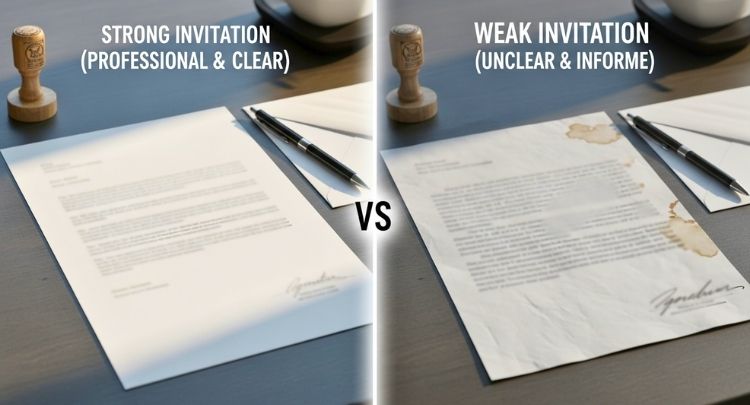
Strong and weak invitation letters can change how people respond quickly. A clear letter feels friendly, honest, and respectful from the first line. A weak letter feels confusing, cold, or rushed without purpose. Read the examples below to see what truly makes an invitation work.
Strong Invitation Letter (Effective)
Subject: Invitation to Attend the Annual Business Networking Conference on March 15
Dear Mr. Rahman,
We are pleased to invite you to attend our Annual Business Networking Conference, which will take place on March 15, 2026, from 10:00 AM to 4:00 PM at the City Convention Hall, Dhaka.
This event will bring together business leaders, industry experts, and professionals from different sectors. Your experience and knowledge would add great value to the discussions and networking sessions.
The conference will include keynote speeches, panel discussions, and opportunities to connect with industry professionals. We believe your presence will inspire many attendees.
Please confirm your availability by March 5, 2026. If you need any further information, feel free to contact us.
We look forward to welcoming you.
Warm regards,
Foysal Ahmed
Event Coordinator
ABC Organization
Phone: +880XXXXXXXXX
Email: [email protected]
Reason for this Letter is Strong
- Clear subject and purpose
- Complete event details
- Polite and confident tone
- Explains why the guest is important
- Clear next steps
Weak Invitation Letter (Not Effective)
Subject: Invitation
Dear Sir,
We want to invite you to our event. It will be held soon and many people will attend. We hope you can come and support us.
Please let us know if you are interested.
Thank you.
Regards,
ABC Organization
Reason for this Letter is Weak
- No clear event name
- No date, time, or location
- No reason why the person should attend
- Sounds unsure and rushed
Commonly Asked Questions
Here are some common questions people often have after reading about invitation letters. These FAQs focus on small but important doubts that usually come up later. Each answer explains things simply so you can feel more confident and clear.
Can A Canada Invitation Letter Be Verified Online?
A Canada invitation letter cannot be verified through a public online system. There is no website where you enter a number to check it. Verification happens by checking details and matching documents. Visa officers verify information during application review using records and proofs you submit.
Does A Notarized Invitation Letter Mean It Is Always Real?
Notarization only confirms the signature, not the truth of details. A notarized letter can still contain wrong or false information. Officers still check the host’s status, relationship, and purpose. You should always verify supporting documents, even if the letter is notarized.
Can I Verify An Invitation Letter Without Contacting The Host?
It is very hard to verify a letter without host contact. Most checks need host confirmation or documents. If the host avoids contact, it is a warning sign. Honest hosts usually respond and share proof without delay.
Is An Invitation Letter Required For Every Canada Visitor Visa?
An invitation letter is not required for all visitor visas. It is mainly used for family visits, friends, or specific events. Some travelers apply using hotel bookings instead. If you include a letter, it must be correct and verifiable.
What Happens If Small Details Are Wrong In The Letter?
Small errors can still cause doubts. Name spelling, dates, or address mistakes may delay decisions. Officers may ask for more proof or refuse the application. Always ask the host to correct errors before submission.
Can A Business Or Conference Invitation Be Verified Differently?
Yes, business or conference letters are checked differently. Officers look at the organization’s website, address, and event details. They may also verify company records. Fake organizations are easier to spot during these checks.
How Long Do Officers Take To Verify Invitation Letters?
Verification time varies with each case. Some letters are checked quickly if details match. Others take longer if officers need more proof. Delays often happen when information is unclear or inconsistent.
End Note
Verifying an invitation letter is about staying careful, calm, and organized. When details match and documents feel real, stress reduces quickly. Taking time to review names, dates, and proof helps protect your visa plans and avoids mistakes that can delay or stop approval.
So, how do I verify a Canada invitation letter? The answer is simple and clear. Check the host identity, confirm legal status, match travel details, review signatures, and keep records. These steps show honesty and help officers trust your application during review.
Always read documents slowly and ask questions early. Do not rush or trust unclear letters. Keep copies safe and stay consistent. With care and patience, the process feels easier. Wishing you smooth preparation, strong documents, and success with your Canada visa plans ahead.