
Icebreakers are small but powerful ways to turn quiet rooms into friendly spaces. They make people smile, relax, and start talking with ease. If you’ve ever wondered how to bring strangers together and create a warm event mood, you might be thinking about conference ice breakers for large groups.
Conference ice breakers for large groups include games like “Would You Rather,” “Two Truths and a Lie,” “Human Bingo,” and “Speed Networking.” These fun, simple activities spark conversations, ease tension, and help attendees connect quickly, turning large, quiet rooms into energetic, friendly spaces.
Do you want to know how to make big groups feel active and connected? Keep reading because this article shares everything you need to know about using icebreakers to make large conferences more fun, engaging, and full of energy.
Conference Ice Breakers for Large Groups
Big groups can feel quiet at first, but a few fun games help everyone open up. Simple activities can turn a room full of strangers into smiling faces fast. These ice breakers work for all kinds of events and are easy to set up. Keep reading to see some great ideas you can use next time.

Would You Rather
Ask light “Would you rather” questions that make people laugh and think. Try saying, “Would you rather live on the beach or in the mountains?” Ask the crowd to raise their hands for their choice. Keep the questions short and fun so everyone can join without pressure.
Sample:
“Would you rather travel to space or explore the deep ocean?”
Raise your hand if you pick space, or stay seated if you pick ocean.
Two Truths and a Lie
Invite a few people to share two true things and one false one. Everyone else guesses which one is not true. It’s quick, funny, and lets people learn new things about each other. Keep it easy with simple facts, not personal secrets.
Sample:
“I have a twin. I can juggle. I hate chocolate.”
Now others guess which one is the lie.
Human Bingo
Make bingo cards with fun facts like “Has a pet cat” or “Can sing.” People walk around finding others who match the boxes. Each person finds the signs that box. The first to fill a full row wins a small prize. It’s great for mingling and laughs.
Sample:
Ask someone,
“Have you ever visited more than three countries?”
If yes, they sign your card.
Speed Networking
Set up short, two-minute chats where people meet one-on-one. They can answer easy questions like “What’s your dream job?” or “What’s your favorite movie?” Then switch partners and repeat. It’s perfect for quick introductions, especially for global events like conference in Canada, where people meet from all over.
Sample:
Round 1:
“What’s your dream vacation spot?”
After two minutes, switch partners and repeat with a new question.
Emoji Check-in
Ask everyone to pick an emoji that shows their mood. They can say it or show it on their phones. It’s quick and funny when people explain why they picked that emoji. You’ll see smiles and a lighter mood right away.
Sample:
Say,
“I’m the laughing emoji because I was rushing here!”
Then ask others to share theirs.
Group Polls
Use live tools like Slido or Mentimeter to ask quick questions. People answer from their phones, and results show up on a big screen. It’s a fun way to learn about the group and spark laughs. Simple questions keep it lively and easy.
Sample:
Ask,
“Do you like coffee or tea more?”
Watch the live chart fill up on screen.
Rock, Paper, Scissors Tournament
Have everyone pair up and play one quick round. Winners find new partners for the next round until one final winner remains. The energy builds up fast as people cheer. It’s short, funny, and great for boosting excitement.
Sample:
Say,
“Find a partner near you and play one round!”
Winners raise their hands and move to the next match.
Team Scavenger Hunt
Split people into groups of five or six and give them a list. Include fun challenges like “Take a selfie with a stranger” or “Find someone wearing red.” It makes everyone talk and move around. The first team to finish wins.
Sample:
List items like:
- Take a photo with someone from another city.
- Find a pen with a logo on it.
Word Association
Start with one word and go around the room fast. Each person says a new word that connects to the last one. Keep it moving so no one overthinks. It’s funny when words start to get random, and everyone laughs.
Sample:
You say “Conference.”
Next person says “Meeting.”
Next says “Ideas,” and so on until someone hesitates.
Guess The Speaker
Show a funny photo or fact about a speaker before they go on stage. Let the crowd guess who it might be. It’s lighthearted and builds fun before sessions begin. Everyone enjoys seeing speakers in a playful way.
Sample:
Show a slide saying, “This speaker once sang on TV!”
Ask, “Who do you think it is?” before revealing the answer.
Ice breakers can turn a big crowd into a friendly group in minutes. They make people laugh, talk, and connect with ease. Try mixing a few ideas to fit your event’s mood and space. With these simple games, your next conference will start with energy and smiles.
Why Do Large Groups Need Special Icebreakers?
Big events can feel exciting but also a little uncomfortable. When there are many people, it’s easy for the room to feel quiet at first. Some might not know where to start or who to talk to. That’s why fun and simple icebreakers can make a huge difference for everyone. Here are more reasons why large groups need special icebreakers.
Big Crowds Can Feel Distant

When a group is large, people often stick to familiar faces. It can feel awkward to start talking with strangers in a big room. Without help, many people stay quiet and miss chances to connect. Icebreakers make that first step easy and comfortable for everyone.
Icebreakers Build Quick Comfort
Fun activities help people relax and feel included right away. A simple game or question can break the silence and bring out smiles. Once people laugh or share something small, the whole mood changes. Everyone starts to feel like part of the same group.
Helps People Interact Naturally
It can be hard to talk to new people at big events. Games or group tasks give everyone a reason to interact. When there’s something fun to do, it removes pressure from talking. Before long, the room is full of voices and laughter.
Turns Strangers Into Teams
When people work together, even for a short time, they connect faster. Team-based icebreakers build trust and make cooperation feel natural. These small activities often lead to better teamwork later in the event. Simple shared fun can quickly turn strangers into friendly faces.
Makes Events Feel Energetic
A few lively games at the start set a positive tone. Once people laugh, talk, and move, the energy spreads across the room. When planning for big crowds, looking at some top icebreaker ideas for conferences can help you pick activities that energize the room and make networking easier from the start.
Big groups can feel quiet, but a few fun ideas can change that. Icebreakers give everyone a chance to smile, talk, and connect fast. They make events more lively, friendly, and welcoming for all. With the right start, every large gathering feels more open and enjoyable.
Best Time to Run Icebreakers During a Large Conference
Big events often need a little boost to keep the energy high. Icebreakers work best when used at just the right time. They can lift moods, refresh minds, and help people reconnect. Let’s look at the best times to use them for a lively and friendly crowd.
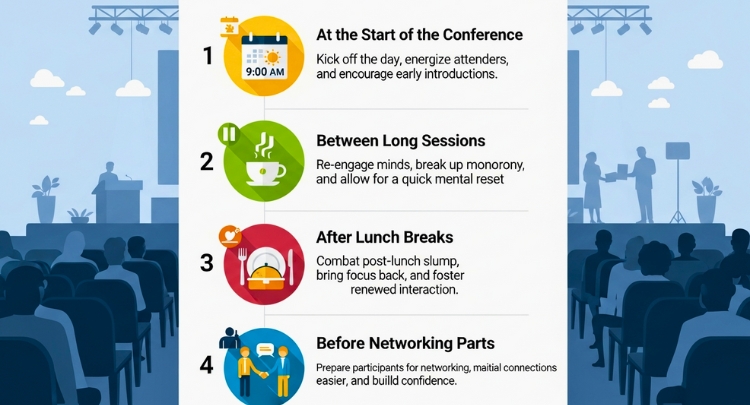
At the Start of the Conference
The first few minutes set the mood for the whole event. A short game or fun question helps people relax and talk early. Once attendees laugh together, the tension fades fast. Icebreakers here help new faces feel welcome and make the start enjoyable.
Between Long Sessions
Sitting through long talks can make anyone feel tired. A quick game between sessions gives everyone a mental break. It refreshes the crowd before they move to the next topic. Even five minutes of fun can bring energy back into the room.
After Lunch Breaks
Lunch breaks often slow down the energy in a big event. A light and funny icebreaker helps everyone wake up again. It’s also a good way to restart conversations and laughter. People return to sessions more focused and in a better mood.
Before Networking Parts
When it’s time to meet new people, icebreakers help start talks. Short and easy games make everyone feel ready to chat. They remove that awkward pause that often happens at first. Once people start talking, they’ll find it easier to connect naturally.
Near the End of the Day
After a long day, people can feel tired or quiet. Ending with a simple icebreaker helps close the day on a happy note. It can spark laughs and leave everyone with a good memory. These fun endings often make people excited for the next day.
Using icebreakers at the right time keeps the crowd lively and fresh. They lift the energy, encourage talks, and make long events enjoyable. Plan them around breaks or slow moments for the best effect. The right timing makes your conference fun, connected, and full of smiles.
How to Keep Everyone Engaged During a Large-group Icebreaker?
Large groups can be fun but tricky to manage during icebreakers. Some people may talk more, while others stay quiet. Keeping everyone involved takes a little planning. Try these simple ways to make sure no one feels left out during activities.
- Use a Microphone: Clear sound helps everyone hear and follow along. In big rooms, it keeps the group together and avoids confusion when giving short or funny instructions.
- Pick Group Leaders: Choose one leader for every few tables or rows. These helpers can guide others, explain rules, and keep the energy high throughout the activity.
- Try Visual Cues: Use hand signals, slides, or colored cards to show what’s next. Simple signs make large games smoother, even when it’s noisy or busy.
- Keep Rules Simple: Clear and short directions help people stay focused. Avoid long explanations or complex rules that confuse the crowd or slow things down.
- Use Interactive Tools: Polling apps or screens can include everyone quickly. People love seeing live answers pop up, making the crowd feel more connected and active.
- Move Around the Room: Walk through the crowd instead of staying on stage. Talking to smaller groups keeps the energy spread and makes people more comfortable joining in.
- Encourage Applause and Cheers: Small wins and laughs bring excitement to the group. A few rounds of clapping help keep everyone engaged and smiling together.
Large crowds can lose focus fast, but a few tricks keep them lively. Use tools, sound, and movement to involve everyone. When people feel included, the fun grows quickly. With a little effort, every big icebreaker becomes a great shared moment.
Technology That Helps Run Icebreakers for Large Conferences
Big crowds can be tricky to manage without the right tools. Simple technology can make icebreakers smoother and more fun for everyone. With just a few clicks, people can join in easily. Let’s look at how tech can make big group games more exciting and fair.
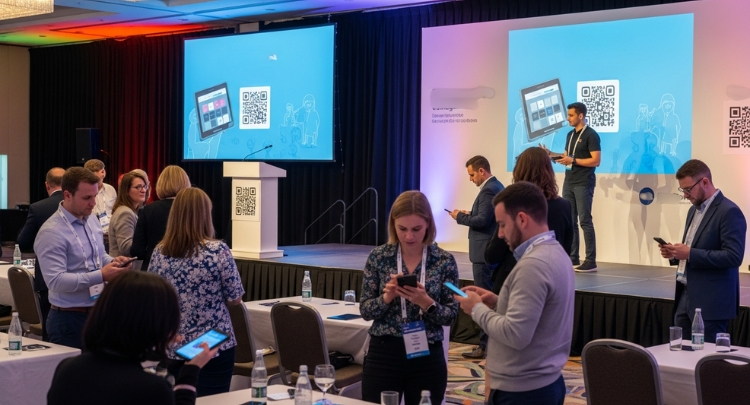
Event Apps Make It Easy
Using event apps keeps everything in one place for attendees. People can join games, answer questions, or share answers through their phones. It saves time and avoids confusion in large spaces. Many apps even collect live results, which helps keep the audience interested and involved.
Live Polls Add Instant Fun
Poll tools like Slido or Mentimeter bring fast, fun interaction. People vote or answer through their phones, and results show instantly on screen. Seeing live answers makes everyone feel part of the crowd. It’s quick, easy, and keeps energy high even in huge rooms.
QR Codes Save Time
Sharing links or joining games becomes simple with QR codes. Attendees scan the code to take part in polls or group tasks. It cuts waiting time and gets everyone involved right away. This trick works great in large halls where people are spread out.
Big Screens Boost Involvement
Showing answers or scores on big screens adds excitement to games. People love seeing their names or results pop up live. It also helps everyone follow along, even from the back rows. The visuals keep the mood fun and hold attention longer.
Chat Boards Help Everyone Join
Virtual chat boards or digital walls let people post messages or ideas. Even shy attendees can take part without speaking out loud. These tools make sharing easier and more comfortable for all. It turns icebreakers into fun spaces where every voice counts.
Simple tech tools can make icebreakers smoother and more fun for big groups. They help include everyone, no matter where they sit. From apps to QR codes, small touches can make a big difference. With the right tools, every crowd feels connected and active.
Tips for Choosing the Right Icebreaker for Big Audiences
Picking the right icebreaker for a big crowd takes a little thought. You want something fun but also easy to follow. The best ones match your time, space, and people. Use these simple tips to make your activity smooth and enjoyable.
- Know Your Audience: Choose something that fits the group’s comfort level. If people are shy, avoid high-energy games. Go with light and easy icebreakers that make everyone feel relaxed and welcome.
- Match the Event Tone: Fun events need playful games, while professional ones need something calmer. Always pick activities that match the mood and purpose of your gathering.
- Keep the Rules Simple: Complex directions confuse large groups fast. Pick games that need only one or two clear steps so everyone can join easily.
- Think About the Space: Big rooms need games that don’t require much movement. Smaller spaces work better with sit-down games or short group talks.
- Watch the Clock: Choose something that fits your time slot well. A quick game before a session or short breaks works best for big crowds.
- Use Helpers or Hosts: Having helpers in different parts of the room keeps things organized. They guide small groups and keep everyone involved.
- Test It First: Try the icebreaker with a small team before the event. This helps you spot any issues and make it run more smoothly.
Before picking an activity, it’s worth understanding conference icebreaker sessions to know which formats work best for large groups and which keep everyone involved.

Mistakes to Avoid When Hosting Large-group Icebreakers
Running games for a big crowd sounds simple, but it can go wrong fast. Some mistakes can make people confused or left out. Planning helps make sure everyone feels involved and has fun. Let’s see what to avoid when leading large-group icebreakers.
Giving Too Many Rules
Too many directions confuse people and waste time. Keep the game simple with short, clear steps that anyone can follow. When people understand fast, the fun starts sooner. Shorter rules mean more time for laughter and less time explaining.
Picking Games That Exclude People
Avoid games that need special skills or lots of movement. Some people may not feel comfortable joining in those. Choose activities that everyone can play equally. The goal is to include everyone and make them feel part of the group.
Talking for Too Long
Long talks before a game make people lose interest quickly. Explain what to do in one or two short sentences. Keep your energy up and start the fun right away. The faster it begins, the more excited the group will be.
Ignoring the Group Size
Some games only work in small groups, not large ones. Trying them with too many people causes chaos and noise. Pick games that fit your crowd and space well. That way, everyone can join without feeling lost or bored.
Forgetting to Manage Time
Time can slip away fast in big events. Always plan how long each activity will take. If it runs too long, people lose focus. Keeping icebreakers short keeps energy high and sessions on track.
Not Using Helpers
Handling hundreds of people alone is tough. Ask a few helpers to guide smaller groups or explain tasks. They keep things smooth and organized. With helpers, everyone stays on track and enjoys the activity together.
Skipping Clear Instructions
A fun game can fail if people don’t know what to do. Always repeat the main points before starting. Make sure everyone understands before moving on. Clear instructions help the group feel confident and ready to play.
Big icebreakers work best when they’re simple and clear. Avoid long talks, confusing rules, and hard tasks. Keep it short, fun, and easy for all to join. With good planning, large groups will laugh, connect, and enjoy every minute.
How Do Icebreakers Improve Networking and Team Spirit?
Meeting new people can sometimes feel a little uncomfortable at first. Icebreakers make that first step easy and fun for everyone. They help people laugh, relax, and open up naturally. Keep reading to learn how these simple activities can improve teamwork and build real connections.

Breaks the Initial Silence
Silence can feel awkward when people don’t know each other. A fun icebreaker helps fill that quiet space quickly. Once people start talking and laughing, the tension fades. That small start makes everyone feel more open to meeting new faces.
Builds Quick Comfort
Comfort helps people talk freely without fear or pressure. Games or questions help them find common interests fast. When people feel at ease, they connect more easily. Icebreakers create a friendly space where everyone feels included and ready to chat.
Encourages Natural Conversation
Fun questions or group activities make conversations flow better. Instead of formal talks, people share small, real moments. These simple chats often lead to deeper and lasting connections. A light start helps everyone interact in a friendly and relaxed way.
Creates Team Connection
Shared fun builds trust and teamwork quickly. When people laugh or solve something together, they feel more united. Icebreakers help groups bond before serious work begins. These early moments make working together smoother and more enjoyable later on.
Makes Networking Easier
Networking becomes less scary when people already feel connected. After a short game, talking to others feels simple and natural. Icebreakers open doors to longer, more meaningful talks. This helps build relationships that last beyond the event itself.
Icebreakers do more than just fill time at the start of an event. They help people relax, connect, and enjoy being part of the group. Strong connections lead to better teamwork and communication. With a little fun, networking turns into something easy and natural.
FAQs About Conference Ice Breakers for Large Groups
Starting a big event can feel a bit tense, especially when people don’t know each other. That’s where icebreakers help. They warm up the room, make people laugh, and create a friendly space for meeting new faces. Below are some common questions and answers to help you understand how to use conference ice breakers for large groups the right way.
What Makes a Good Icebreaker for a Large Conference?
A good icebreaker should be easy to join, quick to explain, and fun for everyone. It should not require special skills or extra tools to play. The best ones include everyone and get people moving or talking. Games that create laughter or friendly competition work really well for big crowds.
How Long Should a Conference Icebreaker Last?
The best icebreakers take about 5 to 10 minutes. Long games can make people lose interest, especially if there are many sessions to attend. Short activities keep energy levels high and leave people wanting more. Always match the time to your event’s flow and schedule.
Can Icebreakers Be Used in Professional Conferences?
Yes, they work great in professional events too. You just need to choose activities that match the tone of the event. Simple games like polls, “Would You Rather,” or group introductions work well. They make networking easier without feeling childish or out of place.
How Can I Handle Shy Attendees During Icebreakers?
Use group activities where no one is singled out. Fun polls, team challenges, or card games can help shy people join comfortably. Giving simple tasks or letting them pair up reduces pressure. The goal is to make everyone feel included, not forced to talk.
What Equipment Helps Run Icebreakers Smoothly?
Microphones, big screens, and simple apps like Slido can help manage large groups. QR codes make it easy for people to join games quickly. Using tech keeps everything organized and avoids confusion. A few helpers or event staff can also keep things running well.
Should Icebreakers Include Prizes?
Small prizes can make games more exciting and fun. Simple gifts like notebooks, mugs, or gift cards are enough to boost participation. The goal isn’t the reward but the laughter and teamwork it brings. Even a round of applause can be a great motivator.
Conclusion
Icebreakers have the power to turn a quiet crowd into a lively group full of smiles and energy. They help people relax, share small moments, and feel connected from the very beginning. A few fun and simple activities can make even the biggest event feel warm and friendly for everyone attending.
The best conference ice breakers for large groups are easy to join, simple to explain, and quick to play. They help people meet, talk, and connect naturally without feeling pressured. Whether through games, polls, or teamwork, these icebreakers bring comfort, laughter, and stronger networking in every big event.
To make your next conference shine, plan your activities early, keep instructions short, and choose games that fit your space and audience. Always aim to include everyone, keep the energy high, and enjoy the fun moments that follow. Wishing you a smooth event full of smiles and good conversations!