
Electrical engineering is changing fast with new smart systems, clean energy solutions, and advanced technologies. These improvements help create safer, simpler, and more efficient ways to use and manage electricity. As devices become more connected, engineers have more opportunities to work on modern and useful ideas.
The best electrical engineering research topics include renewable energy systems, smart grids, IoT-based automation, power electronics, artificial intelligence in control systems, and electric vehicle technology areas that support cleaner and smarter engineering.
Keep reading to learn about each topic in simple terms and find ideas that match your interests. Follow this guide to explore practical, trending, and high-value topics for your project or research work.
Best Electrical Engineering Research Topics
Explore the most important research areas in electrical engineering, from smart grids to AI-powered systems. These categories help you find clear, practical, and future-ready ideas for your project. Check out the topics that are most relevant to your goals and interests by reading on:
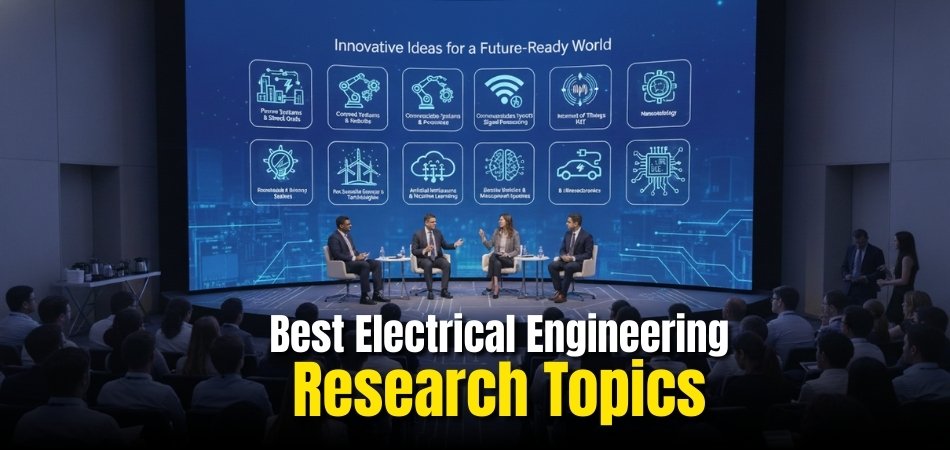
Power Systems and Smart Grids
This area focuses on building stronger and smarter power networks. Research topics include renewable energy integration, grid automation, real-time monitoring, energy storage systems, and ways to make power generation more sustainable. Students can also explore smart meters, distributed energy resources, and methods to reduce power losses.
Control Systems and Robotics
Control systems help machines work safely and accurately. In robotics, they manage movement, balance, and decision-making. Research topics include automation, robot control, sensor integration, motion planning, and AI-based control models. These topics help improve robots used in industries, healthcare, and homes.
Communication Systems and Signal Processing
This field deals with how information is sent, received, and processed. Students can explore 5G technology, IoT communication, wireless networks, and digital signal analysis. Other research ideas include noise reduction, data compression, and secure communication systems.
Internet of Things (IoT) and Embedded Systems
IoT connects everyday devices to the internet, while embedded systems control how these devices work. Research topics include low-power devices, wireless sensor networks, microcontrollers, and real-time operating systems. Students can also study smart home systems, tracking devices, and automation tools.
Artificial Intelligence and Machine Learning in Electrical Engineering
AI and ML help machines make smart decisions and improve system performance. Research topics include power usage optimization, fault detection, automation, and predictive maintenance. Students can also explore how AI supports grid planning, robotics, and energy forecasting.
Renewable Energy and Sustainable Technologies
This area focuses on clean and eco-friendly energy solutions. Popular topics include solar energy, wind power, hydrogen fuel cells, and energy harvesting systems. Students can also research sustainable power generation, smart inverters, and EV charging systems that support green energy.
Electric Vehicles and Battery Management Systems
Electric vehicles (EVs) need good charging networks and safe batteries. Research topics include fast-charging systems, battery health monitoring, energy storage improvement, and thermal management. Students can also explore renewable-powered EV charging stations and intelligent BMS design.
Nanotechnology and Microelectronics
This field works with very small electronic components that power modern devices. Research topics include new semiconductor materials, microchip design, nanodevices, and energy-efficient circuits. Students can also study how nanoscale technology improves sensors, processors, and communication tools.
Latest Electrical Engineering Research Topics (2025 Trends)
Here are some of the latest electrical engineering research trends shaping 2025. These emerging ideas focus on smarter systems, cleaner energy, and faster technologies. Each topic opens new doors for students and researchers who want to explore fresh, impactful, and future-ready innovations in the electrical field.

- Quantum Computing: Quantum systems use qubits to process huge amounts of data faster than traditional computers. This technology helps solve complex engineering problems with improved accuracy and advanced computational power.
- Wireless Power Transfer: Wireless power lets devices charge without physical cables using magnetic or radio waves. It supports safer, cleaner, and more flexible energy options for vehicles, homes, and industrial equipment.
- Smart City Systems: Smart cities use sensors and automation to improve traffic, energy use, and public services. These systems help communities become safer, more efficient, and environmentally friendly.
- Edge Computing: Edge computing processes data near devices instead of cloud servers for faster response. It reduces delays and improves performance for IoT systems, smart grids, and connected machines.
- Advanced Battery Tech: New battery designs improve charging speed, storage capacity, and long-term safety. These solutions support electric vehicles, renewable systems, and portable devices with better reliability.
- Cyber-Physical Security: This area protects power grids, communication networks, and smart devices from digital threats. It ensures safer operation and reduces risks in modern automated systems.
- AI-Based Energy Tools: AI helps predict power usage and manage energy more efficiently. These tools support stable grids and reduce waste in homes and industries.
- High-Efficiency Semiconductors: New semiconductor materials improve energy savings and device performance. These components support faster electronics, stronger processors, and better communication systems.
These trends highlight where electrical engineering is heading and offer strong opportunities for valuable, future-focused research work. Whether you’re exploring advanced systems or preparing for a conference in Mexico, these innovations provide clear direction and meaningful topics that can strengthen your academic projects, professional goals, and long-term engineering career.
Easy and Practical Research Topics for Undergraduate Students
Undergraduate students can explore electrical engineering with simple topics that use small tools and clear methods. These ideas build strong skills and help learners understand key concepts without large budgets or complex labs. Here are the topics that support learning through easy tests and short experiments.
Basic Power Control Projects
Small power circuits give clear chances to learn simple control ideas with safe parts and direct steps. Each setup guides the student through steady current paths and helpful tests inside a compact build. These projects teach strong skills that support future work.
Sensor and Motion Systems
Sensor modules track light, sound, or movement with short code lines that guide clear actions. Each small setup shows how simple signals travel into a board and create quick changes. These projects help students understand basic sensing ideas with ease.
Smart Home Mini Designs
Simple home ideas allow small boards to control lights and switches with short rules inside clean code. Each compact build connects parts through direct triggers that create fast responses. These designs introduce smart features used in real spaces and homes.
Simple Communication Links
Two boards can share tiny messages through radio modules that send clear data in short bursts. Quick signals move across small distances and help each board react in simple ways. These projects teach early communication ideas used in many devices.
Introductory Embedded Tools
Microcontroller boards run short programs that guide pins through simple actions with direct loops. Each task teaches how code lines shape timing, flow, and device behavior. These builds give students strong early skills for deeper embedded work.
Innovative and High-Impact Topics for Postgraduate or PhD Research
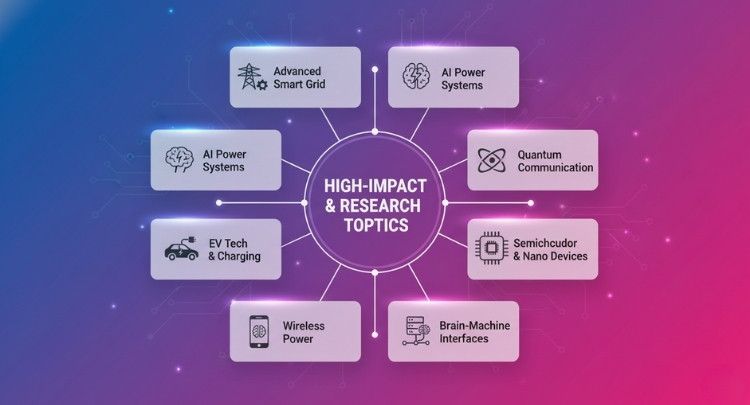
Postgraduate and PhD research in electrical engineering focuses on advanced ideas, deep technical studies, and high-impact innovation. These topics aim to solve major global challenges, improve modern systems, and create new paths for long-term academic growth through meaningful scientific work.
Building Strong Research Impact
High-level research becomes more valuable when students share findings, gain feedback, and connect with global experts. This process grows even stronger when researchers gain wider insight by participating in engineering conferences, which helps refine ideas and opens doors for future collaboration and recognition.
Advanced Smart Grid Optimization
Research in this area explores intelligent grid models, dynamic power routing, and reliable renewable integration. Students can design real-time control systems, improve grid stability, and study advanced forecasting tools that support cleaner and smarter energy networks.
AI-Driven Power and Energy Systems
This field applies machine learning tools to predict faults, improve load patterns, and support stable power flow. Work may include deep-learning control models, predictive planning tools, and intelligent automation for next-generation power grids.
Quantum Communication and Secure Networks
Quantum research creates ultra-secure communication systems using quantum keys and unique transmission methods. Students explore quantum channels, entanglement-based links, and system stability, making this a strong path for high-impact security research.
High-performance Semiconductor and Nano Devices
Nano-level studies focus on new materials, advanced chip structures, and energy-efficient designs. These topics support faster processors, improved sensors, and high-performance electronics used in modern devices.
Electric Vehicle Technologies and Ultra-Fast Charging
EV research includes smart charging networks, safe battery systems, and thermal optimization. Students can design fast-charging models, renewable-backed charging solutions, and intelligent battery management systems.
Wireless Power Transfer and Energy Harvesting
This field studies wireless charging systems and devices that gather energy from motion, heat, or light. These ideas support long-term use in medical implants, IoT devices, and remote sensors.
Edge AI for Real-time Embedded Systems
Edge AI combines fast computing with smart embedded tools. Research includes low-latency models, micro-AI chips, and real-time decision systems used in robotics and autonomous machines.
Brain–Machine Interfaces and Neuro-electrical Systems
Neural research explores how the brain connects with electronic devices. Students study signal decoding, neural mapping, and assistive systems that support communication and mobility.
How to Choose a Topic for an Electrical Engineering Conference?
Undergraduate conferences give students strong chances to share ideas, meet experts, and learn from real feedback. Choosing the right topic helps you speak clearly, feel confident, and show useful work. Here are simple steps so you can pick and refine an effective electrical engineering conference topic with peers.
1. Explore Your Interests
Start by listing subjects in electrical engineering that fascinate you and feel natural during long study sessions. Remember topics from classes, labs, or hobbies where time passed quickly because curiosity stayed strong and playful. Strong interest helps you handle challenges, finish tasks, and speak confidently about every detail to listeners.
2. Check Available Resources
Next, check what tools, software, and lab equipment your campus already provides for student projects each semester. Choose ideas that match available hardware, budget, and time rather than dreaming about huge, unrealistic systems everywhere. Good resource planning keeps your conference work smooth, focused, and comfortable during demanding weeks on campus.

3. Match Supervisor Expertise
Then, look at faculty research areas and notice which teachers enjoy guiding extra projects outside normal classes. Discuss rough ideas during office hours and ask which directions match their current interests and active grants. Strong supervisor support gives feedback, faster decisions, and useful connections during conference preparation and later work.
4. Follow Current Trends
Search recent papers, conference programs, and trusted blogs to see which electrical engineering topics appear repeatedly everywhere. Notice areas like smart grids, renewable systems, or embedded intelligence that connect with industry needs and society. Choosing a trendy area helps your talk feel fresh, relevant, and interesting for judges and audiences.
5. Plan for Time and Effort
Estimate how long design, testing, and presentation work may take when your semester feels crowded and busy. Break the project into weekly goals, including reading, building, measuring, and preparing clear slides for delivery later. A realistic plan protects your health, keeps progress steady, and prevents last-minute panic before conferences.
6. Add Original Value
Think about how your idea differs from common classroom projects and obvious textbook experiments that other students present. Add a small twist, such as new data, different conditions, or unusual combinations that create fresh perspectives. Unique topics attract attention, support memorable discussions, and sometimes lead to invitations for further collaboration afterward.
7. Test Your Idea with Feedback
Create a quick sketch, diagram, or tiny prototype that shows the core idea without heavy detail everywhere. Share this outline with friends, mentors, or teachers and ask whether the message feels clear and interesting. Early feedback reveals confusing sections, missing steps, and chances to strengthen your title, visuals, and explanation.
Why Choosing the Right Topic for a Conference Matters?
Choosing a strong conference topic shapes the direction of your work and helps your ideas stay clear during busy days. It also affects how people judge your skills, how your research grows, and how you build a confident voice. Picking well gives you better outcomes, stronger connections, and more useful paths in engineering. Here are more reasons to choose.

Strong Research Direction
A focused topic supports steady progress because your mind follows one clear idea instead of drifting through many vague options. This clarity keeps your planning simple and helps you explain your work with comfort when you stand in front of a room.
Better Academic Impact
Teachers respond quickly to a topic that feels sharp, grounded, and easy to follow. This kind of interest opens the door to deeper mentor discussions and guidance that can improve your project in meaningful ways.
Higher Innovation Value
Fresh ideas often appear when your topic has room for creativity and exploration. New angles bring unexpected thoughts that push your work forward and help your presentation stand out during busy events.
Wider Industry Relevance
Real engineering problems connect naturally with topics that respond to practical needs companies care about. That connection becomes even stronger in discovering engineering conferences in Mexico, opening opportunities to learn how different regions approach similar challenges.
Strong Publication Potential
A clear and original idea improves your publication chances because journals prefer work with focused goals and solid direction. Strong writing around such topics builds your academic presence and supports long-term growth across research groups and engineering fields.
Better Supervisor Support
Supervisors often show more interest when your topic aligns with their strengths and preferred areas of research. This alignment leads to smoother meetings and steady support that helps you move forward without unnecessary confusion.
Long-term Career Growth
Valuable experience grows from a topic that matches emerging engineering fields. Over time, this helps employers see someone confident, capable, and prepared to handle ideas with clarity and purpose.
Common Mistakes to Avoid When Selecting a Research Topic
Selecting a research topic becomes harder when students overlook simple details that shape the direction of their work. Many problems appear because ideas feel too large, too old, or too heavy for available tools. These points highlight common mistakes and offer easy guidance to help students choose better topics.
- Too Broad: Large topics create confusion because they include many areas that demand extra time and heavy effort. Clear focus helps you choose smaller goals that support progress and remove stress during short project periods.
- Outdated Ideas: Old topics reduce interest because teachers expect research that matches new technology and strong industry changes. Fresh ideas help you build exciting work that connects with current needs and draws clear attention.
- Heavy Resources: Complex topics drain energy because advanced tools often require long training and higher funds not easily available. Simple builds help you learn faster and produce neat results that support confident presentations.
- Weak Interest: Uninspiring topics reduce motivation because long weeks become difficult when curiosity fades too quickly within your plan. Choose exciting ideas that keep your mind active and help your work stay smooth and steady.
- Unclear Scope: Vague topics cause problems because goals and steps change often without any strong direction or real purpose. Clear limits guide your actions well and help each part flow naturally toward a stronger final project.
- Poor Guidance: Unsupported topics create issues because supervisors may not know enough to offer useful and strong help. Matching your idea with available expertise gives you better advice and smoother weekly progress.
- No Practical Use: Weakly applied topics feel empty because they rarely offer any benefits that matter in real spaces. Choose ideas that solve simple tasks and help you understand useful engineering needs during your work.
FAQs About Best Electrical Engineering Research Topics
Before selecting a research topic in electrical engineering, students often have questions about difficulty, value, and long-term impact. These FAQs help clear confusion by offering simple guidance and practical ideas. Use them to choose topics that match your skills and future goals.
What Is the Easiest Electrical Engineering Topic to Start With?
The easiest topics usually involve small circuits, basic sensors, or simple control systems that need minimal tools and time. These options help beginners understand core ideas while building confidence. Students can also explore small IoT ideas that require very little setup.
Which Electrical Engineering Field Has the Most Future Growth?
Fields like renewable energy, electric vehicles, power electronics, and embedded intelligence show strong long-term growth. These areas support global development and industrial needs. Students choosing topics from these zones gain better opportunities and stronger research direction for modern engineering careers and future study paths.
How Do I Know If My Topic Is Too Hard?
A topic becomes too hard when it demands tools you cannot access or software you cannot learn quickly. Long timelines also signal problems. Choosing simpler ideas with clear steps helps you build progress steadily without losing clarity or confidence during research.
Are Software-Based Electrical Engineering Topics Acceptable?
Software topics are useful because they help students test ideas without needing expensive lab equipment. Simulations, modeling tools, and algorithm designs offer strong learning value. Many universities support such work because it teaches analysis, system behavior, and digital decision-making effectively.
What Electrical Engineering Topics Have a Practical Impact?
Topics linked to clean energy, medical devices, safety systems, smart grids, and communication tools have a strong real-world impact. These areas solve daily problems and improve lives. Students working in such fields gain meaningful experience and produce research that feels valuable and relevant.
Can I Combine Two Fields Into One Research Topic?
Combining two fields is a smart idea when both areas connect smoothly and share similar goals. Examples include AI with power systems or IoT with automation. Such blends give your project unique value while still remaining manageable with proper planning.
What Makes a Research Topic Unique and Interesting?
A topic becomes unique when you add a new angle, a fresh condition, or a different method. Small improvements can create clear differences. Students who adjust familiar ideas often gain strong results and produce work that stands out during presentations.
How Do I Choose a Topic If I Like Many Fields?
When interests feel wide, list the fields you enjoy and compare required time, tools, and personal comfort. Choosing the area that feels natural during long study sessions helps reduce confusion. A simple priority ranking also helps narrow everything down.
Are Hardware Projects Better Than Software Projects?
Both hardware and software projects offer strong value, and the better choice depends on your skills and tools. Hardware builds teach physical design and testing. Software projects teach logic and modeling. Selecting based on comfort helps you maintain steady progress.
How Can I Make My Research Topic More Practical?
You can make your topic more practical by focusing on simple problems seen in daily technology or local systems. Adding measurable results also helps. Practical ideas give you clearer direction and make your findings easier to present and explain.
Wrap Up
Electrical engineering offers a wide range of paths, and exploring them helps you find ideas that match your goals, skills, and interests. Every topic covered in this guide can support personal growth, academic strength, and real-world impact.
When you explore the best electrical engineering research topics, you gain clearer direction and stronger confidence for future projects. Each area encourages deeper learning, creative thinking, and valuable experience that can shape your journey in meaningful ways.
As you continue your work, keep experimenting, stay curious, and let your interests guide you toward ideas that inspire genuine progress in your engineering career.