Searching for the right conference can feel exciting yet overwhelming, especially when events are scattered across different platforms. Many people wonder, how do I find a list of conferences? because the process often seems unclear, time-consuming, and full of mixed information.
To find a list of conferences, use trusted directories, academic platforms, association websites, and smart Google searches, then narrow results by topic, location, and goals. This simple method helps you discover relevant and reliable events quickly. To learn more about the top tactics, continue reading.
Why Finding Conferences Can Be Difficult?
Finding a list of conferences can be difficult because events are spread across multiple platforms, listings may be outdated, and some conferences are unreliable or even predatory. The specifics of these are listed below:
- Events are spread across many platforms: Conferences are listed on directories, university websites, social media, and association pages, which makes finding local conferences and global events in one place difficult.
- Some listings are outdated or incomplete: Conference dates, deadlines, and locations can change quickly, and not all websites update their information regularly.
- Not all conferences are trustworthy: Some events are low-quality or even predatory conferences that charge high fees without offering real value or proper peer review.
- Different goals require different sources: Academic researchers look for indexed conferences (Scopus, Web of Science), while professionals focus on networking or industry events—so one platform rarely fits all needs.
- Deadlines and calls for papers are time-sensitive: Missing submission deadlines or early registration dates can mean losing valuable opportunities.
Without a clear strategy, it’s easy to miss high-quality conferences—or worse, waste time and money on unreliable ones.
How Do I Find a List of Conferences?
To find a list of conferences, use conference directory websites, academic platforms, association pages, and smart Google searches. The most effective approach is to start broad and then narrow your results based on your topic, location, and goals. Here are the most effective methods:

Start With Conference Directory Websites
Conference directories are the fastest way to see a large number of events in one place. These platforms allow you to filter conferences by:
- Topic
- Country
- Date
They give you a broad overview and help you quickly identify relevant options.
Explore Regional and Niche Portals
Some websites focus only on specific regions or industries, such as Europe, Asia, medicine, or engineering.
These platforms are useful when:
- You want location-specific results
- You are searching within a specialized field
They reduce noise and make your search more targeted.
Check Professional Associations and Societies
Industry associations and academic societies often host the most reputable conferences, including:
- Annual flagship events
- Workshops
- Symposia
These conferences are usually well-organized and widely recognized in their fields.
5. Utilize Academic Listservs
Many professionals and researchers rely on mailing lists instead of traditional websites. These listservs often share conference announcements early—sometimes before they appear on public platforms.
Popular examples include:
- H-Net (Humanities)
- JISCmail
- University mailing lists
Subscribing to these lists can give you early access to calls for papers, niche events, and specialized upcoming conferences in your field.
Look at Universities and Research Institutes
University websites are one of the best sources for academic conferences. They often publish:
- Research symposiums
- Graduate conferences
- Call-for-papers announcements
Searching directly within department pages can help you find high-quality academic events.
Use Social Media and Email Alerts
Social platforms can help you discover newly announced events that may not yet appear on directories.
Useful sources include:
- LinkedIn Events
- Facebook groups
- Hashtags like #CallForPapers
Subscribing to email newsletters also ensures you don’t miss important updates.
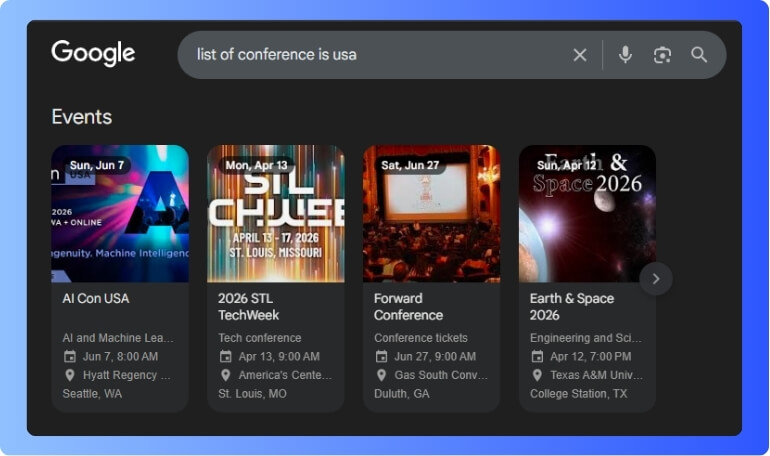
Use Smart Google Searches (Advanced Method)
Google can uncover hidden conference listings when used correctly.
Try searches like:
- “international conferences 2026 [your field]”
- “call for papers 2026 site:.edu”
- “conference 2026 filetype:pdf”
These techniques help you find official pages, brochures, and academic listings that may not appear on standard platforms.
Top 10 Websites to Find Conferences in 2026
Using reliable websites is crucial for finding a list of conferences in 2026. The platforms below help you discover academic and professional events by topic, location, and date, making your search faster and more reliable.
| Platform | Best For | Key Features |
| Global Conference Alliance | International events | Covers multiple fields, global listings, easy filtering |
| 10times | Business & industry events | Large database, filters by date, country, and category |
| Eventbrite | Local & professional events | Ticketing, real-time updates, networking events |
| Springer | Academic conferences | Research-focused, indexed proceedings, trusted publisher |
| WikiCFP | Call for papers | Academic submissions, deadline tracking |
| AllConferenceAlert | General listings | Email alerts, category-based browsing |
| Conference Alerts | Global conferences | Location-based alerts, simple interface |
| PaperCrowd | Academic researchers | CFP tracking, research-focused filtering |
| Conference-Service | Broad listings | Easy browsing by subject and location |
| ResearchGate (Events) | Academic networking | Community-driven event sharing |
For Academics vs Professionals: Where to Search
Academics and professionals should search for conferences in different places. Researchers use academic platforms and indexed events, while professionals rely on industry platforms for networking and career growth. The full details are given below:
For Researchers and Students
If your goal is to publish papers or gain academic recognition, focus on platforms that highlight call-for-papers (CFP) and indexed conferences:
- WikiCFP (for CFP deadlines and academic listings)
- University websites and department pages
- Academic publishers like Springer, IEEE, and ACM
- Indexed conferences (Scopus, Web of Science)
- Global Conference Alliance (for international academic and multidisciplinary conferences)
These sources help you find conferences where your work can be reviewed, published, and cited.
For Professionals and Business Users
If your goal is networking, learning industry trends, or career growth, focus on platforms that promote events and workshops:
- LinkedIn Events
- Eventbrite
- 10times
- Global Conference Alliance (for global business, technology, and professional events)
- Industry-specific platforms and communities
These are ideal for discovering practical events, building connections, and staying updated with market trends.
Quick Tip
Choose your source based on your goal:
- Publishing research → Academic platforms
- Networking and skills → Professional platforms
Reverse Lookup Strategy- Does it Felp You Find List of Conferences?
Yes, the reverse lookup strategy is an effective way to find high-quality conferences by identifying where experts and researchers in your field present their work. Instead of searching directories first, this method helps you discover trusted and relevant conferences through real academic and professional activity.
How the Reverse Lookup Strategy Works
The idea is simple:
Find respected professionals in your field and track the conferences they attend or publish in.
You can do this by:
- Checking CVs or personal websites of researchers
- Reviewing Google Scholar or ResearchGate profiles
- Looking at published papers and their conference names
- Exploring LinkedIn profiles of industry experts
This approach reveals conferences that are often high-impact, reputable, and worth attending.
Why This Strategy Is Powerful
- Filters out low-quality or predatory conferences
- Highlights events with real academic or industry value
- Helps you discover niche conferences not listed on major directories
- Shows where top professionals actually participate
When Should You Use It?
The reverse lookup strategy is especially useful when:
- You want to publish research in reputable conferences
- You are unsure which conferences are respected in your field
- You want to follow trends and expert activity
Step-by-Step: How to Search for Conferences Online?
To search for conferences online, use event platforms, directory websites, academic sources, and smart Google search techniques. Follow these steps to find relevant and trustworthy conferences efficiently:

Step 1: Choose Clear Keywords
Start with three basics: topic, location, and year. Examples:
- “AI conference 2026 USA”
- “marketing conference Europe 2026”
This helps you get accurate and focused results.
Step 2: Search Major Event Platforms
Begin with large platforms like Eventbrite and 10times. These sites provide filters for location, category, and date, giving you a quick overview of available events.
Step 3: Use Conference Directory Sites
Explore platforms like AllConferenceAlert and Conference-Service. These are useful for browsing multiple events in a list format across different fields and regions.
Step 4: Check Call-for-Papers Platforms
If you are a researcher, use sites like WikiCFP and PaperCrowd. You can locate conferences that are currently accepting submissions by using these platforms.
Step 5: Visit Association and Society Websites
Look at official organizations such as IEEE and other academic or industry societies. These conferences are often more reputable and widely recognized.
Step 6: Use Advanced Google Search Techniques
Use operators like:
- site:.edu (for university-hosted events)
- filetype:pdf (for brochures and CFPs)
You can find official or hidden conference listings using these techniques.
Step 7: Review Conference Details Carefully
Before shortlisting, check key details such as date, venue, organizer credibility, and fees to get the right conference that matches your goals. This ensures the conference matches your goals.
Step 8: Verify Legitimacy Before Registering
Always confirm the conference is genuine. Check the organizer, past events, speaker list, and whether it is associated with recognized institutions or indexed in databases like Scopus or Web of Science.
Pro Tip: Save and Track Your Results
Keep your selected conferences in a spreadsheet or digital tool. Update it regularly to track deadlines and avoid missing opportunities.
Free vs Paid Conference Directories
Free vs paid conference directories differ in cost, features, and data quality. Free platforms offer basic search tools, while paid directories provide advanced filtering, better accuracy, and dedicated support for more reliable conference research. Here is a comparison table:
| Feature | Free Conference Directories | Paid Conference Directories |
| Cost | Free | Subscription-based |
| Tools | Basic filters and search options | Advanced features and analytics |
| Quality | Mixed listings | Higher-quality, curated listings |
| Support | Limited or community-based | Dedicated customer support |
Tip: Use free directories to explore options initially, then switch to paid tools for deeper research, better filtering, and more reliable results.
Ways to Set Google Alerts
To set Google Alerts for conferences, create keyword-based alerts using filters, frequency settings, and search operators. This helps you track new events automatically. Follow the steps below to set it up correctly.
Choose Clear and Focused Keywords
Start by selecting keywords based on your topic, location, and year, such as “AI conference 2026” or “health summit Asia.” Specific keywords improve accuracy and ensure you receive relevant alerts instead of unrelated or low-quality results.
Use Advanced Search Operators
Enhance your alerts using operators like quotes, OR, site:, and minus signs. For example, (“data science” OR “machine learning”) conference 2026 helps capture multiple variations while filtering unwanted results for better precision.
Create Alerts with Proper Settings
Go to Google Alerts, enter your keyword, and adjust settings like frequency, language, and region. Choose “only the best results” to reduce spam and ensure higher-quality conference updates delivered to your inbox or feed.
Set Multiple Alerts for Better Coverage
Instead of one broad alert, create several focused alerts such as topic plus conference, topic plus call for papers, and location-based alerts. This approach increases coverage and helps you discover more relevant opportunities efficiently.
Organize Alerts Using Email Filters
Use email filters or labels to keep alerts organized. Create a label like “Conferences” in your inbox so updates are easy to track. This prevents clutter and ensures important notifications are not missed.
Review and Improve Alerts Regularly
Check your alerts weekly and refine keywords based on results. Add new terms if you miss opportunities or remove irrelevant ones. Regular adjustments keep your alerts accurate, useful, and aligned with your conference search goals.
Identifying Fake and Predatory Conferences
Predatory conferences are low-quality or deceptive events that charge high fees without proper peer review, credible organizers, or recognized academic value. Identifying them early helps you avoid wasting time, money, and research opportunities.
Common Warning Signs to Watch For
- No clear organizer details: Legitimate conferences always list verified institutions, societies, or universities behind the event.
- Fake or unverified speakers: Well-known names may be listed without confirmation. Always check speaker profiles or official announcements.
- Poor website quality: Broken links, grammar errors, and vague information often indicate low credibility.
- No past event history: Reliable conferences usually show previous editions, photos, or published proceedings.
- Pressure to register quickly: Urgent emails and countdown tactics are common in predatory events.
- Unclear indexing or publication claims: If a conference claims indexing in Scopus or Web of Science without proof, treat it as a red flag.
- Spam email invitations: Unsolicited emails inviting you to unrelated conferences are often a warning sign.
How to Verify a Conference Is Legit?
To verify a conference is legit, check organizer credibility, affiliations, indexing, and past event history. Always confirm details across multiple sources before registering. Follow these steps to ensure the conference is trustworthy.

Check the Organizer’s Credibility
Look for clear information about the organizer, such as a university, professional society, or recognized institution. Search their name online and confirm they have a real presence, official website, and consistent event history.
Verify Association or Society Affiliation
Trusted conferences are often linked to organizations like IEEE, ACM, or other professional bodies. Check if the event is officially listed on the organization’s website, not just mentioned on the conference page itself.
Confirm Indexing and Publication Claims
If the conference promises publication, verify indexing in databases like Scopus or Web of Science. Search the conference name with “indexing” and check the publisher’s official site to confirm these claims are genuine.
Review Past Events and Proceedings
Legitimate conferences usually have a history of previous editions. Look for past event photos, speaker lists, or published proceedings. A lack of verifiable history is a strong warning sign of a low-quality or fake event.
Check Speaker and Committee Details
Search for listed speakers or committee members on LinkedIn or academic profiles. Real experts usually mention their participation. If names cannot be verified or seem unrelated, the conference may not be credible.
Evaluate Website Quality and Transparency
A trustworthy conference website should include clear details such as venue, schedule, fees, and contact information. Poor design, vague content, or missing details often indicate low credibility.
Verify Payment and Contact Information
Ensure the registration page uses secure payment methods with HTTPS. Check for a valid email address and contact number. Avoid conferences that request unusual payment methods or lack clear communication channels.
Cross-Check Information on Multiple Sources
Search the conference name on Google, social media, and academic platforms. Legitimate events usually appear on multiple trusted websites. If you only find one source, verify carefully before proceeding.
Frequently Asked Questions
These frequently asked questions address additional concerns people have when searching for conferences online. They cover practical tips, timing, costs, and tools that were not discussed earlier, helping you make smarter decisions and improve your overall conference search strategy.
What Is The Best Time To Start Looking For Conferences?
The best time to start searching is 6 to 12 months in advance. Many conferences announce early details and call for papers months before the event, giving you enough time to prepare submissions, travel plans, and registration.
How Can I Find Conferences In My Local Area?
You can find local conferences by using location-based keywords, checking city event listings, and browsing platforms like Eventbrite or LinkedIn Events. Local universities and community boards also often promote nearby conferences and workshops.
Why Do Some Conferences Have High Registration Fees?
Conference fees usually cover venue costs, speaker arrangements, materials, and event management. High-quality conferences with strong speakers and networking opportunities often charge more, but they also provide better value and learning experiences.
What Tools Can Help Me Manage Multiple Conference Deadlines?
You can use tools like Google Calendar, Notion, or spreadsheets to track deadlines. Setting reminders and organizing conferences by date, topic, and priority helps you stay on schedule and avoid missing important submission or registration deadlines.
How Do I Know If A Conference Is Worth Attending?
Check the conference agenda, speakers, organizer reputation, and attendee reviews. If the topics match your goals and the event is backed by a recognized institution or community, it is likely worth attending.
Can Students Attend Professional Conferences?
Yes, many conferences welcome students and often provide discounted registration fees. Students can benefit from networking, learning new skills, and gaining exposure to industry trends and academic research.
Where Can I Find Free Or Low-Cost Conferences?
Free or low-cost conferences are often listed on Eventbrite, university websites, and nonprofit organization pages. You can also find virtual conferences, webinars, and workshops that offer valuable learning without high costs.
How Can I Network Effectively At Conferences?
Prepare a short introduction, attend networking sessions, and engage with speakers and attendees. Following up on LinkedIn or email after the event helps you build long-term professional connections.
Conclusion
Finding the right events becomes much easier when you follow a clear system. If you’re unsure, how do I find a list of conferences? The answer is simple: use trusted platforms, smart searches, and consistent tracking.
Stay organized, verify every conference, and update your list regularly to avoid missing deadlines or falling for low-quality events. With the right approach, you can confidently discover opportunities that match your goals and interests.