
You arrive at the conference early. People are already gathering, chatting, exchanging smiles, and scanning name badges. Some look sharp and confident. Others look unsure, tugging at their clothes or checking how they compare.
You pause for a second and wonder if what you are wearing fits in. That quiet moment is when many people start asking the same question in their mind: what is business casual for a conference?
Business casual for a conference means dressing neat, comfortable, and professional without wearing a full suit. Choose clean shirts or blouses, tailored pants or skirts, and comfortable shoes. Neutral colors, good fit, and simple layers help you look confident and ready for long conference days in 2026.
Conferences move fast. First impressions happen before the first handshake or hello. The right outfit helps you feel comfortable, focused, and confident instead of distracted. Dressing too formal can feel stiff. Dressing too casual can feel awkward. Finding the right balance matters more than most people admit.
Do you want to feel confident without overthinking your outfit choices? This article explains men and women outfit ideas, fabric choices, shoes, grooming, layering, weather tips, and industry differences. Reading ahead helps you avoid mistakes, pack smarter, and dress right for conferences without stress or confusion.
What Is Business Casual for a Conference? Simple Guide for 2026
For a conference, business casual means looking neat, relaxed, and professional all at once. It sits between formal office wear and casual daily clothes. The goal is to feel comfortable while still looking serious and respectful. This simple guide explains what works best for men and women in 2026.

Business Casual Outfit Ideas For Men
Men’s business casual adheres to straightforward guidelines that strike a balance between comfort and style. Clean lines, fitted pieces, and neutral colors work best. You do not need a full suit, but clothes should look intentional. Here are clear outfit ideas to help you choose confidently below.
Basic Business Casual Formula
A simple formula includes a clean shirt, smart pants, and polished shoes. Colors should stay neutral and soft. Clothes must fit well, not too tight or loose. This approach works well for long days at events like a business conference Canada professionals often attend.
Tops
Choose button down shirts or neat polo shirts in solid colors. Avoid loud prints or slogans. Fabric should be breathable and wrinkle free. Light blue, white, or soft gray work well. These tops look professional while keeping you comfortable through long sessions and networking breaks.
Pants
Go for tailored chinos or dress pants in navy, beige, or gray. Jeans are usually not ideal unless clearly allowed. Pants should sit well at the waist and fall cleanly. A neat fit helps you look sharp without feeling stiff or restricted during movement.
Blazers And Layers
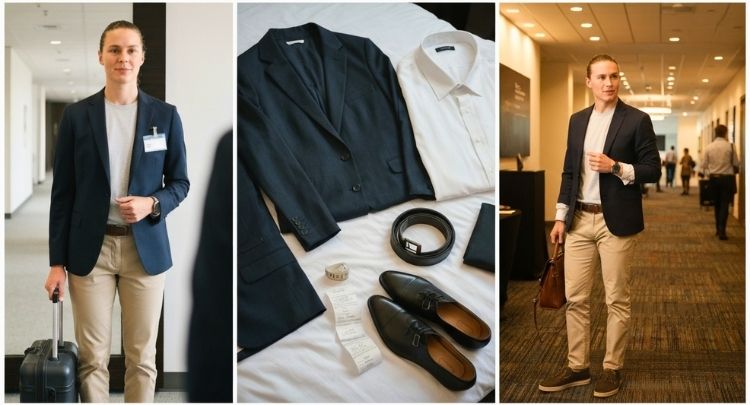
A blazer is optional but helpful for a polished look. Choose lightweight fabrics for easy layering. Neutral shades like navy or charcoal work best. You can remove it if needed. Layers help you adjust to room temperature changes while still looking put together.
Shoes
Shoes should be clean, closed toe, and comfortable. Loafers, derby shoes, or simple leather sneakers work well. Avoid sports shoes or sandals. Neutral colors like brown or black are safe choices. Good shoes complete your outfit and show attention to detail.
Accessories And Grooming
Keep accessories simple and minimal. A classic watch and clean belt are enough. Hair should be neat, and facial hair trimmed. Avoid strong scents. Grooming matters as much as clothing because it shows care and respect for the event and people around you.
Business Casual Outfit Ideas For Women
Business casual for women allows more variety while staying neat and professional. The focus is clean cuts, soft colors, and comfortable fabrics. Outfits should look polished without being formal. Here are easy outfit ideas to help you plan clearly below.
Basic Business Casual Formula

The basic formula includes a neat top, structured bottom, and comfortable shoes. Clothes should fit well and allow easy movement. Avoid anything too tight or flashy. This balance helps you stay confident, relaxed, and professional during long conference days and active schedules.
Tops And Blouses
Choose blouses or tops with clean designs and soft colors. Sleeves can be short or long but should look neat. Avoid deep cuts or heavy prints. Fabrics like cotton or blends work best. A simple top keeps the focus professional and comfortable.
Pants, Skirts, And Dresses
Tailored pants, knee length skirts, or simple dresses work well. Colors like black, navy, or beige are safe. Length should feel appropriate and easy to move in. These options give flexibility while keeping your look professional and suitable for conference settings.
Blazers And Layers
Blazers, cardigans, or light jackets add structure to outfits. Choose neutral shades that match easily. Layers help manage room temperature and add polish. They also make outfits look complete without feeling too formal or heavy during busy conference schedules.
Shoes
Closed toe flats, low heels, or clean loafers are ideal. Shoes should support walking and standing. Avoid very high heels or casual sandals. Neutral tones work best. Comfortable shoes help you stay focused and confident throughout long days and networking moments.
Accessories, Bags, And Grooming
Keep accessories simple and practical. Small earrings, a watch, and a structured bag work well. Makeup should look natural. Hair should be tidy. Avoid heavy perfume. Clean grooming supports a professional image and helps you feel prepared and confident.
Business casual dressing helps you feel confident and comfortable at conferences. The right outfit supports focus, movement, and first impressions. Simple choices make planning easier and stress free. Use this guide to dress smartly and feel ready for every conference moment.
Business Casual Conference Outfit Examples You Can Copy
This section gives you easy outfit ideas that work well for most conferences. These looks are professional, comfortable, and safe choices when you are unsure about the dress code. You can copy these outfits without overthinking.

Business Casual Outfit Ideas for Men
Outfit 1: Classic and Safe
- Light color button-down shirt
- Chinos or tailored trousers
- Brown or black loafers
- Leather belt and simple watch
This look works well for corporate, academic, and formal conferences.
Outfit 2: Smart and Comfortable
- Polo shirt or casual button-down
- Dark chinos
- Clean leather sneakers or loafers
- No bold logos or bright colors
This is a good choice for tech or creative conferences.
Outfit 3: Slightly More Formal
- Blazer over a plain shirt
- Neutral trousers
- Dress shoes or loafers
This outfit is perfect if you are speaking or attending a high-level event.
Business Casual Outfit Ideas for Women
Outfit 1: Professional and Simple
- Blouse or modest top
- Tailored pants or knee-length skirt
- Flats or low heels
- Minimal jewelry
This outfit fits almost all conference settings.
Outfit 2: Comfortable and Polished
- Knit top or soft blouse
- Ankle-length trousers
- Closed-toe flats or block heels
This is a great option for long conference days.
Outfit 3: Slightly Formal Look
- Blazer with a neutral top
- Pencil skirt or tailored pants
- Low heels or formal flats
This look works well for presentations and networking sessions.
Quick “Copy This Look” Tips
- Stick to neutral colors like black, navy, beige, or grey
- Choose clothes that fit well and feel comfortable
- Avoid loud prints, flashy accessories, and athletic shoes
- When unsure, dress slightly more formal than casual
These outfit examples help you stay confident and professional without trying too hard.
How Business Casual Dress Codes Change by Industry?
Business casual means different things depending on the type of conference. Each industry follows its own style based on culture, comfort, expectations. Knowing these differences helps you dress right and feel confident. Read below to understand how business casual changes by industry.

Technology Conferences
Tech events usually lean relaxed but still neat and professional. Clean shirts, chinos, and smart sneakers are common choices here. Hoodies and jeans may appear, but polished pieces still matter. This is where business casual conference attire feels most flexible yet respectful. Comfort plays a big role during long conference days.
Corporate And Finance Conferences
Corporate and finance conferences expect a sharper business casual look overall. Button down shirts, tailored pants, and closed shoes work best. For more formal events, jackets and closed shoes are usually part of appropriate male attire for business conferences, while creative conferences may allow something slightly more relaxed.
Academic Conferences
These conferences value clean, simple, and respectful clothing choices. Neutral colors, modest cuts, and comfortable shoes fit well here. Comfort matters for long sessions and walking between halls. Overly trendy outfits can feel distracting in serious academic settings. A business casual conference attire guide helps avoid dressing too casually.
Creative Industry Conferences
Many creative events allow personal style while keeping a professional base. Patterned shirts, relaxed blazers, and clean shoes work well. The goal is to look put together, not stiff. This industry offers more freedom but still expects neat presentation. Avoid outfits that look sloppy or unfinished overall.
Healthcare And Government Conferences
Events in these fields prefer conservative and polished business casual clothing. Simple shirts, neutral pants, and closed shoes are safest. Loud colors and trendy pieces feel out of place. Dressing slightly formal shows respect for the setting and audience. This approach reduces doubt about meeting expectations there.
Business casual works best when matched with the event style. Pay attention to industry norms before choosing your outfit carefully. When unsure, simple and clean choices are always safer for most events. Use this guide to dress smart and feel confident there.
How to Dress Business Casual for Conferences in Different Weather?
Weather plays a big role in choosing the right business casual outfit. Dressing wrong can make long conference days uncomfortable and distracting. Each season brings different challenges that affect clothing choices. Use the tips below to dress smart in any weather.

Hot And Humid Weather
Staying cool matters, but you still need a clean, professional look. Choose breathable fabrics like cotton, linen, silk, or light wool. Men can wear chinos with short sleeve shirts and pack a light blazer. Women can choose blouses, dresses, or skirts. Avoid fabrics that trap heat and odors.
Cold And Freezing Weather
Layering helps manage cold mornings and warm indoor spaces. Wear a blazer or cardigan over long sleeve tops. Wool pants and thicker fabrics add warmth without bulk. Thin inner layers help keep heat in. Choose closed shoes or ankle boots. A proper coat keeps the outfit polished outside.
Rainy Or Wet Weather
Rainy days need smart choices that stay neat when wet. Quick dry fabrics work better than heavy materials. Cropped pants help avoid soaked hems. A waterproof trench coat looks professional and practical. Shoes should have grip and resist water. Avoid suede since it gets damaged easily in rain.
Spring And Fall Weather
Changing temperatures call for flexible outfit pieces. Light layers make it easy to adjust during the day. A blazer, knit top, or light sweater works well. Scarves add warmth and style when needed. Dark trousers or allowed jeans stay neat. This approach suits unpredictable conference weather best.
Indoor Conference Room Temperatures
Conference halls often feel much colder than expected. Air conditioning can make light outfits uncomfortable. Carry a blazer, cardigan, or scarf to stay warm. Neutral layers blend well with business casual looks. This tip works across all seasons and helps maintain comfort without changing outfits during sessions.
Weather should never distract from your conference experience. Smart clothing choices keep you focused and comfortable all day. Plan outfits based on forecasts and indoor conditions. These tips help you dress right for every conference setting.
What Not to Wear to a Business Casual Conference (Clear Do-Not-Wear List)
Business casual conferences still expect polish, even when dress codes sound relaxed. What you wear shapes first impressions before you ever speak. Small clothing mistakes can quietly weaken trust and confidence levels. Read below to learn common outfit errors and smarter alternatives.
Overly Casual Clothing
Conference days are long, but comfort should still look professional. Hoodies, ripped jeans, and casual shorts suggest weekend wear. Clothes that look too sporty or too flashy often fall into the category of not to wear to a business conference, because they can distract from your professional image.
Flashy Or Loud Outfits
Bright colors, shiny fabrics, and bold prints steal attention quickly. At conferences, people should focus on your ideas. Loud outfits pull eyes away during talks and meetings. Neutral tones feel calmer and easier to trust. Simple colors help others remember what you said, not what you wore.
Poor Fit And Wrinkles
Clothes that fit poorly send the wrong message fast. Baggy shirts look sloppy, while tight clothes feel uncomfortable. Wrinkles can make clean outfits seem careless. These details matter more than brand names. People notice fit before they notice logos. Taking time to steam and tailor clothes shows respect for the setting.
Too Much Casual Footwear
Shoes often finish an outfit, or quietly ruin it. Sneakers, flip flops, and worn sandals feel too relaxed. They clash with business casual expectations. Choose clean loafers or simple flats instead. Footwear should match the tone of the event. Comfortable shoes can still look neat, polished, and ready for meetings.
Overdone Accessories And Scents
Accessories should support your outfit, not dominate it. Oversized jewelry can distract during conversations. Strong perfume or cologne affects people nearby. Scent sensitivity is common in shared spaces. Simple choices help everyone focus on discussion. Less truly works better here. Keep accessories small and fragrance light to stay respectful and comfortable.
Dressing well shows respect for others and for your goals. Business casual still requires thought, balance, and clean choices daily. Avoiding simple mistakes helps you feel confident and focused inside. Use these tips to prepare outfits that support your message.

Business Casual Conference Packing Checklist (Quick Summary)
Packing smart for a conference helps you feel calm and confident each day. Business casual clothes should look neat, feel comfortable, and fit schedules. This checklist shares simple essentials so you can prepare fast and avoid last stress.
- Blazers Or Light Jackets: A simple blazer adds polish to outfits and keeps you warm indoors. Neutral colors match easily and work for meetings, talks, and dinners.
- Button Down Shirts Or Blouses: Clean shirts or blouses create a professional look without effort. Choose soft fabrics that breathe well and stay comfortable during long conference days.
- Comfortable Dress Pants Or Skirts: Well fitting pants or skirts help you move easily between sessions. Dark shades hide wrinkles and keep your appearance tidy throughout busy event schedules.
- Closed Toe Shoes: Supportive shoes protect your feet during standing and walking. Simple styles look professional and reduce pain, helping you stay focused on sessions.
- Smart Casual Accessories: Small accessories like belts or watches complete your look. Keep them minimal and practical so they add style without drawing unwanted attention.
- Lightweight Bag Or Briefcase: A neat bag carries notes, chargers, and documents safely. Choose one with strong straps so it stays comfortable during full conference days.
- Grooming And Personal Care Items: Basic grooming items keep you fresh and confident. Pack deodorant, tissues, and hand sanitizer to stay comfortable during long hours.
Packing business casual essentials makes conference days easier and comfortable. With the right clothes and accessories, you can focus on learning and networking. Use this checklist to pack smart, save time, and feel ready morning.
How Has Business Casual Changed Since 2020?
Packing smart for a conference helps you feel calm and confident each day. Business casual clothes should look neat, feel comfortable, and fit schedules. This checklist shares simple essentials so you can prepare fast and avoid last stress.
- Blazers Or Light Jackets: A simple blazer adds polish to outfits and keeps you warm indoors. Neutral colors match easily and work for meetings, talks, and dinners.
- Button Down Shirts Or Blouses: Clean shirts or blouses create a professional look without effort. Choose soft fabrics that breathe well and stay comfortable during long conference days.
- Comfortable Dress Pants Or Skirts: Well fitting pants or skirts help you move easily between sessions. Dark shades hide wrinkles and keep your appearance tidy throughout busy event schedules.
- Closed Toe Shoes: Supportive shoes protect your feet during standing and walking. Simple styles look professional and reduce pain, helping you stay focused on sessions.
- Smart Casual Accessories: Small accessories like belts or watches complete your look. Keep them minimal and practical so they add style without drawing unwanted attention.
- Lightweight Bag Or Briefcase: A neat bag carries notes, chargers, and documents safely. Choose one with strong straps so it stays comfortable during full conference days.
- Grooming And Personal Care Items: Basic grooming items keep you fresh and confident. Pack deodorant, tissues, and hand sanitizer to stay comfortable during long hours.
Packing business casual essentials makes conference days easier and comfortable. With the right clothes and accessories, you can focus on learning and networking. Use this checklist to pack smart, save time, and feel ready morning.
Budget-Friendly Business Casual Tips for Conferences
Conference days are long, so smart outfits should feel calm. Looking business casual does not mean spending much money today. Small choices help you look sharp without stress or high cost. Read below for simple tips that save money and look professional.
Smart Color Choices
Neutral shades mix easily and hide wear from long travel days. Choose black, navy, gray, or tan pieces first. These colors match fast, reduce outfit planning time, and stretch each item further. This helps build business casual outfits using fewer clothes while still looking neat at conferences.
Buy Pieces With Many Uses
One good blazer works with jeans, chinos, or simple dress pants. Shirts should fit clean and stay plain. Avoid loud prints. Items that mix well cut costs fast. This approach supports a budget-friendly conference wardrobe that stays useful beyond one event for many work days ahead too.
Shop Secondhand And Sales
Thrift stores and online resale sites offer solid quality finds. Look for lightly used brands with strong fabric. End-of-season sales also help. Waiting a little can lower prices a lot. Smart timing makes professional conference clothing affordable without lowering style or comfort for long meetings days ahead.
Focus On Fit Over Labels
Clothes that fit well always look better than pricey names. Tailoring pants or sleeves costs little and changes everything. Even simple shoes shine when clean. Paying attention to fit gives confidence and polish. This tip matters more than brand logos at conferences for first impressions and photos.
Keep Accessories Simple And Clean
Belts, shoes, and watches finish an outfit quietly. Choose clean designs in brown or black. Skip extra shine. One good bag is enough. Simple accessories support business casual conference looks without pulling attention or raising costs during busy event days and long walking hours there too often.
Dressing well for conferences does not require high spending today. Smart planning and simple choices can save money every time. Use these tips to build outfits that feel confident and calm. Start small, stay comfortable, and enjoy your next conference days.
Frequently Asked Questions
Here are some common questions people still ask about business casual at conferences.
These answers clear confusion and help with quick decisions.
Each question focuses on practical concerns many people face.
Read below for clear and simple explanations.
Is Business Casual The Same At Every Conference?
Business casual is not exactly the same everywhere. Expectations change by industry, location, and audience. A tech event may feel relaxed, while a finance event feels stricter. Always think about who will attend and what the event focuses on before choosing your outfit.
Can Business Casual Include Cultural Or Traditional Clothing?
Yes, cultural or traditional clothing can fit business casual. The key is that it looks clean, neat, and respectful. Choose simple designs and calm colors when possible. This helps your outfit match the professional setting while honoring personal or cultural identity.
Does Business Casual Change For International Conferences?
International conferences often mix styles from different cultures. What feels casual in one country may seem formal in another. It helps to research the host country’s work culture. When unsure, slightly formal business casual is usually a safe choice.
Is Business Casual Required For All Conference Days?
Some conferences have different expectations for different days. Opening days or keynote sessions may feel more formal. Workshops or networking days may feel relaxed. It is smart to pack flexible outfits that can adjust to each day’s schedule.
Can Business Casual Work For Panel Speakers Or Presenters?
Yes, but speakers should aim for a slightly sharper look. Being on stage draws more attention. Clean lines, good fit, and simple colors help build trust. A polished business casual outfit supports confidence and credibility while speaking.
End Note
Business casual dressing helps you stay confident, calm, and respected at conferences. When clothes fit well and feel comfortable, you focus better on talks and conversations. Simple choices reduce stress, save time, and help you present yourself clearly in busy professional spaces.
So, what is business casual for a conference? It means wearing clean, neat, and comfortable clothes that look professional without feeling formal. Think smart tops, well fitting pants, simple shoes, and light layers that suit long days and shared spaces.
Before packing, check the event type, venue, and weather carefully. Choose neutral colors, comfortable shoes, and simple accessories. Keep outfits easy to mix and wear. Dress with care, stay comfortable, and best wishes for a confident, successful conference experience ahead.