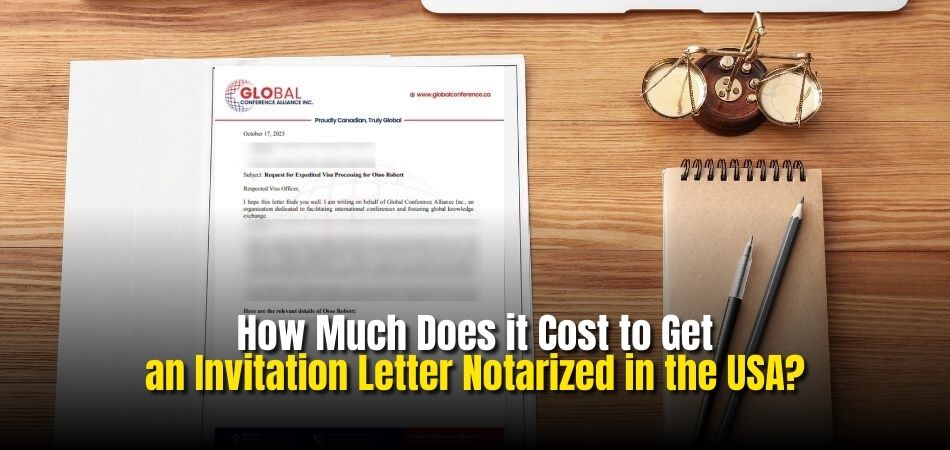
A notarized invitation letter can feel important when someone plans a visit to the USA, and people often want it done the right way. Many get confused by the rules, the steps, and the fees. A little guidance can calm the stress and show a simple path. Clear facts and small tips make the whole process easier, even when readers wonder how much does it cost to get an invitation letter notarized in the USA?
Notarizing an invitation letter in the USA typically costs $5 to $20 per signature at banks or shipping stores. Online notary services range from $25 to $75. Mobile notaries may add $25–$60 for travel. U.S. embassies charge $50 per seal. Prices vary by location and service type.
Many people want simple help so they can avoid mistakes and extra cost. This article gives every key detail in a clear way. You will understand the steps, the fees, the mistakes to avoid, and the forms to pick. Reading ahead can make the whole notarizing process easier and stress free.
What is Notarized Invitation Letter?
A notarized invitation letter is a regular invitation letter that has been checked and stamped by a notary public. The notary confirms who signed the letter and makes sure it is genuine. Because of this seal, the letter carries more weight when it is used in a visa application or shown to immigration officers.

When a letter is notarized, the host must sign it in front of the notary. The notary checks their ID, watches the signature, and then adds a seal or stamp. This does not guarantee a visa, but it proves that the letter and signature are real. Officials can then trust that the document did not come from an unknown source.
People choose notarized letters because they help avoid doubts or questions. They are useful when someone is visiting family, attending an event, or traveling for business.
- It helps show the invitation is not fake.
- It proves the identity of the person inviting.
- It can reduce delays during document checks.
Here is the example:
Date:
To Whom It May Concern,
I, [Full Name of Host], residing at [Full Address], invite [Full Name of Visitor], passport number [Passport Number], to visit me in the United States from [Start Date] to [End Date].
The purpose of the visit is [reason for visit]. During this stay, [he/she] will reside at my address mentioned above. I confirm that this invitation is written willingly and that the information provided is true to the best of my knowledge.
Sincerely,
[Full Name of Host]
[Phone Number]
[Email Address]
(Signature to be done in front of a Notary Public)
If you are invited to attend upcoming conferences or similar events, a notarized invitation letter can be a simple way to add credibility. Keep copies of everything, follow the instructions from the embassy, and make sure the letter clearly states who is inviting, who is visiting, and the purpose of the trip. Let me know if you want help drafting one.
How Much Does it Cost to Get an Invitation Letter Notarized in the USA?
Notarizing an invitation letter can cost different amounts across the USA. Prices change due to location, service type, and how you notarize. Some places charge only a small fee, while others charge more. Read below to see typical costs and choose the best option.
Average Cost In The USA
Most people pay between 5 and 20 dollars per signature. In states with strict fee caps, such as New York, the legal notary fee can be much lower, with some states allowing charges of only a few dollars per signature. These prices are common at banks, shipping stores, and local offices. If the letter has many pages, the price can increase. Extra seals may add another 5 to 15 dollars. This is still the lowest cost option overall.
State-Specific Legal Fee Limits to Know
Notary fees in the USA are regulated by state law, which means each state sets a legal maximum a notary can charge per notarized signature. Because of this, the actual cost may be much lower than national averages, depending on where the notarization happens.
- California: Notaries can charge up to $15 per signature, which is the legal cap set by the state.
- Florida: The maximum allowed fee is $10 per notarized signature, regardless of document type.
- New York: The state limit is only $2 per signature, making it one of the lowest notary fees in the country.
- Other states: Fee caps vary, and some states allow higher limits or additional charges for travel or special services.
| State | Maximum Notary Fee (Per Signature) |
| Texas | $10 |
| Illinois | $1 |
| New Jersey | $2.50 |
| Massachusetts | $1.25 |
| Pennsylvania | $5 |
| Ohio | $5 |
| Washington | $10 |
| Virginia | $5 |
| Michigan | $10 |
| Georgia | $2 |
Online Notary Prices
Remote notarizing happens by video call and usually costs more. Many services charge 25 to 75 dollars per session. Some platforms also add ID or platform fees of 5 to 15 dollars. It is helpful if you are busy or live far away. Always check if your embassy accepts online notarizing.
Bank And Credit Union Fees
Many banks notarize free for account members, which can save money. Non members often pay 5 to 15 dollars per signature. Call first so you know if a notary is on site. Bring one valid ID and the unsigned letter. This choice is simple and usually the least expensive.
UPS And Shipping Stores
UPS Stores and mail centers charge clear prices you can see in store. Most charge around 10 to 20 dollars per signature. Copies may cost 25 to 50 cents each. If another seal is needed, the price can rise. Ask before you sign so the bill is clear.
Mobile Notary Charges
A mobile notary comes to you, which adds travel cost. The notarizing may still be 10 to 20 dollars, but travel can be 25 to 60 dollars or more. Late night visits may cost extra. This works great for people who cannot leave home. Always confirm the final total.
Embassy And Consulate Fees
U.S. embassies and consulates charge a fixed fee of 50 dollars per seal. This option mainly applies to U.S. citizens who are outside the United States and need to notarize an invitation letter abroad. If you are inside the USA, local or online notary services are usually the correct and lower-cost choice.
Extra Costs To Expect
Some offices add small fees for printing, copying, or parking. Rush notarizing can add 50 to 150 dollars to your bill. Added pages sometimes cost 5 dollars each. If you need more than one seal, the price grows. Ask for a full quote before the appointment to avoid surprises.
Best Way To Save Money
Start by checking your bank for free notarizing for members. Call two local stores and compare their listed prices. Try to finish all pages in one visit so you avoid extra fees. Skip rush service unless truly needed. These small steps can cut your total cost a lot.
Notarizing an invitation letter does not have to feel hard. Knowing the price range helps you plan your budget well. Pick the service that fits your time and wallet best. If you still feel unsure, ask the notary for clear steps.

Acknowledgment vs. Jurat: Which Notary Form Do You Need for a USA Invitation Letter?
Before you pick a notary form, it helps to see how acknowledgment and jurat differ. The list below explains each feature in simple words. It shows what each form requires and when it is used. This makes choosing the right one easier.
In most U.S. states, the notary fee is the same for an acknowledgment and a jurat because the law sets a fixed price per notarized signature, not per document type. However, a few states allow a higher charge for a jurat because it includes an oath or affirmation. For this reason, choosing a jurat when it is not required can slightly increase the total notarization cost.
| Feature | Acknowledgment | Jurat |
| What it proves | Shows the signer signed on purpose. | Shows the signer swore the info is true. |
| Signer appearance | The signer must meet the notary. | The signer must meet the notary. |
| Signing before notarization | Can be signed earlier or at the visit. | Must be signed in front of the notary. |
| Oath or affirmation | No oath is given. | An oath is given and answered. |
| Use in visa letters | Usually the right choice for invites. | Rare for invites unless sworn facts are needed. |
| Common examples | Deeds, contracts, powers of attorney. | Affidavits and sworn statements. |
| Risk if used wrong | Low risk in most cases. | Higher risk because it is sworn. |
| Simple way to choose | Pick when you only prove identity and signing. | Pick only when you must swear the contents. |
What It Proves
This point explains the main difference between both notary forms. An acknowledgment only proves the signature and free will of the signer. A jurat goes further and ties the signer to a sworn promise that the facts written are true.
Signer Appearance
Here we look at whether the signer must be present. For both forms, the signer must appear before the notary. Identity is checked using valid ID. Without a face to face meeting, the notarization cannot be completed by the notary.
Signing Before Notarization
This feature explains when the signing happens. With an acknowledgment, the document may be signed earlier or at the visit. With a jurat, the signer must sign in the notary’s presence. This rule helps prevent doubts or later claims of the document.
Oath Or Affirmation Needed
An oath is a key dividing line. In an acknowledgment, there is no oath or promise about truth. A jurat requires the notary to give an oath or affirmation. The signer must answer out loud and accept responsibility for the statements made.
Use In Visa Letters
This part explains which form fits invitation letters. Most letters only need proof of identity and signature, so acknowledgment is common. A jurat is rare because it adds a sworn statement. Some embassies may ask for it only in special cases.
Common Examples
Here we think about everyday uses. Acknowledgments are common for deeds, contracts, and powers of attorney. Jurats are used for affidavits and statements of fact. Knowing these uses makes it easier to pick the right form when preparing documents for notarizing.
Risk If Used Wrong
This topic covers possible problems. Using an acknowledgment when a jurat is needed may cause rejection. Using a jurat when not needed can create extra legal risk. It is smart to read the instructions from the embassy or agency first. In some states, jurats may also carry a slightly higher notary fee because they include an oath or affirmation, which means choosing a jurat unnecessarily can increase the overall notarization cost.
Simple Way To Choose
This feature gives a quick method. Pick acknowledgment when you only need proof of identity and signing. Choose a jurat when the document must be sworn as true. When in doubt, ask the notary, and they can guide your choice.
Mistakes That Can Increase Notary Costs of USA Invitation Letter
Getting a letter notarized should be simple, but small mistakes can raise the cost. Many people lose time and money because they are unsure about the right steps. A little planning can help avoid repeat visits and extra fees. Read below to see the mistakes and how to prevent them.
Signing Before The Notary Visit
Some people sign the letter early and think it is fine, but the notary must watch the signing. If the letter is already signed, the notary may stop the process and ask you to return. This can add another fee. Take a moment to verify a USA invitation letter before signing.
Bringing Expired Or Wrong ID
Notaries must confirm who you are using valid ID. If your ID is expired, missing your photo, or does not match the name on the letter, the notary cannot move forward. You may need a new visit and another fee. Checking your ID before you go saves time and money.
Picking The Wrong Service Type
Some people choose online or mobile notarizing even when they do not need it. These services cost more and can raise your total bill. If a simple office visit is enough, you should choose that option. A quick call to the notary can help you know the right choice.

Missing Needed Documents
Some notaries ask for extra papers like a copy of your passport. If you forget these items, they may ask you to return later. This adds another visit and more cost. Always check the list of needed items before the appointment. Keeping everything ready makes things easy.
Last Minute Visits And Rush Fees
Waiting until the final day before a deadline can force you to pay rush fees. Some notaries charge more for late hours or short notice visits. Planning ahead can help you avoid these higher charges. A small amount of early prep can protect your budget.
Not Knowing The Number Of Signers
Some letters need more than one signer, and all must be present. If one signer is missing, the notarizing cannot be done. You must book another time and pay again. Make sure everyone needed is there at the same visit so you finish everything once.
Errors On The Notary Certificate
Notaries can make mistakes like wrong dates or missing fields. If the receiving office rejects the letter, you must come back and do it again. This adds new fees and more waiting. Checking the certificate before leaving helps prevent extra steps and protects your time.
Planning well can make notarizing simple and low cost. Small checks can prevent extra visits and added fees. You can follow the steps above to keep the process smooth. Use these tips to prepare better and avoid common problems.
Step-by-Step: How to Notarize an Invitation Letter in the USA?
Notarizing an invitation letter can feel confusing at first sometimes. You only need simple steps and clear guidance to continue. The process is safe when done the right way properly. Read below to learn the steps and finish it correctly.
Step 1: Write The Invitation Letter
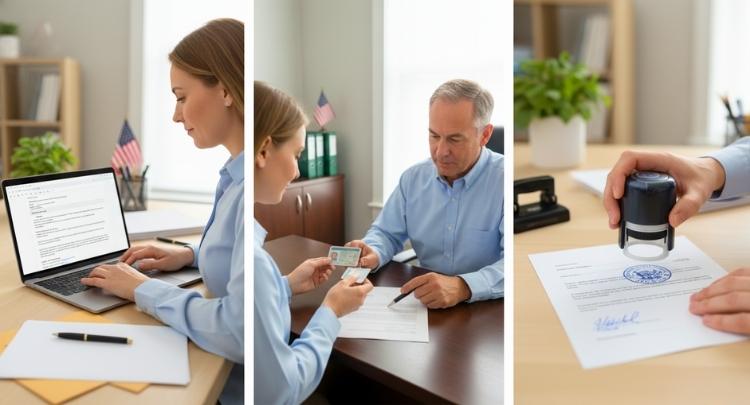
Start with a clean letter that lists all needed details for the visit. Add your full name, address, phone, and the guest’s information. Include the reason for the visit and the travel dates. Leave the signature space blank. It helps to verify a USA invitation letter before printing to avoid mistakes later.
Step 2: Find A Notary Public
Banks, libraries, and many shipping stores have notaries ready to help. County clerk offices also serve the public in most towns. Online notarizing may be allowed in your state if you prefer that option. Call ahead to ask about hours and fees. Bring your letter so the visit stays simple.
Step 3: Bring Valid ID
Take a current passport or driver license with your photo clearly shown. The notary must confirm who you are before any signing happens. The name on the card should match the name on the letter. Expired ID will not work. Checking your ID at home helps avoid extra visits and cost.
Step 4: Do Not Sign Early
Always wait until you sit with the notary before signing anything. The notary must see the exact moment you sign the letter. If the page is already signed, the notary may stop the visit. That means a second trip and extra fees. Keeping it blank until the visit protects the whole process.
Step 5: Let The Notary Verify
The notary checks the ID again and reads the letter for blank spots. They may ask simple questions to be sure you understand the document. This step protects both sides and keeps the record clean. It also helps confirm the signature belongs to the right person in a clear way.
Step 6: Sign In Front Of The Notary
When told, place your signature on the letter in clear writing. Some forms ask for a short oath, while others only ask you to confirm your signature. Listen and answer as needed. This step links your identity to the letter in a way others can trust later when reviewing it.
Step 7: Receive The Notary Seal
After you sign, the notary fills the certificate and adds a stamp. The seal shows the type of notarizing done. Dates and names should look correct. Take a quick look before leaving. Catching errors now can stop extra visits and prevent new fees later.
Step 8: Keep Or Send The Notarized Letter
The notarized letter should go to the visa applicant. Some visa offices want the original copy. Others accept a clear scanned version. Keep one copy for yourself. Checking the rules from the embassy early helps you send the right version without delays or extra mailing costs.
Notarizing an invitation letter can feel easy when you follow these steps. A little planning helps save time and avoid repeat visits. Keep your papers ready and ask questions when unsure. Use this guide anytime you need to notarize an invitation.
Extra Notes
- Notarization is not always required for a US visa invitation letter, but it can make the document more trusted by immigration officers. Always check with the embassy or consulate if they want it.
- If you can’t visit in person, online notarization (video call) is also an option in many states.
Commonly Asked Questions
A short FAQ section can help clear up common doubts about notarizing an invitation letter. Many people still have small questions even after learning the main steps and costs. These answers give simple guidance so you can finish the process with confidence.
Does The Notary Cost Change In Different States?
Notary prices can change from one state to another because each state sets its own fee rules. Some states limit how much a notary can charge, while others leave the price open. You may notice that big cities cost more than small towns. Checking your local state rules can help you plan your budget better.
Can The Price Increase If The Letter Has Many Pages?
Yes, the price can go up if your letter has many pages that need checking. Some notaries charge a small fee for each extra page. This is because extra pages take more time to review. It is a good idea to keep the letter simple so you do not pay more for added pages.
Is There A Different Cost For Stamping Multiple Copies?
Many notaries charge by the stamp, not the number of copies. If you need two stamped copies, you may pay the fee twice. Some offices may offer a small discount, but this depends on the notary. Asking before you go can help you avoid surprise costs.
Can I Get A Lower Price If I Book A Notary Early?
Some notaries offer normal rates for early bookings and higher rates for late or urgent visits. Booking early helps you avoid rush fees or after hour charges. It also gives you time to prepare your papers. Planning ahead is one of the best ways to save money.
Do Notary Costs Change During Holidays?
Holiday times can raise the price, especially for mobile or urgent notarizing. Some notaries work limited hours, which can make the service cost more. It is common to pay extra for late evening or holiday visits. If you want to save, try to notarize before busy dates arrive.
Are There Extra Fees For Using Online Notarization Platforms?
Online notarizing often includes platform fees because they use special tools like video verification. You may pay one fee for the notary and another for the online service. This can raise the total cost compared to in person notarizing. Checking the price list before booking helps you stay prepared.
Can I Ask For A Price Breakdown Before I Pay?
Yes, you can always ask for a clear breakdown of all charges. A good notary will tell you the cost of stamps, pages, and any service fees. This helps you understand what you are paying for. It also helps you decide if another notary might fit your budget better.
End Note
Handling a notarized invitation letter becomes much easier when you understand the steps, the fees, and the common mistakes that can raise your cost. With the right information, you can complete the process smoothly and avoid the stress many people face when preparing documents.
The cost can vary, but the answer to how much does it cost to get an invitation letter notarized in the USA? is simple to recall because most in person notaries charge between five and twenty dollars, while online services usually charge higher fees based on the platform used.
You can end the process with confidence by planning early, checking your ID, and keeping all papers ready before your appointment. A few small steps can save time and protect your budget. Follow the tips shared in this guide, and best wishes on your notarizing process ahead.