Planning an international trip often brings excitement, but understanding what is the difference between an invitation letter and a letter of sponsorship for a visa application can quickly become overwhelming. Many travelers mix up these documents, and that confusion can lead to delays or unnecessary stress. A clear breakdown can make the entire visa process feel much more manageable.
In simple terms, an invitation letter explains the purpose of your visit, while a sponsorship letter confirms who will finance your travel. Knowing how each one works helps you submit a complete and confident visa application. Continue reading to explore detailed explanations, practical examples, and helpful guidance that will make your preparation easier.
What Is the Difference Between an Invitation Letter and a Letter of Sponsorship for a Visa Application?
Many travelers feel unsure when embassies ask for documents that sound similar, especially for business or conference travel. Understanding the difference between an invitation letter and a sponsorship letter helps remove confusion and build a stronger visa file. One explains why you are visiting, while the other shows how your trip will be paid for.
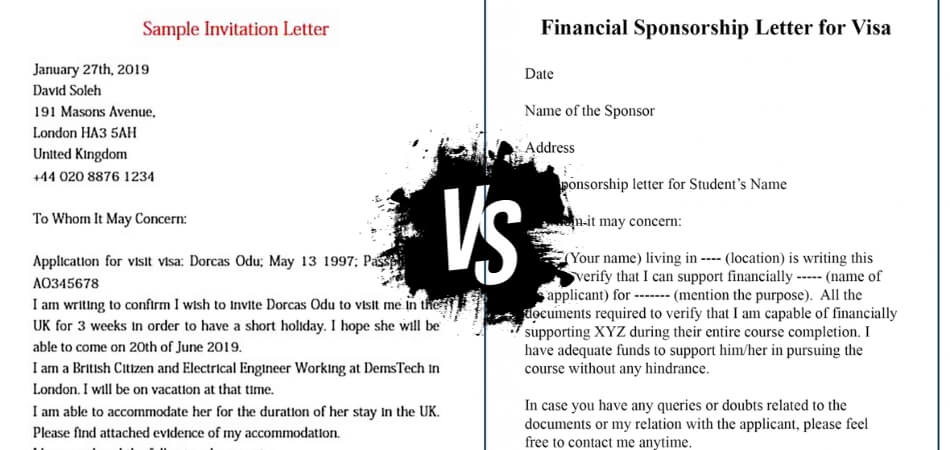
About Invitation Letter for a Visa
An invitation letter is written by the individual or organization welcoming you to their country. It explains the purpose of your visit, your relationship with the host, and the planned duration of your stay. Embassies use it to confirm that your visit is genuine, organized, and connected to a real event such as a meeting or a conference in Canada, the USA or anywhere else in the World.
About Sponsorship Letter for a Visa
A sponsorship letter is written by someone who agrees to pay for your travel expenses. It explains who will cover your airfare, accommodation, daily costs, or event fees. For Canada visitor visas, this letter shows financial support only and does not guarantee approval. The applicant must still qualify independently based on the purpose of travel, funds, and return plans.
Comparison Table: Invitation Letter vs Sponsorship Letter
|
Feature |
Invitation Letter | Sponsorship Letter |
| Main Purpose | Explains purpose of travel |
Confirms financial support |
|
Who Writes It |
Host or event organizer | Sponsor or financial supporter |
| What It Proves | Reason for visit |
Financial capability |
|
Common Use Cases |
Meetings, visits, conferences | Students, funded travelers |
| Required Details | Host info and visit purpose |
Sponsor identity and financial proof |
|
When Both Are Needed |
When purpose and funding must be shown | When additional verification is required |
| Optional or Required | Often required |
Depends on embassy rules |
Main Purpose
The invitation letter focuses on clarifying why you are visiting and what you plan to do during your trip. The sponsorship letter focuses on demonstrating that your travel costs will be covered, giving the embassy confidence in your financial situation.
Who Writes It
An invitation letter is normally written by a host, family member, or event organizer. A sponsorship letter is prepared by the individual or organization funding your trip, such as an employer, family member, or conference sponsor.
What It Proves
An invitation letter proves your travel intention and relationship with the host, helping the embassy understand your reason for visiting. A sponsorship letter proves your financial backing, ensuring the embassy that your stay is fully funded and financially secure.
Common Use Cases

Invitation letters are often used for business meetings, seminars, tourism, and family visits. Sponsorship letters are common when applicants lack strong financial documents or when organizations fund travelers for training, study, or professional development.
Required Details
An invitation letter includes host identity, purpose of visit, dates, and relationship details. A sponsorship letter includes sponsor identity, funding commitments, financial evidence, and documents that confirm the sponsor is capable of supporting the entire trip.
When Both Are Needed
Both letters are needed when the embassy must verify both the legitimacy of your visit and the stability of your financial support. This often happens in situations where the host invites you but is not paying for your expenses.
Optional or Required
Invitation letters are frequently required when the purpose of travel must be clearly shown. Sponsorship letters may be optional, depending on the applicant’s income, savings, the destination country, and how much financial evidence the embassy expects.
Knowing the role of each letter helps you prepare a visa application that answers the embassy’s questions directly. When you provide clear purpose and solid financial proof, your documents support each other and increase the strength of your overall application. Let these explanations guide you as you prepare your next international trip.
How to Write an Effective Invitation Letter for a Visa Application?
Preparing a strong invitation letter can make your visa application smoother and more convincing. The embassy relies on this document to understand the purpose of your visit and to confirm that your trip is planned with the knowledge and support of a host. The more organized and clear your letter is, the easier it becomes for visa officers to verify the details.

Details an Invitation Letter Include
A complete invitation letter should contain the following essential information:
- Full name, physical address, and contact details of the host
- Applicant’s full name, passport number, and travel information
- Reason for the visit or event being attended
- Duration of stay with planned dates
- Relationship between the host and the applicant
- Details about the event, meeting, or purpose of travel
- A statement confirming that the host is inviting the applicant
- Host’s written signature and contact verification
Including these details helps the visa officer understand your intention clearly and quickly.
Invitation Letter for Visa Sample
Below is a simple and commonly accepted format that applicants can use:
Sample Invitation Letter
To
Visa Officer
Embassy of [Country]I, [Host Name], residing at [Host Address], would like to invite [Applicant Name], passport number [XXX], to visit me in [City, Country] from [Start Date] to [End Date]. The purpose of this visit is to attend [event or reason]. I confirm that I will be available during this period and understand the responsibilities of hosting the applicant. The applicant will return to their home country as scheduled.
For any clarification, I can be contacted at [Phone Number] or [Email Address].
Sincerely,
[Name and Signature]
This example is brief but includes the core information that embassy officers usually check first.
Invitation Letter Format: How to Structure It Professionally
Using a clear structure makes your letter easier to read and ensures every required detail is included. A simple and effective format of invitation letter typically includes:
- Header with the host’s name and contact details
- Date of issuing
- Embassy or consulate address
- Short introduction of the host
- Applicant’s personal and passport details
- Purpose and explanation of the visit
- Exact travel dates and length of stay
- Statement confirming the intention for the applicant to return
- Host’s contact details for verification
- Host’s signature at the end
This structure keeps the letter organized and helps both the traveler and the embassy understand every detail without confusion.
A well prepared invitation letter improves your chances of a smooth visa review. When the information is complete, accurate, and professionally structured, it reassures the embassy that the visit is planned, genuine, and clearly supported by the host. If you follow the details and format above, you will create a strong document that supports your visa application effectively.
How to Prepare a Strong Sponsorship Letter for a Visa Application?
A sponsorship letter plays a key role in many visa applications, especially when applicants rely on someone else to cover their travel expenses. The embassy uses this document to confirm that your trip is financially supported and that you have a reliable sponsor who can take responsibility for your costs. A clear and well structured sponsorship letter builds trust and reduces the chance of delays.
Who Can Sponsor You?
A wide range of individuals or organizations can act as a sponsor, as long as they provide proper evidence of financial ability. Common sponsors include:
- Employer
- Family member
- Educational institution
- Conference organizer
- Business partner
Anyone offering financial support can be a sponsor, and the letter often works best when paired with a sponsorship form and supporting financial documents.
Must Inclusions in a Sponsorship Letter
A complete sponsorship letter should cover the following essential details:
- Sponsor’s full name, address, and contact details
- Explanation of the relationship with the applicant
- Clear statement confirming financial responsibility
- List of expenses the sponsor will cover
- Duration and purpose of the support
- Sponsor’s signature and contact verification
- Supporting documents such as bank statements or employer confirmation
Including these points shows the embassy that your travel is financially secure and properly planned.
Sponsorship Letter Sample
Below is a simple and widely accepted sample that demonstrates how to present the information clearly and respectfully.
Sample Sponsorship Letter
To
Visa Officer
Embassy of [Country]I, [Sponsor Name], residing at [Sponsor Address], confirm that I will sponsor [Applicant Name], passport number [XXX], during their visit to [Country] from [Start Date] to [End Date]. I will cover all travel, accommodation, daily living, and related expenses throughout the trip.
I am attaching my financial documents as proof of my ability to support the applicant. If further information is needed, I can be reached at [Phone Number] or [Email Address].
Sincerely,
[Name and Signature]
Documents Required to Support a Sponsorship Letter
A sponsorship letter is stronger when it is backed by proper financial and identity documents. Embassies rely on these supporting papers to verify the sponsor’s ability to fund the applicant’s travel and confirm that the relationship and purpose of support are genuine. Submitting all relevant documents together helps reduce delays and improves the credibility of the visa application.
Essential Supporting Documents
The following documents are commonly required by embassies to accompany a sponsorship letter:
- Recent bank statements showing financial stability
- Payslips that verify monthly income
- Tax records demonstrating consistent earnings
- Employment letter confirming the sponsor’s job status
- Identification documents such as passport or national ID
- Proof of relationship between the sponsor and the applicant
- Conference registration if the visit is related to an event
For Canada visas, especially for longer stays or family-supported travel, embassies may also request a Statutory Declaration of Financial Support, which is a notarized form of sponsorship. While not required in every case, it is often recommended when strong financial backing needs to be clearly proven.
Submitting a complete set of financial and identity documents not only strengthens the sponsorship letter but also reduces the risk of additional embassy queries. When the sponsor’s financial capacity is clearly demonstrated, the overall visa application becomes more reliable and easier for officers to evaluate.
When Do You Need Both an Invitation Letter and a Sponsorship Letter?
Some visa cases require both documents because the embassy wants a complete picture of your travel purpose and financial backing. When these responsibilities are handled by different parties, two separate letters help clarify each role and strengthen the application.

Events That Involve One Host but a Different Payer
Sometimes the event organizer issues the invitation, yet a friend or relative pays for your travel. The embassy reviews both documents to confirm that the visit has a verified purpose and a reliable financial supporter.
Corporate Travel Supported by Employers
In many professional trips, the organizer provides the official invitation while the employer funds accommodation and travel. Submitting both letters helps the embassy understand the business intention and recognize the employer’s financial commitment.
Academic Visits Supported by Family
Students attending interviews, seminars, or academic programs may receive invitations directly from institutions. Since parents or guardians usually handle the expenses, both letters are needed to justify the educational purpose and confirm financial capability.
Embassy Requests for Clear Multi Source Verification
Certain visa processes become smoother when the embassy receives separate confirmations from the host and the sponsor. This allows officers to evaluate purpose, financial stability, and return intentions without confusion or missing information.
Using both letters becomes essential whenever the host and the financial supporter are different. Presenting clear documentation allows the embassy to verify each detail easily, improving the overall strength of your visa application.
Which Letter Should You Use? Easy Guidance to Decide
Deciding which document to submit becomes easier once you know how each letter supports your application. One explains why you are traveling, and the other confirms who will pay for your expenses. Matching the right letter to your situation helps create a clear and convincing application.
Choosing an Invitation Letter for Purpose Clarity
Applicants who must clearly explain the reason for their visit should rely on an invitation letter. It confirms who is hosting them, outlines travel intentions, and helps the embassy understand the purpose behind the planned trip.

Selecting a Sponsorship Letter for Financial Assurance
If financial proof is the key requirement, a sponsorship letter is the right choice. It identifies the person or organization funding the visit and demonstrates that every major travel cost is fully covered and reliably supported.
Combining Both Letters for Complete Verification
Some travelers benefit from submitting both documents, especially when the host is also supporting expenses. Providing two letters helps the embassy verify the purpose of the trip and the trustworthiness of the financial support at the same time.
Relying on a Sponsorship Letter When Funds Are Limited
Applicants with limited personal financial documents should prioritize a sponsorship letter. This reassures the embassy that a dependable sponsor will manage all travel related expenses, strengthening the overall credibility of the visa application.
Selecting the appropriate letter depends on your specific situation and what the embassy needs to verify. By submitting the document that directly answers their key questions, you make your application clearer, stronger, and easier for officers to approve.
Common Mistakes Applicants Make
Many visa applications get delayed simply because of avoidable mistakes in key supporting documents. Understanding these issues helps you prepare more confidently and avoid unnecessary embassy questions. Review each point carefully and continue to the next discussion for deeper guidance.

- Missing Financial Documents: Missing or incomplete financial documents weakens your application by creating doubts about your sponsor’s ability to support the trip. Embassies expect clear evidence, and without it, officers may pause your application and request additional verification.
- Poor or Incorrect Structure: A poorly organized letter makes it difficult for visa officers to quickly understand important details. Using a clear structure helps present your information in a professional way, reducing confusion and improving the overall flow of your application.
- Unclear or Inconsistent Visit Dates: Incorrect or mismatched dates often cause delays because embassies cross check every detail. When your letter does not match your form or travel plans, officers may request clarification, slowing down the entire review process.
- Missing Signature: An unsigned letter affects authenticity and may be viewed as incomplete. A proper signature confirms accountability, helps verify the sender, and assures the embassy that the information provided is genuine and intentionally submitted.
- Informal or Casual Language: A casual tone can make your letter appear unprofessional. Embassies expect formal, respectful communication that clearly states the purpose of your visit without unnecessary wording or unclear expressions that may create confusion.
- Mismatched Details with Visa Form: If your letter does not match the information in your visa application form, it may raise concerns. Embassies review both documents together, so consistency in names, dates, and purpose is essential for a smooth evaluation.
- Using Outdated Samples: Relying on old or incorrect letter samples can lead to missing sections that embassies now expect. Updated formats reflect current requirements, ensuring your letter remains relevant, complete, and aligned with modern visa standards.
By avoiding these common mistakes, you create clear, trustworthy documents that support your visa application effectively. When your letter is accurate, well structured, and up to date, it becomes much easier for embassy officers to review and approve.
Frequently Asked Questions
Visa applicants often have extra questions after understanding the roles of invitation and sponsorship letters. The questions below address practical concerns that many travelers think about but rarely find clear answers to. These will help you prepare with more confidence and clarity.
Can I Submit Digital Copies Of These Letters, Or Do Embassies Need Originals?
Most embassies accept digital copies during online applications, but some may request originals during the in person appointment. It is always safer to bring printed versions. Check your specific embassy’s guideline to avoid confusion or delays during submission.
How Early Should I Request These Letters Before Applying For A Visa?
It is best to request the letters at least two to three weeks before your visa application. This gives the host or sponsor enough time to prepare a complete document. Starting early also helps you fix errors before your appointment.
Do These Letters Increase My Chances Of Getting A Visa Approval?
These letters do not guarantee approval, but they strengthen your application. Clear purpose and verified financial support help visa officers understand your situation better. Strong supporting documents always create a positive impression and reduce unnecessary doubts.
Should I Notarize My Invitation Or Sponsorship Letter?
Notarization is not always required, but it can add an extra layer of authenticity. Some embassies recommend it for formal or long term visits. When in doubt, notarizing the letter can make your document more trustworthy.
Can Multiple People Sponsor My Trip At The Same Time?
Yes, more than one person can sponsor you if each sponsor explains their contribution clearly. In such cases, separate letters may be needed. Embassies appreciate transparent financial arrangements that show how all travel expenses will be managed.
Is It Okay To Use The Same Letter For Multiple Countries In A Schengen Trip?
You must tailor each letter to the main destination or the country responsible for your visa file. A general letter may create confusion. Mentioning your full itinerary while focusing on the primary country is the best approach.
Can I Apply For A Visa Without These Letters If My Documents Are Strong?
Some travelers receive approval without these letters if their finances and purpose of travel are well documented. However, the letters provide extra clarity and reduce the chances of follow up questions. They are helpful even when not mandatory.
Concluding Words
Preparing for a visa does not have to feel overwhelming, especially once you understand what is the difference between an invitation letter and a letter of sponsorship for a visa application. Knowing how these documents work gives you clarity, confidence, and a sense of control during the entire process.
Each letter supports your application in a unique way, helping the embassy understand both your purpose and your financial readiness. When you choose the right document, follow the proper format, and avoid common mistakes, the path to approval becomes much smoother. As you move forward with your plans, use this guide to prepare your documents carefully and approach your visa application with confidence.