Planning to attend a professional event abroad is always exciting, but traveling to Australia adds another layer of preparation. Between booking flights, confirming your conference spot, and packing your essentials, understanding the visa process often becomes the most confusing part.
So, do you need a business visa to attending a business conference in Australia? Yes, most international delegates will need a visa that allows professional participation but not paid work. The type of visa depends on your nationality, visit duration, and the purpose of your attendance.
Australia welcomes thousands of global professionals every year, but choosing the right visa ensures a hassle-free experience from arrival to departure. Continue reading to learn exactly which visa suits your situation and how to apply confidently for your upcoming business trip.
Do You Need a Business Visa to Attending a Business Conference in Australia?
Attending an international event often involves more than just booking a flight. Most foreign delegates must obtain a valid visa to attend business conferences in Australia. The exact type of visa depends on factors such as your nationality, the length of your stay, and whether you’ll engage in paid or unpaid activities.
Australia classifies business conferences as professional visits, meaning you must enter under a visa that permits attending meetings and events but not employment. Selecting the right visa ensures smooth entry, compliance with immigration laws, and peace of mind during your trip. Let’s explore the main options available for global attendees.
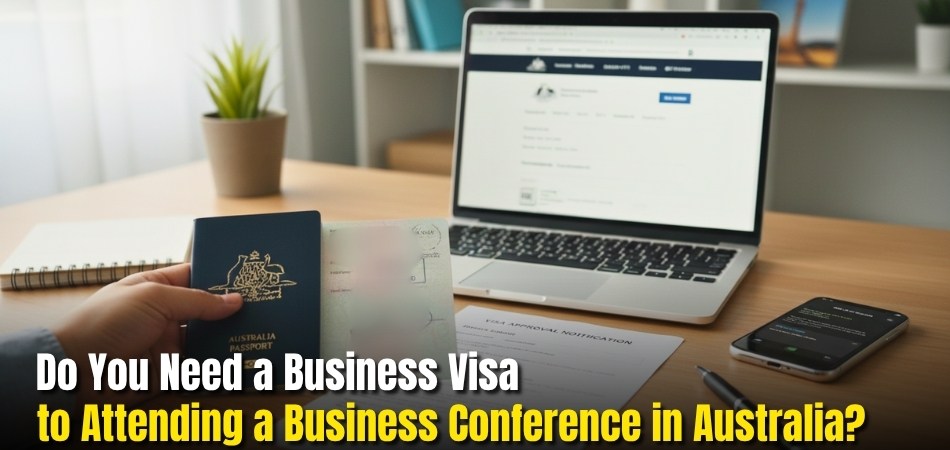
Business Visitor Stream (Subclass 600)
This visa is ideal for professionals or company representatives traveling to Australia for short-term business activities like meetings, negotiations, and conferences. It allows a stay of up to three months, with some cases extending to six months. The Subclass 600 Business Visitor Stream is widely used by those who need a formal approval pathway.
Key Details:
- Apply online via the Department of Home Affairs website.
- Proof of conference registration or an invitation letter is required.
- Financial evidence must show you can support your stay.
- Usually processed within 3–4 weeks, depending on workload.
- You cannot work or sell products while on this visa.
Electronic Travel Authority (ETA 601)
The ETA is an electronic visa option for travelers from eligible countries such as the United States, Canada, Singapore, and Japan. It allows multiple short visits within a 12-month period, each stay lasting up to three months. It is fast to apply for and ideal for frequent business travelers attending conferences in Australia.
Key Details:
- Apply through the official ETA app or the Australian immigration site.
- Approval is usually granted within minutes to 24 hours.
- Allows attendance at conferences, meetings, and trade events.
- No paid employment or contract work permitted.
- Passport must be valid for at least six months beyond travel dates.
eVisitor Visa (Subclass 651)
The eVisitor visa is free and available to citizens of the European Union and select European countries. It permits short visits for business purposes, including attending conferences or professional gatherings, for up to three months at a time within a 12-month period. This option is best for EU delegates seeking a simple online process.
Key Details:
- Apply online with no application fee.
- Requires conference invitation or proof of registration.
- Must show intent to return home after your visit.
- Valid for 12 months with multiple entries.
- Not suitable for any form of paid work in Australia.
Each visa option offers unique benefits depending on your nationality and travel purpose. Review your eligibility and supporting documents before applying to avoid unnecessary delays. Next, we’ll guide you through how to choose between these visa types so you can plan your Australian conference journey with confidence.
How to Choose Between the Visitor Visa, ETA and eVisitor When Heading to a Conference?
Selecting the right visa depends on your nationality, travel frequency, and conference duration. Each option fits different traveler categories with its own cost, validity, and eligibility criteria. Knowing these distinctions helps you choose confidently and avoid processing delays before attending your conference in Australia.
Visitor Visa (Subclass 600)

The Visitor Visa suits participants from countries not eligible for the ETA or eVisitor programs. It’s designed for professionals visiting Australia for short business purposes such as attending conferences, meetings, or networking events. This visa offers flexibility, allowing both single and multiple entry options.
- Who it suits: Applicants from countries outside the ETA and eVisitor lists
- Stay period: Up to three months, extendable for longer visits if approved
- Cost range: Around AUD 190–AUD 380, depending on location
- Conditions: Employment is not permitted; proof of funds and return intent required
Electronic Travel Authority (ETA 601)
For citizens of eligible nations like the United States, Japan, Singapore, and Canada, the ETA is a quick and convenient choice. It allows multiple short visits within a year and is perfect for business professionals attending trade events or short seminars without extended stays.
- Who it suits: Passport holders from select partner countries
- Stay period: Up to three months per visit within a 12-month period
- Cost range: About AUD 20 as a service fee
- Conditions: Limited to unpaid business activities; must apply via the official ETA app
eVisitor Visa (Subclass 651)
This visa is available to citizens of the European Union and other eligible European countries. It’s free and ideal for professionals planning short-term participation in business gatherings or conferences. The eVisitor is entirely digital and valid for a year, allowing multiple brief entries.
- Who it suits: EU and eligible European nationals
- Stay period: Up to three months for each visit within 12 months
- Cost range: Free
- Conditions: Not valid for paid or contractual work; conference invitation or registration proof required
Each visa serves a distinct category of travelers. Review your country eligibility and travel plans carefully before applying. Staying informed about current visa rules through Australia’s Department of Home Affairs ensures a smooth and compliant journey for your professional visit.
Step-by-Step: How to Apply for the Right Visa for Your Australia Conference Trip
Applying for a conference visa in Australia is a simple process if you plan each step carefully. Following the correct order helps prevent errors and delays. Here’s a clear step-by-step guide to make your conference travel application smooth and stress-free.
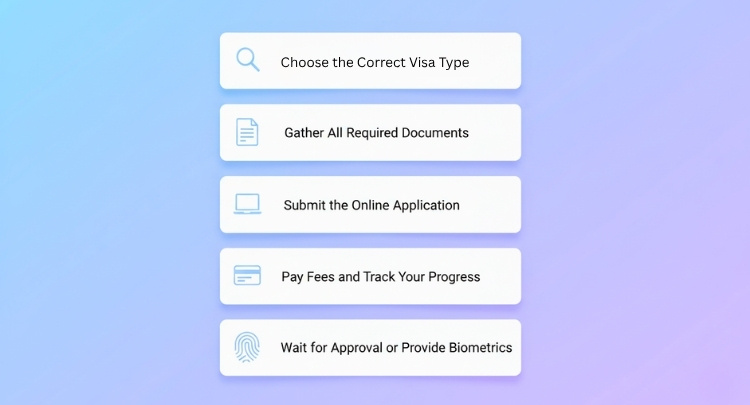
Step 1: Choose the Correct Visa Type
Before applying for an Australian conference visa, identify which visa suits your situation. Check your nationality, visit length, and type of participation. Whether it’s the Business Visitor Visa, ETA, or eVisitor, choosing correctly from the start ensures compliance and faster approval.
Step 2: Gather All Required Documents
Prepare your documents early to avoid last-minute issues. You’ll need your passport, conference invitation letter, proof of registration, financial statements, and travel itinerary. Ensure all details match your application form and are up to date to support your visa eligibility.
Step 3: Submit the Online Application
Visit the Department of Home Affairs website and complete the application form. Carefully enter your personal, travel, and conference details. Upload scanned copies of required documents in the specified format and double-check everything before submitting your application online for processing.
Step 4: Pay Fees and Track Your Progress
Visa fees vary depending on the type of visa and your location. Payment is made securely online during submission. Once done, you’ll receive a confirmation email and tracking number. Use it to check updates and any requests for additional information during review.
Step 5: Wait for Approval or Provide Biometrics if Requested
After submission, most visas are processed within days to a few weeks. You may be asked to provide biometrics or additional evidence. If your visa is refused or has expired, reapplying for an Australia conference visa requires updated documents and a valid reason for travel.
Applying early, ideally 4–6 weeks before your event, gives enough time for approval and travel planning. Always monitor official updates through the Home Affairs website to stay informed and ensure your visa application moves forward without complications.
What Documents will You Need Before Applying for a Conference Visa to Australia?
Getting your documents ready early makes the visa process easier and more reliable. Australian authorities carefully verify each detail, so preparing everything correctly helps you avoid delays. Below is a clear checklist of what you’ll need for a successful application.
- Valid Passport: Ensure your passport is valid for at least six months beyond your planned travel date. Damaged or soon-to-expire passports often cause unnecessary rejections or requests for additional verification.
- Conference Invitation Letter or Registration Proof: A signed invitation letter from the event organizer confirms your purpose of travel. It should include conference details, dates, venue, and your role or participation type for verification purposes.
- Proof of Employment or Enrollment: Provide a letter from your employer or educational institution verifying your position, reason for travel, and assurance that you’ll return after the conference. This helps establish your temporary visitor intent.
- Financial Evidence: Submit recent bank statements or salary slips proving you can fund your trip, accommodation, and return expenses. The financial documentation should reflect stable income and a sufficient available balance.
- Travel Itinerary and Accommodation Details: Include flight bookings and hotel confirmations that match your conference schedule. This demonstrates genuine planning and strengthens your case for visa approval.
- Identity and Supporting Documents: Depending on your country, you might also need digital photos, proof of residence, or travel history records. Ensure all uploads are clear and formatted according to Home Affairs guidelines.
Providing accurate and complete documentation greatly increases your chance of approval. Always double-check your invitation letter and financial records before submission to make sure every detail supports your purpose of attending the conference in Australia.
Common Mistakes When Applying for a Business Conference Visa in Australia
Even a small mistake can delay or even reject your visa application. Knowing what to avoid can save you time, stress, and extra fees. Here are the most common errors applicants make and how you can prevent them effectively.
Choosing the Wrong Visa Subclass
Many applicants apply under the wrong visa type without checking eligibility. Each subclass serves a specific purpose. Always review whether you qualify for the Visitor, ETA, or eVisitor visa before applying to ensure your purpose matches the selected category.

Submitting Incomplete or Outdated Documents
Missing or outdated documents are one of the top reasons for visa delays. Double-check that your passport, invitation letter, and financial statements are valid. Upload clear, legible copies to the Home Affairs system to support your case successfully.
Applying Too Close to the Travel Date
Last-minute applications increase the risk of missing your conference. Always apply at least four to six weeks before your event. Early preparation allows time to respond to additional document requests or biometric appointments if required.
Providing Inconsistent Travel Reasons
Visa officers compare your stated purpose with the supporting documents. Mismatched details between your invitation letter, itinerary, or employer letter can raise doubts. Ensure all information clearly reflects that your primary reason for visiting is attending a business conference.
Ignoring Previous Visa Refusals or Expirations
If your visa has been refused or expired before, reapplying for Australia conference visa requires extra care. Review past feedback, update your documents, and provide stronger evidence to show clear intent and compliance with visa conditions.
Avoiding these common pitfalls makes your application stronger and more credible. Careful planning, document accuracy, and consistent details will help you secure approval faster and ensure a smooth entry for your conference experience in Australia.
What You Can and Cannot Do While on a Business-Visitor Visa at an Australian Conference?
Understanding what your visa allows helps you stay compliant throughout your trip. The Business-Visitor visa is meant for short-term professional participation without any form of employment. Follow these simple guidelines to ensure a smooth and lawful visit.
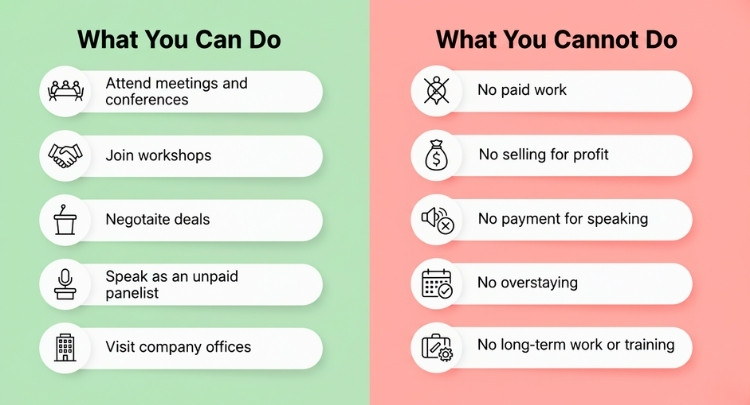
What You Can Do
- Attend business meetings, trade fairs, seminars, or conferences as a delegate.
- Participate in professional training sessions or short-term workshops.
- Negotiate contracts or explore potential business partnerships.
- Join as a non-paid speaker or panelist at business or academic events.
- Visit company offices or meet clients to strengthen business relationships.
What You Cannot Do
- Accept paid work or any job offer while in Australia.
- Sell products or promote services for direct financial gain.
- Receive payment, commission, or honorarium for conference participation.
- Stay beyond the visa’s validity or request an onshore extension.
- Engage in long-term training or employment-based activities.
Complying with these conditions protects your visa status and prevents legal complications. Staying within your visa limits ensures your participation in Australian conferences remains professional, respectful, and fully aligned with immigration regulations.
Frequently Asked Questions
Attending a business conference in Australia can raise many small but important questions that go beyond visa application steps. Here are some helpful answers to common concerns travelers usually have when planning their professional visit.
Can I Travel With My Family While Attending a Business Conference?
Yes, you can bring family members, but they must apply for the appropriate visa separately. Spouses or children can apply for a Visitor Visa under the tourism stream. Each applicant must meet individual eligibility and documentation requirements.
How Early Should I Apply for a Business Conference Visa?
It’s best to apply at least six weeks before your travel date. This allows time for document review, biometrics, or additional requests. Early application ensures you receive approval well before your conference begins.
What Should I Do If My Visa Is Refused?
If your visa is refused, you’ll receive an explanation outlining the reasons. You can reapply with updated information or stronger supporting documents. Make sure you’ve corrected the earlier issues before submitting a new application.
Can I Attend Multiple Conferences During One Visit?
Yes, you can attend more than one event as long as it fits within your visa’s validity period. Include details of all events in your application to avoid confusion during immigration checks.
Is Health Insurance Required for Attending a Conference in Australia?
Health insurance isn’t mandatory but strongly recommended. It protects you from unexpected medical expenses during your stay. Short-term travel insurance with international coverage is a smart choice for all business travelers.
Can I Combine Tourism With My Business Conference Trip?
Yes, you can enjoy leisure travel in Australia before or after your conference. Make sure your activities fall within the allowed stay period and do not violate your visa conditions. Keep your itinerary clear and consistent.
What Happens If My Passport Expires Soon After the Conference?
Your passport must remain valid for at least six months after your trip. If it expires earlier, renew it before applying for your visa. A valid passport ensures smooth processing and hassle-free entry at the airport.
Concluding Lines
Attending a business conference in Australia can open doors to new ideas, partnerships, and opportunities. But before packing your bags, you must first understand the right visa requirements to travel legally and safely.
Answering the question, do you need a business visa to attending a business conference in Australia, the short answer is yes. Most travelers require a valid business or visitor visa that allows short-term professional activities. It’s simple once you know the correct process.
Preparing the right documents, applying early, and staying informed about your visa type will help you enjoy your event stress-free. With the right approach, your Australian conference experience will be productive, rewarding, and memorable from start to finish.