
Getting a visa to visit Canada often requires supporting documents, and one important one is an invitation letter. This letter confirms that someone in Canada is expecting you and outlines the reason for your visit. It helps immigration officers assess your ties and purpose before granting a visa. But how to get an invitation letter from Canada is the question that comes to mind while applying for a Canadian visitor visa.
To get an invitation letter from Canada, ask a legally residing host, such as a citizen, permanent resident, company, or event organizer to write a signed letter. It must include your personal details, visit purpose, stay dates, host address, and proof of their legal status.
Read on to learn the exact steps to follow when requesting a letter from your Canadian host. Understand what details must be included for immigration approval. Get practical tips to avoid delays and strengthen your visa application.
How to Get an Invitation Letter From Canada (Step-by-Step Process)
An invitation letter can feel confusing if you do not know where to start. The good news is that the process is simple when you follow the right order. The steps below follow official IRCC guidance and practical approval patterns, making them reliable for both current and future applications.
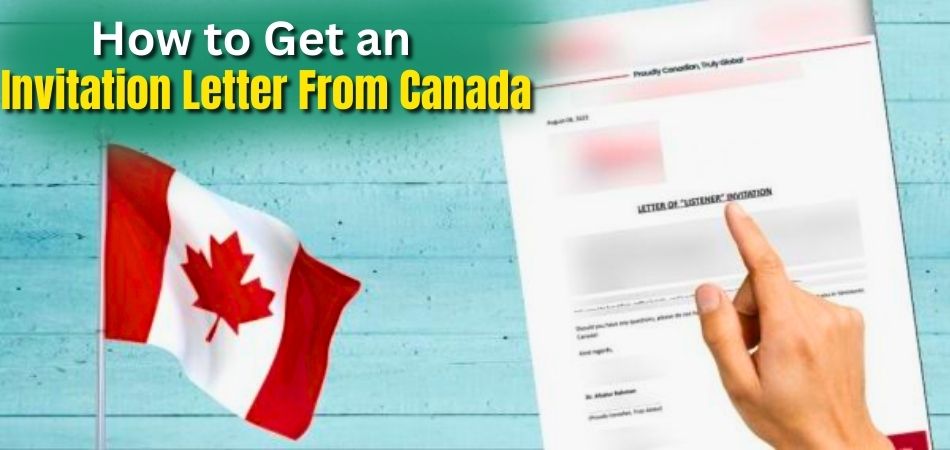
Step 1: Choose the Correct Host in Canada
Your host must be legally living in Canada. They can be:
- A Canadian citizen
- A permanent resident
- A work or study permit holder
- A company or employer
- A conference, event, or university organizer
The most important requirement is that the host can prove their legal status in Canada. Relationship strength and purpose of visit must look reasonable and honest.
Step 2: Collect and Share Your Personal Details
Before the host writes the letter, you must provide accurate information, including:
- Full name (exactly as on passport)
- Passport number and date of birth
- Address and contact details
- Purpose of travel (visit, business, conference, family)
- Planned travel dates and length of stay
- Relationship to the host (if applicable)
Accuracy here is critical. Any mismatch between the letter and your visa application can cause delays or refusal.
Step 3: Host Writes the Invitation Letter Using a Proper Template
The host prepares the invitation letter using a clear and simple format. The letter should explain:
- Who the visitor is
- Why they are visiting Canada
- How long they will stay
- Where they will stay
- Whether the host will provide financial support
Using a template matched to the visit type (visitor, family, business, or conference) reduces mistakes and improves clarity for the visa officer.
Step 4: Host Attaches Identity and Status Proof
The invitation letter must be supported by documents that prove the host’s legal status, such as:
- Copy of Canadian passport or PR card
- Work permit or study permit (if applicable)
- Proof of address (utility bill or lease – optional but helpful)
- Employment letter or business registration (for business invitations)
- Event or conference confirmation (for conference invitations)
These documents help visa officers trust the invitation and verify details quickly.
Step 5: Upload the Invitation Letter With Your IRCC Application
Once you receive the letter and documents:
- Scan or save them as clear PDF files
- Upload them under “Client Information” or “Purpose of Travel” in your application with Immigration, Refugees and Citizenship Canada (IRCC)
- Make sure the letter details match your forms exactly
IRCC accepts scanned or emailed invitation letters. Originals or notarization are not required unless specifically requested.
An invitation letter supports your visa application when it stays clear, honest, and consistent. Use the correct template, match it with your documents, and submit it properly through Immigration, Refugees and Citizenship Canada. If you’re attending conferences in Canada, make sure your invitation clearly states the event details to strengthen your case. Careful preparation improves review speed and reduces avoidable delays.
Who Can Invite You to Canada? (IRCC-Verified)
Before requesting an invitation letter, you must understand who can legally invite you to Canada. The Canadian government allows several types of hosts, depending on purpose and relationship. Each option requires specific proof and works only in certain travel situations approved by Immigration, Refugees and Citizenship Canada.
Canadian Citizens
Canadian citizens can invite visitors for family visits, tourism, or personal reasons without difficulty. They must provide passport copies and address proof clearly. This option works best when the relationship is clear, the visit has fixed dates, and the host shows stable residence.
Proof required:
- Copy of Canadian passport or citizenship certificate
When it is acceptable:
- Family visits, friend visits, tourism, or personal invitations
IRCC clarification:
Citizens can invite visitors if they live in Canada and provide complete, truthful details about the visit.
Permanent Residents (PRs)

Permanent residents may invite visitors for family visits, short stays, or personal travel purposes. They must share PR card copies and address details. This invitation works when the PR maintains valid status, stable residence, and a realistic visit plan.
Proof required:
- PR card or Confirmation of Permanent Residence (COPR)
When it is acceptable:
- Family visits, friends, short personal stays
IRCC clarification:
Permanent residents have the same right as citizens to invite visitors, provided their status is valid.
Work Permit or Study Permit Holders
Temporary residents can invite visitors for short personal visits under limited conditions. They must provide permit copies and enrollment or employment proof. This option suits brief visits only, especially when the inviter shows compliance history and clear return plans.
Proof required:
- Valid work permit or study permit
- Passport copy
When it is acceptable:
- Short visits from family or close relations
IRCC clarification:
Temporary residents may invite visitors, but the visit length must align with the host’s legal stay in Canada.
Canadian Companies or Employers
Canadian companies can invite foreign visitors for meetings, training, or business events. They must provide business registration and invitation letters. This invitation works when the visit involves defined tasks, short duration, and no unauthorized work activities.
Proof required:
- Business registration documents
- Employer letter on official letterhead
When it is acceptable:
- Business meetings, site visits, training, contract discussions
IRCC clarification:
Companies can invite foreign nationals for legitimate business purposes without offering employment.
Event or Conference Organizers
Recognized organizers can invite attendees, speakers, or delegates for approved events. They must provide event confirmation and registration proof. This option suits conferences, workshops, or exhibitions with fixed schedules and official documentation supporting attendance.
Proof required:
- Official event invitation
- Registration or participation confirmation
When it is acceptable:
- Conferences, exhibitions, workshops, forums
IRCC clarification:
Event organizers can issue invitation letters for attendance or speaking roles, but visa approval remains discretionary.
Universities, Colleges, or Research Institutions
Educational institutions may invite students, researchers, or guest speakers for academic activities. They must issue official letters and program details. This invitation works when the visit supports learning, research, or academic collaboration with clear timelines.
Proof required:
- Official institutional invitation
- Event, seminar, or research details
When it is acceptable:
- Academic conferences, guest lectures, research collaboration
IRCC clarification:
Educational institutions may invite visitors for short academic or research-related activities.
Types of Invitation Letters in Canada (Choose the Right One)
Canada uses different invitation letters based on travel purpose. Choosing the correct type helps visa officers understand your intent clearly. Each letter supports a specific visit reason and must match your documents and plans under guidelines set by Immigration, Refugees and Citizenship Canada.

General Visitor Visa Invitation Letter
This letter supports short visits for tourism or personal reasons. A legal resident in Canada issues it with basic visit details. It works when travel dates are short, accommodation plans stay clear, and the visitor shows strong ties to their home country.
Family or Friend Visit Invitation Letter
This letter allows relatives or friends to invite visitors for personal stays. The host explains the relationship and visit purpose clearly. It works best when family links are proven, visit duration stays limited, and financial responsibilities are explained simply.
Business Invitation Letter
A Canadian company issues this letter for meetings, training, or negotiations. It explains business purpose and visit length clearly. This letter suits short professional visits where no employment occurs and the company provides registration or business proof.
Conference or Event Invitation Letter
Event organizers issue this letter for registered participants attending conferences or exhibitions. It includes event name, dates, and role. This option works when the event is legitimate, time-limited, and supported by registration or payment confirmation. Unlike invitation letters from family members in Canada, these letters come from professional or institutional hosts and must align with visa purposes accurately.
Speaker or Presenter Invitation Letter
This letter invites speakers, panelists, or presenters to attend academic or professional events. The organizer explains the speaking role and schedule. It works when the visit stays temporary, unpaid or honorarium-based, and supported by event documentation.
Sponsor Support Letter (Expenses Covered)
This letter confirms that the host will cover travel, lodging, or living costs. It includes financial responsibility details. This option works when the sponsor shows stable income, clear intent, and submits proof supporting their ability to fund the visit.
Super Visa Invitation Letter (Parents and Grandparents): What’s Different
If you are inviting parents or grandparents for a Super Visa, the invitation letter has extra “must-have” items. A normal visitor invitation letter is not enough on its own.
1) Your host must meet the Minimum Necessary Income (LICO-based)
IRCC requires the child or grandchild in Canada to meet a minimum income level (often called LICO-based income). IRCC publishes an updated table.
Minimum necessary income (Updated July 29, 2025):
- 1 person: $30,526
- 2 persons: $38,002
- 3 persons: $46,720
- 4 persons: $56,724
- 5 persons: $64,336
- 6 persons: $72,560
- 7 persons: $80,784
- Each extra person: + $8,224
Tip: Family size is not just “who lives in the house.” IRCC has a specific way to count it (including the invited parent/grandparent).
2) Medical insurance is mandatory for Super Visa
For Super Visa, the applicant must have private medical insurance and it must stay valid during their time in Canada. IRCC also says you should be ready to show proof of paid insurance at the border.
What the insurance should cover (IRCC guidance):
- Valid for at least 1 year from the date of entry
- Minimum $100,000 coverage
- Covers health care, hospitalization, and repatriation
Important update: Since January 28, 2025, IRCC allows Super Visa applicants to buy eligible insurance from companies outside Canada (not only Canadian providers).
3) The invitation letter should clearly promise financial support
For Super Visa, the host’s letter should clearly say the host will support the parent/grandparent during the visit, and it should match the income proof being submitted
Requirements for a Canadian Invitation Letter (IRCC Checklist)
An invitation letter must clearly identify the visitor, confirm the host’s legal status in Canada, and explain the purpose and conditions of the visit. Missing or unclear details can weaken the application. Here are the requirements for getting a invitation letter according to IRCC:
Required Information About the Visitor
The invitation letter must include accurate details about the person applying for the visa:
- Full name (exactly as shown on passport)
- Date of birth
- Passport number
- Current address and contact details
- Relationship to the host (family, friend, business, academic, etc.)
- Purpose of the visit
- Intended length of stay in Canada
These details help IRCC confirm identity and understand why the visitor wants to enter Canada.
Required Information About the Host in Canada
The host must clearly prove who they are and their legal status in Canada:
- Full name
- Date of birth
- Canadian address and phone number
- Legal status in Canada (citizen, permanent resident, worker, student)
- Proof of status (passport, PR card, work or study permit)
- Occupation or job title
- Number of people living in the household (if applicable)
IRCC uses this information to verify that the host is legally allowed to invite someone.
Required Trip & Financial Details
The letter must also explain how the visit will work in practice:
- Planned travel dates
- Where the visitor will stay
- Who will pay for travel, accommodation, and daily expenses
- Whether the host will provide financial support (if applicable)
- Confirmation that the visitor will leave Canada at the end of the stay
Clear trip and financial details reduce doubts about overstaying or unsupported travel.
Including all these elements ensures the invitation letter meets IRCC expectations, supports the visa application properly, and remains valid even if application systems or formats change in the future.
Canada Invitation Letter Requirements Table (Quick Reference)
| Requirement | Needed? | Notes |
| Host’s legal status proof | Yes | Passport, PR card, or valid work/study permit |
| Host’s full address | Yes | Must match official ID or address records |
| Visitor’s passport number | Yes | Mandatory IRCC identification detail |
| Financial support statement | Optional | Required only if the host is sponsoring expenses |
| Notarization | Optional | Rarely requested by IRCC |
| Employment letter (host) | Optional | Adds credibility, especially for business or long visits |
Documents You Must Attach With the Invitation Letter
Providing the right supporting documents helps visa officers verify the invitation letter and understand the purpose of the visit. While IRCC may not require every document in all cases, submitting clear and relevant proof greatly improves application strength and reduces follow-up requests from Immigration, Refugees and Citizenship Canada (IRCC).

Documents the Host Should Attach
Here are the documents you as a host should attach for the invitation letter:
Copy of PR Card or Canadian Passport
This document proves the host’s identity and legal status in Canada. IRCC uses it to confirm that the person issuing the invitation is legally allowed to invite a foreign national.
Valid Work Permit or Study Permit (If Applicable)
If the host is not a citizen or permanent resident, a valid work or study permit must be included. The permit validity should reasonably cover the visitor’s planned stay in Canada.
Proof of Address in Canada
Documents such as a utility bill, lease agreement, or bank statement help confirm where the host lives. The address should match the one mentioned in the invitation letter to avoid inconsistencies.
Employment Letter or Business Documents
An employment letter, pay slip, or business registration adds credibility by showing the host’s occupation and stability in Canada. This is especially helpful for longer visits or when financial support is mentioned.
Event or Conference Registration Confirmation
For business, academic, or conference visits, official registration or participation confirmation explains the purpose of travel clearly and supports the invitation letter’s claims. In some cases, applicants may also include notarized invitation letters in Canada to strengthen credibility, especially when IRCC requests extra proof of authenticity or host responsibility.
Proof of Relationship (When Applicable)
Documents such as birth certificates, marriage certificates, or sworn affidavits help IRCC verify family or personal relationships. This is increasingly important for family and friend visit applications.
Documents the Visitor Should Prepare
Now let’s have quick look at the documents you need to prepare:
Valid Passport
The visitor’s passport confirms identity and nationality. The passport details must match exactly with those mentioned in the invitation letter and visa application forms.
Purpose of Travel Documents
These include event details, travel plans, meeting agendas, or invitation emails. They help IRCC understand why the visitor is traveling and how the invitation letter fits into the overall trip.

Proof of Funds
Bank statements, salary slips, or sponsorship proof show how the visitor will cover travel and living expenses. If the host is sponsoring the visit, this must align with what is stated in the invitation letter.
Travel History
Copies of previous visas or entry stamps demonstrate compliance with immigration rules in other countries. A positive travel history can strengthen trust in the visitor’s intention to return home.
Proof of Relationship With the Host
Photos, communication records, or official documents help confirm the connection between the visitor and host. IRCC increasingly reviews this evidence to assess the genuineness of personal visits.
Submitting well-organized and consistent documents ensures the invitation letter supports the visa application effectively and remains aligned with current and future IRCC review practices.
Invitation Letter Templates (Canada)
Here are few ready to use invitaion letter sample
1) Conference Invitation Letter (Best for your niche)
[Organizer Letterhead or Organizer Name]
[Organizer Address]
[Organizer Phone] | [Organizer Email]
Date: [DD Month YYYY]To: Immigration, Refugees and Citizenship Canada (IRCC) / Visa Officer
Subject: Invitation Letter for Conference Attendance: [Event Name]
Dear Visa Officer,
We confirm that [Full Name of Participant], passport number [Passport Number], date of birth [DOB], is invited to attend [Event Name] in [City, Province], Canada from [Event Start Date] to [Event End Date].
Participant details
- Full name: [Full Name]
- Passport number: [Passport Number]
- Nationality: [Nationality]
- Current address: [Full Address]
- Role at event: [Attendee / Speaker / Presenter / Delegate]
- Registration status: [Registered / Paid / Confirmation ID]
Event details
- Event name: [Event Name]
- Dates: [Start Date to End Date]
- Venue: [Venue Name, Full Address]
- Organizer: [Organization Legal Name]
Purpose of visit
The purpose of the visit is to participate in the conference activities only. This invitation does not authorize the participant to work in Canada outside the event role described above.Accommodation and expenses
- Accommodation: [Hotel Name/Address OR “self-arranged”]
- Expenses: [Paid by participant / paid by employer / paid by organizer]
If the organizer is covering any costs, we confirm coverage of: [List items clearly].We request that a visitor visa be considered so the participant can attend the event and return home after completion. Supporting documents attached include: registration confirmation, event schedule/agenda, and proof of organizer details.
Sincerely,
[Full Name of Signatory]
[Position/Title]
[Organization Name]
[Signature]
2) General Friend or Family Visit (Copy-Paste)
[Host Full Name]
[Host Full Address in Canada]
Phone: [Host Phone] | Email: [Host Email]
Date: [DD Month YYYY]To: Immigration, Refugees and Citizenship Canada (IRCC) / Visa Officer
Dear Visa Officer,
I, [Host Full Name], date of birth [Host DOB], currently living at [Host Address], invite [Visitor Full Name], passport number [Passport Number], date of birth [Visitor DOB], to visit me in Canada from [Start Date] to [End Date].
Relationship and purpose
[Explain relationship in 1 to 2 lines. Example: “The visitor is my sister.” / “The visitor is my close friend since 2018.”]
The purpose of the visit is [family visit / holiday / personal visit].Stay details
The visitor will stay at [Host Address] during the visit. The planned length of stay is [X weeks/months], and the visitor will leave Canada before the authorized stay ends.Financial responsibility
Expenses will be covered by [visitor / host / both]. If I will support the visitor, I confirm I can do so and I understand this letter must be truthful.I am in Canada as a [Canadian citizen / permanent resident / work permit holder / study permit holder], and I am attaching proof of my status.
Sincerely,
[Host Full Name]
[Signature]
3) Business Visit (Copy-Paste)
[Company Letterhead]
[Company Legal Name]
[Full Address]
Phone: [Phone] | Email: [Email]
Date: [DD Month YYYY]To: Immigration, Refugees and Citizenship Canada (IRCC) / Visa Officer
Subject: Business Invitation for [Visitor Full Name], Passport [Passport Number]
Dear Visa Officer,
This letter confirms that [Company Name] invites [Visitor Full Name], passport number [Passport Number], employed as [Job Title] at [Visitor Company Name], to visit Canada from [Start Date] to [End Date].
Purpose of visit
The purpose is [meeting / training / site visit / contract discussion] at [location]. The visitor will not take up employment in Canada outside the activities listed above.Schedule (brief)
- [Date]: [Meeting/training topic]
- [Date]: [Meeting/training topic]
Expenses
Expenses will be covered by [visitor / inviting company / visitor’s employer]. Accommodation will be at [Hotel name/address or “self-arranged”].If you need any confirmation, please contact [Contact Name and Title] at [phone/email].
Sincerely,
[Authorized Signatory Name]
[Title]
[Company Name]
[Signature]
Common Mistakes That Lead to Visa Delays or Refusals
Many invitation letters fail not because the visit is invalid, but because important details are missing or unclear. Based on common refusal patterns seen by Immigration, Refugees and Citizenship Canada (IRCC), the following mistakes often lead to delays or refusals.
- Missing passport number: Without a passport number, IRCC cannot properly link the invitation letter to the applicant.
- Unclear or unrealistic visit dates: Vague travel periods or overly long stays raise concerns about the true purpose of the visit.
- Host not proving legal status in Canada: Invitation letters without proof of citizenship, permanent residence, or valid permits lack credibility.
- Implied intention to overstay: Letters suggesting long-term residence, job searching, or open-ended stays can negatively affect the application.
- Contradictions between application forms and the letter: Differences in travel purpose, dates, or relationships create doubt during assessment.
- Lack of relationship evidence: Personal visits without proof of family or friendship connections appear weak and unverified.
- Host offering financial support without proof: Claiming sponsorship without income or financial documents can harm the application.
Is a Canadian Invitation Letter Mandatory?
Many applicants believe an invitation letter is always required for a Canadian visa. In reality, its importance depends on the purpose of travel and the overall strength of the application. The clarification below reflects guidance from Immigration, Refugees and Citizenship Canada (IRCC) and remains valid even as application systems change.

When an Invitation Letter Is Required
An invitation letter is strongly expected when:
- You are visiting family or friends in Canada
- You plan to stay at the host’s residence
- A company, institution, or event is formally inviting you
- Your travel purpose cannot be clearly explained without a host
In these cases, the letter helps IRCC verify accommodation, purpose, and host credibility.
When an Invitation Letter Is Optional
An invitation letter is usually optional when:
- You are traveling purely for tourism
- You have confirmed hotel bookings
- You can fully explain your travel plan without a host
- You have strong financial proof and travel history
IRCC does not refuse applications solely because an invitation letter is missing.
When an Invitation Letter Makes a Strong Impact
An invitation letter can significantly strengthen an application when:
- Your travel history is limited
- Your ties to the host help explain the visit
- A business, conference, or academic event is involved
- Accommodation and expenses need clear explanation
Even when not mandatory, a well-prepared invitation letter often improves clarity and reduces follow-up questions.
Does an Invitation Letter Guarantee Visa Approval?
No, an invitation letter does not guarantee visa approval. It is a supporting document, not a deciding factor. According to Immigration, Refugees and Citizenship Canada (IRCC), visa officers review the entire application, not just the invitation letter.

Reasons Strong Supporting Evidence Matters
An invitation letter works only when it aligns with other documents. IRCC looks for consistency between the letter, your application forms, and your supporting evidence. Proof of funds, travel history, and a clear travel plan often carry more weight than the letter itself.
Factors Determines Visa Approval
Visa approval depends on several core factors:
- Your ties to your home country
- The clarity and legitimacy of your travel purpose
- Your financial ability to support the trip
- Your compliance with previous visa conditions
An invitation letter helps explain why you are visiting, but approval depends on how convincing the full application is.
Common Invitation Letter Mistakes That Cause Delays (And How to Fix Them)
Common invitation letter errors often slow visa checks for many people. These small issues cause big delays and confuse busy visa officers. This simple guide shows what goes wrong and how to fix. Read below for clear tips and quick fixes that save time.
Dates Do Not Match
When the letter shows one set of travel days but the forms show another, officers stop to check what is right. This slows review and can cause a return request. Keep all travel dates the same across your invitation letter for Canada and your visa forms and trip plan every single time.
Missing Passport Number
Missing this key detail makes it hard for officers to link the letter to the right person. That can lead to delays or extra checks. Always include the visitor’s full name and passport number exactly as shown in the passport inside the invitation letter for smooth and quick review steps.
No Proof Of Host Status
Having no proof of legal stay makes the case look weak and unclear. Officers need to see that the inviter is allowed to live in Canada. Add a clear copy of a Canadian passport, PR card, or valid permit with the invitation letter to avoid slow back and forth checks.
Vague Visit Purpose
Short lines like just visiting give no real idea of the plan. Officers want to know what will happen and where the guest will stay. Add one or two simple lines that explain the visit plan and home address inside the invitation letter for clear and fast review every time.
No Proof Of Sponsor Funds
Saying the inviter will pay without proof raises red flags for officers. They need to see real money support. Include a job letter, recent pay slips, or a bank statement with the invitation letter to show the sponsor can cover travel and stay costs without any doubt during review time.
Super Visa Rules Missing
For parent visits, missing income and insurance details can stop the file. Officers must check these rules before they approve long stays. Share proof of income and health insurance that meets Canada rules inside the invitation letter for smooth and fast visa decision without extra follow up emails or calls.
Permanent Stay Language
Using open ended words can make officers think the visitor will not leave. That brings more checks and delays. Keep clear return plans in the invitation letter with dates and home ties. This shows the guest will go back after the visit ends as planned by both sides every time.
These simple fixes help your visa file move much faster now. Small details make a big change for busy visa officers daily. Use this list before you send your invitation letter out today. It saves time and keeps your plans on track without stress.
FAQ: Invitation Letters for Canada
Invitation letters often raise practical questions that applicants do not find clearly explained elsewhere. The answers below reflect common concerns seen in recent applications. They align with review practices used by Immigration, Refugees and Citizenship Canada (IRCC) and remain relevant for future visa years.
Can a Friend Invite Me to Canada?
Yes, a friend can invite you to Canada if they legally live there. The friend must provide a valid invitation letter, proof of status, and relationship evidence. The visit purpose must be realistic, and your application must still show strong ties to your home country.
Does the Invitation Letter Need Notarization?
In most cases, notarization is not required. IRCC accepts simple signed invitation letters. Notarization may help in rare cases involving complex family sponsorships, but it is not a standard requirement for visitor, business, or conference-related invitations.
Can I Email the Invitation Letter to IRCC?
Yes, IRCC accepts scanned or emailed invitation letters uploaded as PDF files. Original paper copies are not required unless specifically requested. The uploaded version must be clear, readable, and consistent with all other application details.
Can Someone on a Work Permit Invite Me?
Yes, work permit holders can invite visitors if their permit is valid. The visit duration should align with the host’s authorized stay in Canada. Proof of legal status and a clear visit purpose are essential for credibility.
How Long Should the Invitation Letter Be?
An invitation letter should be concise, usually one page. It must clearly include identities, purpose of visit, travel dates, accommodation details, and financial responsibility. Longer letters do not improve approval chances and may reduce clarity.
What If the Host Cannot Sponsor My Trip?
A host does not need to sponsor your trip. If the visitor pays their own expenses, the letter should clearly state this. The visitor must then provide strong proof of funds to support travel and living costs independently.
Do I Submit Original or Scanned Copies?
Scanned copies are sufficient for online applications. IRCC reviews digital submissions, so uploaded PDFs are acceptable. Originals are only required if IRCC specifically asks for them later during processing or verification.
Can I Use One Letter for Multiple Entries?
An invitation letter usually supports a single visit purpose. While it may help with a multiple-entry visa request, IRCC decides entry type separately. The letter should clearly state intended travel dates and purpose.
Do I Need Separate Letters for Family Members?
Yes, separate invitation letters are recommended for each family member. This helps IRCC assess each applicant individually and reduces confusion, especially when travel dates, ages, or financial arrangements differ.
Final Words
Applying for a Canadian visa requires care, focus, and honest details. When you learn how to get an invitation letter from Canada, you must match the letter with your forms, dates, and documents. Small mistakes, like wrong passport numbers or unclear plans, can slow the process or cause refusal.
If you spot an error, correct it quickly by updating the letter or adding a clear explanation. Strong proof, clear purpose, and correct files help visa officers trust your case. Always review everything before you submit through Immigration, Refugees and Citizenship Canada. Care today saves time, stress, and repeat applications later.



Thanks for the advice and the process is well explained thanks alot
I want invitor from canada to send me invitation letter
Thank you for your interest! As a conference organizer in Canada, we provide official invitation letters only after attendees have completed their registration.
Please visit the following link to complete your registration: globalconference.ca/global-conference-in-canada/.
Once registered, we will send you the invitation letter.
I’m Rosemary Kirenga.
I’m kindly looking for a sponsor to sponsor me get a job but to pay back immediately l settle down.
Hoping for the best.
Thanks.
Yours sincerely,
Rosemary Kirenga
Dear Rosemary,
We understand and appreciate your interest in seeking opportunities abroad. However, we are not in a position to provide sponsorship or employment support at this time.
We encourage you to explore official job placement programs and consult trusted Canadian immigration resources for further assistance. We wish you all the best in your journey and future endeavors.